Kirjojen hintavertailu. Mukana 11 244 527 kirjaa ja 12 kauppaa.

Kirjahaku

Etsi kirjoja tekijän nimen, kirjan nimen tai ISBN:n perusteella.

4 kirjaa tekijältä Lynn F. Jacobs

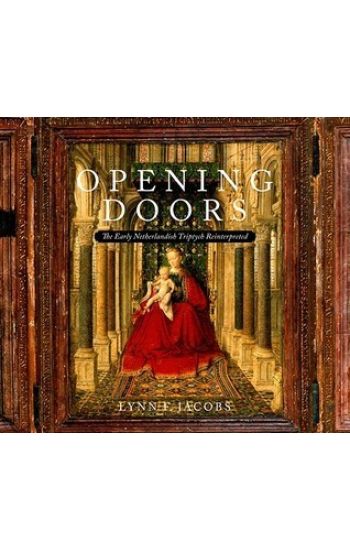
Opening Doors

Opening Doors

Lynn F. Jacobs

Pennsylvania State University Press
2012
sidottu
Opening Doors is the first book of its kind: a comprehensive study of the emergence and evolution of the Netherlandish triptych from the early fifteenth through the early seventeenth centuries. The modern term “triptych” did not exist during the period Lynn Jacobs discusses. Rather, contemporary French, Dutch, and Latin documents employ a very telling description—they call the triptych a “painting with doors.” Using this term as her springboard, Jacobs considers its implications for the structure and meaning of the triptych. The fundamental nature of the format created doors that established thresholds, boundaries, and interconnections between physical parts of the triptych—the center and wings, the interior and the exterior—and between types of meaning, the sacred and the earthly, different narrative moments, different spaces, different levels of status, and, ultimately, different worlds. Moving chronologically from early triptychs such as Campin’s Mérode Triptych and Van Eyck’s Dresden Triptych to sixteenth-century works by Bosch, and closing with a discussion of Rubens, Jacobs considers how artists negotiated the idea of the threshold. From her analysis of Campin’s ambiguous divisions between the space represented across the panels, to Van der Weyden’s invention of the “arch motif” that organized relations between the viewer and the painting, to Van der Goes’s complex hierarchical structures, to Bosch’s unprecedentedly unified spaces, Jacobs shows us how Netherlandish artists’ approach to the format changed and evolved, culminating in the early seventeenth century with Rubens’s great Antwerp altarpieces.
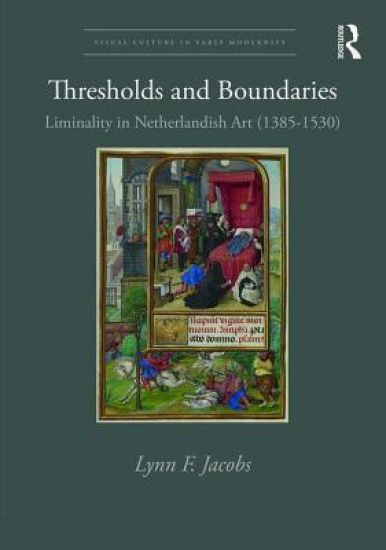
Thresholds and Boundaries

Thresholds and Boundaries

Lynn F. Jacobs

Routledge
2019
nidottu
Although liminality has been studied by scholars of medieval and seventeenth-century art, the role of the threshold motif in Netherlandish art of the late fourteenth, fifteenth and early sixteenth centuries -- this late medieval/early ‘early modern’ period -- has been much less fully investigated. Thresholds and Boundaries: Liminality in Netherlandish Art (1385-1550) addresses this issue through a focus on key case studies (Sluter's portal of the Chartreuse de Champmol and the calendar pages of the Limbourg Brothers' Très Riches Heures), and on important formats (altarpieces and illuminated manuscripts). Lynn F. Jacobs examines how the visual thresholds established within Netherlandish paintings, sculptures, and manuscript illuminations become sites where artists could address relations between life and death, aristocrat and peasant, holy and profane, and man and God—and where artists could exploit the "betwixt and between" nature of the threshold to communicate, paradoxically, both connections and divisions between these different states and different worlds. Building on literary and anthropological interpretations of liminality, this book demonstrates how the exploration of boundaries in Netherlandish art infused the works with greater meaning. The book's probing of the -- often ignored --meanings of the threshold motif casts new light on key works of Netherlandish art.
Thresholds and Boundaries

Thresholds and Boundaries

Lynn F. Jacobs

Routledge
2017
sidottu
Although liminality has been studied by scholars of medieval and seventeenth-century art, the role of the threshold motif in Netherlandish art of the late fourteenth, fifteenth and early sixteenth centuries -- this late medieval/early ‘early modern’ period -- has been much less fully investigated. Thresholds and Boundaries: Liminality in Netherlandish Art (1385-1550) addresses this issue through a focus on key case studies (Sluter's portal of the Chartreuse de Champmol and the calendar pages of the Limbourg Brothers' Très Riches Heures), and on important formats (altarpieces and illuminated manuscripts). Lynn F. Jacobs examines how the visual thresholds established within Netherlandish paintings, sculptures, and manuscript illuminations become sites where artists could address relations between life and death, aristocrat and peasant, holy and profane, and man and God—and where artists could exploit the "betwixt and between" nature of the threshold to communicate, paradoxically, both connections and divisions between these different states and different worlds. Building on literary and anthropological interpretations of liminality, this book demonstrates how the exploration of boundaries in Netherlandish art infused the works with greater meaning. The book's probing of the -- often ignored --meanings of the threshold motif casts new light on key works of Netherlandish art.
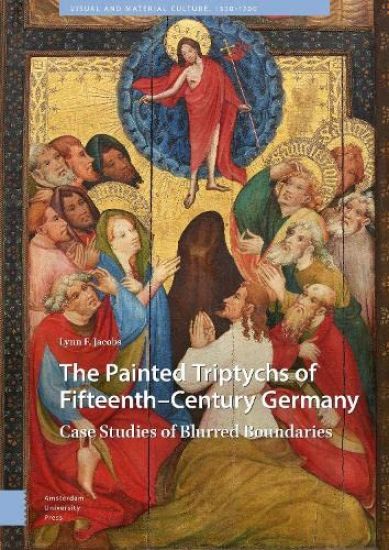
The Painted Triptychs of Fifteenth-Century Germany

The Painted Triptychs of Fifteenth-Century Germany

Lynn F. Jacobs

AMSTERDAM UNIVERSITY PRESS
2022
sidottu
This book presents four case studies that interrogate how German fifteenth-century painted triptychs engage with, and ultimately blur, various boundaries. Some of the boundaries are internal to the triptych format, for example, transgressed frames between narrative scenes on triptych interiors, or interconnections between imagery on triptych interiors and exteriors. Other blurred boundaries are regional ones between the Netherlands and Cologne; metaphysical ones between heaven and earth; and artistic distinctions between the media of painting and sculpture. The book’s case studies—which shed new light on Conrad von Soest, Stefan Lochner, and the Master of the St. Bartholomew Altarpiece—illuminate the importance of German fifteenth-century painting, while providing a fresh assessment of relations between German triptychs and their more famous Netherlandish counterparts. The case studies also demonstrate the value of probing Medialität, that is, the implications of format and medium for generating meaning. A coda assesses the triptych in the age of Dürer.