Kirjojen hintavertailu. Mukana 12 390 323 kirjaa ja 12 kauppaa.

Kirjahaku

Etsi kirjoja tekijän nimen, kirjan nimen tai ISBN:n perusteella.

12 kirjaa tekijältä Lynn Margulis

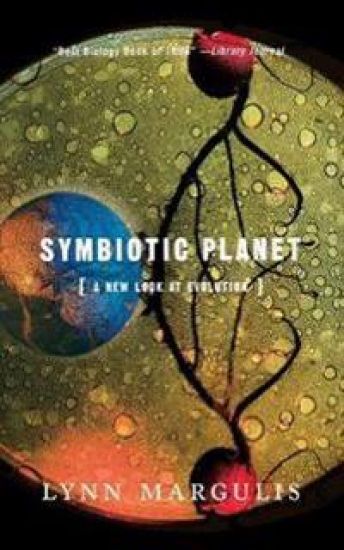
Symbiotic Planet

Symbiotic Planet

Lynn Margulis

Basic Books
1999
pokkari
Although Charles Darwin's theory of evolution laid the foundations of modern biology, it did not tell the whole story. Most remarkably, The Origin of Species said very little about, of all things, the origins of species. Darwin and his modern successors have shown very convincingly how inherited variations are naturally selected, but they leave unanswered how variant organisms come to be in the first place.In Symbiotic Planet, renowned scientist Lynn Margulis shows that symbiosis, which simply means members of different species living in physical contact with each other, is crucial to the origins of evolutionary novelty. Ranging from bacteria, the smallest kinds of life, to the largest,the living Earth itself,Margulis explains the symbiotic origins of many of evolution's most important innovations. The very cells we're made of started as symbiotic unions of different kinds of bacteria. Sex,and its inevitable corollary, death,arose when failed attempts at cannibalism resulted in seasonally repeated mergers of some of our tiniest ancestors. Dry land became forested only after symbioses of algae and fungi evolved into plants. Since all living things are bathed by the same waters and atmosphere, all the inhabitants of Earth belong to a symbiotic union. Gaia, the finely tuned largest ecosystem of the Earth's surface, is just symbiosis as seen from space. Along the way, Margulis describes her initiation into the world of science and the early steps in the present revolution in evolutionary biology the importance of species classification for how we think about the living world and the way academic apartheid" can block scientific advancement. Written with enthusiasm and authority, this is a book that could change the way you view our living Earth.

Origins of Sex

Origins of Sex

Lynn Margulis; Dorion Sagan

Yale University Press
1990
pokkari
A fascinating and detailed examination of the evolution—and occasional devolution—of sexuality in microorganisms and more complex forms of life. Margulis and Sagan trace sex from its inauspicious beginnings in bacteria threatened by ultraviolet radiation to its intimate relation with the origin of mitotic division of nucleated cells. The origin of meiotic sex through cannibalism followed by centriole reproductive tardiness and the connection of cell symbiosis to sex and differentiation are explored.“The authors have not only given us a new and exiting scenario for the evolution of sex, but have also provided us with critical ways in which we can test their hypotheses. . . . This is a stimulating book that is sure to invoke criticism and discussion; I strongly recommend it.”—Symbiosis“The book is well organized and well written, leading the reader from one thought to another almost effortlessly. Background information is presented to aid those of us who are not experts in this field, and a glossary is appended. The book could be used at all levels of study, from interested undergraduates in general biology though postdoctoral students of genetics and evolution. I recommend this thought-provoking book to you for both your enjoyment and your enlightenment.”—Richard W. Cheney, Jr., Journal of College Science Teaching“This book, undoubtedly controversial, is a thoughtful and original contribution to an important aspect of cellular biology.”—John Langridge
Slanted Truths

Slanted Truths

Lynn Margulis; Dorion Sagan; P. Morrison

Springer-Verlag New York Inc.
2014
nidottu
This enticing collection is as devoted to the profound power of figures of speech as any oration of old Hellas. Metaphor reigns as we encounter the identification of our Earth as a Single, integrative organism, a tale told in image and passion. The discoveries and conjectures upon which this grand view rest are here as well. I have enjoyed these two dozen pieces hugely. No family tree of animal life but must somewhere disclose a cousinly infolding. We are compact of life past, and the looped handing down is more complex than the Mendel-Morgan dance of chromosomes and genes. That dance is essential, certainly, but it is the vital editing of an epic and many-rooted work, a book more like the Bible than like one great artists Remembrance of Things Past. We follow a few old shelves of bound DNA, not just a single book. Our major biochemical package for oxidative metabolism was de­ scribed in a small DNA manual, somehow engulfed to become an or­ ganelle within a lucky ancient ancestral anaerobe, and passed ever since viii FOREWORD from mother to offspring outside of the chromosome shuffie. The sperm do carry half the compact genetic message of the human DNA, but they are too small to transfer this equally essential symbiotic one that comes down from the mothers, within roomy egg after roomy egg.
Microcosmos

Microcosmos

Lynn Margulis; Dorion Sagan; Lewis Thomas

University of California Press
1997
pokkari
This title is back in print with a revised preface. "Microcosmos" brings together the remarkable discoveries of microbiology of the past two decades and the pioneering research of Dr. Margulis to create a vivid new picture of the world that is crucial to our understanding of the future of the planet. Addressed to general readers, the book provides a beautifully written view of evolution as a process based on interdependency and their interconnectedness of all life on the planet.
Diversity of Life: The Illustrated Guide to Five Kingdoms

Diversity of Life: The Illustrated Guide to Five Kingdoms

Lynn Margulis; Karlene Schwartz; Michael Dolan

Jones and Bartlett Publishers, Inc
1999
kierre
This sophisticated coloring book is a beautifully detailed illustration of the world's living diversity. It is written for science students, teachers, and anyone else who is curious about the extraordinary variety of living things that inhabit this planet. It opens with an introduction to the classification systems, distinctions between prokaryotic and eukaryotic cells, an introduction to life cycles, Earth history, and an explanation of how to best use this coloring book. The next section is organized by communities in which the organisms live. The final section details the variety of major groupings - phyla - within each kingdom and shows how the organisms in each are distinguished from one other. This coloring book gives a visual understanding of the enormous diversity of life on this planet and will be an enlightening and educational resource for students from a variety of backgrounds.
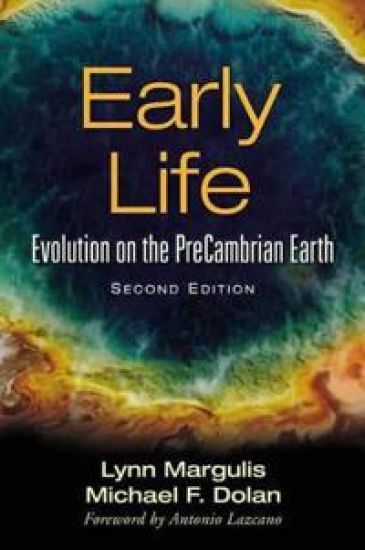
Early Life: Evolution On The Precambrian Earth

Early Life: Evolution On The Precambrian Earth

Lynn Margulis; Michael Dolan

Jones and Bartlett Publishers, Inc
2002
nidottu
Early Life: Evolution on the PreCambrian Earth, Second Edition offers an informative and compelling analysis of microbial evolution, often overlooked as the opening chapter of life's history. With this long-awaited new edition, Lynn Margulis and Michael Dolan integrate new discoveries from the past two decades, such as the enormous contribution of molecular biology, especially the accumulation of protein and DNA sequence information upon which the Woese three-domain system is based. Yet the prokaryotic-eukaryotic distinction remains the largest evolutionary discontinuity in life on Earth. Are the well-formed filaments found so recently in the Warrawoona Series of northwestern Australia really evidence of the oldest life on the planet? Do the fossils found in the great Gunflint Iron Formation of Ontario tell that bacteria were instrumental in the accumulation of the most important iron reserves in the world? These questions are not solved here, but they are raised for students, scientists, and general readers interested in the most basic evolution and its consequences. No special scientific background is required of the reader, only a lively interest.
Gaia and Philosophy

Gaia and Philosophy

Lynn Margulis; Dorion Sagan

Silver Press
2024
pokkari
In the 1970s, microbiologist Lynn Margulis and atmospheric chemist James Lovelock developed the Gaia theory. Embracing the circular logic of life and engineering systems, the Gaia theory states that Earth is a self-regulating complex system in which life interacts with and eventually becomes its own environment. Gaia describes a living Earth: a body in the form of a planet.Fusing science, mathematics, philosophy, ecology and mythology, Gaia and Philosophy, with a new introduction by Dorion Sagan, challenges Western anthropocentrism to propose a symbiotic planet. In its striking philosophical conclusion, the revolutionary Gaia paradigm holds important implications not only for understanding life's past but for shaping its future.
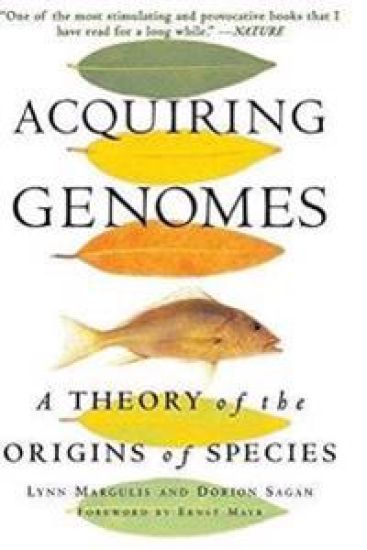
Acquiring Genomes

Acquiring Genomes

Dorion Sagan; Lynn Margulis

Basic Books
2003
pokkari
How do new species evolve? Although Darwin identified inherited variation as the creative force in evolution, he never formally speculated where it comes from. His successors thought that new species arise from the gradual accumulation of random mutations of DNA. But despite its acceptance in every major textbook, there is no documented instance of it. Lynn Margulis and Dorion Sagan take a radically new approach to this question. They show that speciation events are not, in fact, rare or hard to observe. Genomes are acquired by infection, by feeding, and by other ecological associations, and then inherited. Acquiring Genomes is the first work to integrate and analyze the overwhelming mass of evidence for the role of bacterial and other symbioses in the creation of plant and animal diversity. It provides the most powerful explanation of speciation yet given.