Kirjojen hintavertailu. Mukana 11 244 527 kirjaa ja 12 kauppaa.

Kirjahaku

Etsi kirjoja tekijän nimen, kirjan nimen tai ISBN:n perusteella.

8 kirjaa tekijältä Lynn Meskell

A Future in Ruins

A Future in Ruins

Lynn Meskell

Oxford University Press Inc
2018
sidottu
Best known for its World Heritage program committed to "the identification, protection and preservation of cultural and natural heritage around the world considered to be of outstanding value to humanity," the United Nations Educational, Scientific and Cultural Organization (UNESCO) was founded in 1945 as an intergovernmental agency aimed at fostering peace, humanitarianism, and intercultural understanding. Its mission was inspired by leading European intellectuals such as Henri Bergson, Marie Curie, Albert Einstein, Thomas Mann, H. G. Wells, and Aldous and Julian Huxley. Often critiqued for its inherent Eurocentrism, UNESCO and its World Heritage program today remain embedded within modernist principles of "progress" and "development" and subscribe to the liberal principles of diplomacy and mutual tolerance. However, its mission to prevent conflict, destruction, and intolerance, while noble and much needed, increasingly falls short, as recent battles over the World Heritage sites of Preah Vihear, Chersonesos, Jerusalem, Palmyra, Aleppo, and Sana'a, among others, have underlined. A Future in Ruins is the story of UNESCO's efforts to save the world's heritage and, in doing so, forge an international community dedicated to peaceful co-existence and conservation. It traces how archaeology and internationalism were united in Western initiatives after the political upheavals of the First and Second World Wars. This formed the backdrop for the emergent hopes of a better world that were to captivate the "minds of men". UNESCO's leaders were also confronted with challenges and conflicts about their own mission. Would the organization aspire to intellectual pursuits that contributed to the dream of peace or instead be relegated to an advisory and technical agency? An eye-opening and long overdue account of a celebrated yet poorly understood agency, A Future in Ruins calls on us all to understand how and why the past comes to matter in the present, who shapes it, and who wins or loses as a consequence.
A Future in Ruins

A Future in Ruins

Lynn Meskell

Oxford University Press Inc
2020
nidottu
Best known for its World Heritage program committed to "the identification, protection and preservation of cultural and natural heritage around the world considered to be of outstanding value to humanity," the United Nations Educational, Scientific and Cultural Organization (UNESCO) was founded in 1945 as an intergovernmental agency aimed at fostering peace, humanitarianism, and intercultural understanding. Its mission was inspired by leading European intellectuals such as Henri Bergson, Marie Curie, Albert Einstein, Thomas Mann, H. G. Wells, and Aldous and Julian Huxley. Often critiqued for its inherent Eurocentrism, UNESCO and its World Heritage program today remain embedded within modernist principles of "progress" and "development" and subscribe to the liberal principles of diplomacy and mutual tolerance. However, its mission to prevent conflict, destruction, and intolerance, while noble and much needed, increasingly falls short, as recent battles over the World Heritage sites of Preah Vihear, Chersonesos, Jerusalem, Palmyra, Aleppo, and Sana'a, among others, have underlined. A Future in Ruins is the story of UNESCO's efforts to save the world's heritage and, in doing so, forge an international community dedicated to peaceful co-existence and conservation. It traces how archaeology and internationalism were united in Western initiatives after the political upheavals of the First and Second World Wars. This formed the backdrop for the emergent hopes of a better world that were to captivate the "minds of men." UNESCO's leaders were also confronted with challenges and conflicts about their own mission. Would the organization aspire to intellectual pursuits that contributed to the dream of peace or instead be relegated to an advisory and technical agency? An eye-opening and long overdue account of a celebrated yet poorly understood agency, A Future in Ruins calls on us all to understand how and why the past comes to matter in the present, who shapes it, and who wins or loses as a consequence.
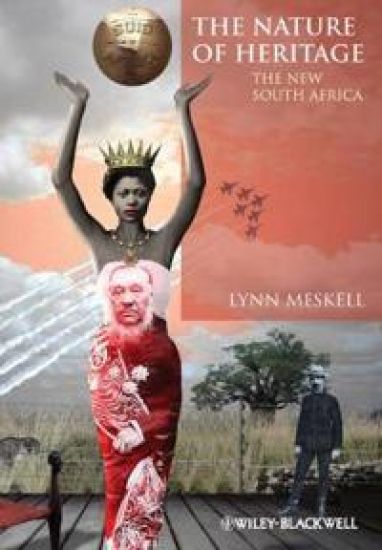
The Nature of Heritage

The Nature of Heritage

Lynn Meskell

John Wiley Sons Inc
2011
nidottu
The Nature of Heritage: The New South Africa is unique in revealing the conflicts inherent in preserving both natural and cultural heritage, by examining the archaeological, ethnographic and economic evidence of a nation's attempts to master its past and its future. Provides a classic example of how nations attempt to overcome a negative heritage through past mastering of their historiesEvaluates the continuing dominance of nature and conservation over concerns for cultural heritageEmploys ethnographic and archaeological methodologies to reveal how the past is processed into a new national heritageIdentifies heritage as therapy, exemplified in the strategy for repairing legacies of racial and ethnic difference in post-apartheid South AfricaHighlights the role of archaeological heritage sites, national parks and protected areas in economic development and social empowermentExplores how nature trumps culture and the global implications of the new configurations of heritage
The Nature of Heritage

The Nature of Heritage

Lynn Meskell

John Wiley Sons Inc
2011
sidottu
The Nature of Heritage: The New South Africa is unique in revealing the conflicts inherent in preserving both natural and cultural heritage, by examining the archaeological, ethnographic and economic evidence of a nation's attempts to master its past and its future. Provides a classic example of how nations attempt to overcome a negative heritage through past mastering of their historiesEvaluates the continuing dominance of nature and conservation over concerns for cultural heritageEmploys ethnographic and archaeological methodologies to reveal how the past is processed into a new national heritageIdentifies heritage as therapy, exemplified in the strategy for repairing legacies of racial and ethnic difference in post-apartheid South AfricaHighlights the role of archaeological heritage sites, national parks and protected areas in economic development and social empowermentExplores how nature trumps culture and the global implications of the new configurations of heritage
Private Life in New Kingdom Egypt

Private Life in New Kingdom Egypt

Lynn Meskell

Princeton University Press
2004
pokkari
Much of the literature on ancient Egypt centers on pharaohs or on elite conceptions of the afterlife. This scintillating book examines how ordinary ancient Egyptians lived their lives. Drawing on the remarkably rich and detailed archaeological, iconographic, and textual evidence from some 450 years of the New Kingdom, as well as recent theoretical innovations from several fields, it reconstructs private and social life from birth to death. The result is a meaningful portrait composed of individual biographies, communities, and landscapes. Structured according to the cycles of life, the book relies on categories that the ancient Egyptians themselves used to make sense of their lives. Lynn Meskell gracefully sifts the evidence to reveal Egyptian domestic arrangements, social and family dynamics, sexuality, emotional experience, and attitudes toward the cadences of human life. She discusses how the Egyptians of the New Kingdom constituted and experienced self, kinship, life stages, reproduction, and social organization. And she examines their creation of communities and the material conditions in which they lived. Also included is neglected information on the formation of locality and the construction of gender and sexual identity and new evidence from the mortuary record, including important new data on the burial of children. Throughout, Meskell is careful to highlight differences among ancient Egyptians--the ways, for instance, that ethnicity, marital status, age, gender, and occupation patterned their experiences. Readers will come away from this book with new insights on how life may have been experienced and conceived of by ancient Egyptians in all their variety. This makes Private Life in New Kingdom Egypt unique in Egyptology and fascinating to read.
Object Worlds in Ancient Egypt

Object Worlds in Ancient Egypt

Lynn Meskell

Berg Publishers
2004
nidottu
Egypt looms large in the Western imagination. Whether it is our attraction to pharaonic art, the pyramids or practices of mummification, Egypts unique understanding of materiality speaks to us across space and time. Is it because the ancient Egyptians fetishized material objects that we find their culture captivating today? And what exactly do Egyptian remains tell us about biography, embodiment, memory, materiality, and the self? Object Worlds in Ancient Egypt takes New Kingdom Egypt (1539-1070 BC) as its starting point and considers how excavated objects reveal the complex ways that ancient Egyptians experienced their material world. From life to death, the material world instantiated, reflected and influenced social life and existence for ancient Egyptians. Thus, in Meskells unique approach to the materiality and sensuousness of subjects and objects, we uncover the philosophical, spiritual and human meanings embedded in these cultural artefacts. Meskells book explores the fundamental existential questions that not only preoccupied ancient Egyptians, but continue to fascinate people today. What is the essence of persons and things? How might we understand the situated experiences of material life, the constitution of the object world and its shaping of human experience? How might objects successfully mediate between worlds? In the final analysis, Meskell moves forward through time and examines the consumption and appreciation of these Egyptian material objects in the contemporary world. Materiality is our physical engagement with the world, our medium for inserting ourselves into the fabric of that world and our way of constituting and shaping culture in an embodied and external sense. From that perspective it is very much the domain of anthropology and archaeology.Drawing on a wide range of objects, artefacts, and artwork, from Valley of the Kings through to Las Vegas, Meskell provides an elegant analysis of the aesthetics of ancient Egyptian material culture