Kirjojen hintavertailu. Mukana 11 717 486 kirjaa ja 12 kauppaa.

Kirjahaku

Etsi kirjoja tekijän nimen, kirjan nimen tai ISBN:n perusteella.

11 kirjaa tekijältä Lynne Curry

The Deshaney Case

The Deshaney Case

Lynne Curry

University Press of Kansas
2007
sidottu
Poor Joshua! lamented Justice Harry Blackmun in his famous dissent. ""Victim of repeated attacks by an irresponsible, bullying, obviously cowardly, and intemperate father, and abandoned by respondents who placed him in a dangerous predicament and who knew or learned what was going on, and yet did essentially nothing..."" Even so, the Supreme Court, by a 6-to-3 margin, absolved Wisconsin officials of any negligence in a case that had left a young child profoundly damaged for the rest of his life. Does the Constitution protect children from violent parents? As Lynne Curry shows, that was the central question at issue when Melody DeShaney initially sued Wisconsin for failing to protect her battered son Joshua from her estranged husband, thus violating her son's constitutional right to due process. The resulting case, DeShaney v. Winnebago County (1989), was a highly emotional one pitting the family against the state and challenging our views on domestic relations, child abuse, and the responsibilities - and limits - of state action regarding the private lives of citizens. The Supreme Court's controversial decision ruled that the Constitution was intended to limit state action rather than oblige the state to interfere in private affairs. It viewed the Due Process Clause as a limitation on the state's power to act, not a guarantee of safety and security, not even for children who depend on the state for their survival. In this first book-length analysis of the case, Curry helps readers understand how considerations of ""what should be"" are not always reflected in legal reasoning. Curry brings to light details that have been ignored or neglected and covers both the criminal and civil proceedings to retell a story that still shocks. Drawing on legal briefs and social work case files, she reviews the legal machinations of the state and includes personal stories of key actors: family members, social workers, police officers, child advocates, and opposing attorneys. She then clearly analyzes the majority and dissenting opinions from the Court, as well as reactions from the court of public opinion. Joshua DeShaney depended on the state for protection but found no satisfaction in the courts when the state failed him. The DeShaney Case offers a much-needed perspective on the dilemmas his predicament posed for our legal system and fresh insight into our ambivalent views of the role that the state should play in our daily lives.
The Deshaney Case

The Deshaney Case

Lynne Curry

University Press of Kansas
2007
nidottu
Poor Joshua! lamented Justice Harry Blackmun in his famous dissent. ""Victim of repeated attacks by an irresponsible, bullying, obviously cowardly, and intemperate father, and abandoned by respondents who placed him in a dangerous predicament and who knew or learned what was going on, and yet did essentially nothing..."" Even so, the Supreme Court, by a 6-to-3 margin, absolved Wisconsin officials of any negligence in a case that had left a young child profoundly damaged for the rest of his life. Does the Constitution protect children from violent parents? As Lynne Curry shows, that was the central question at issue when Melody DeShaney initially sued Wisconsin for failing to protect her battered son Joshua from her estranged husband, thus violating her son's constitutional right to due process. The resulting case, DeShaney v. Winnebago County (1989), was a highly emotional one pitting the family against the state and challenging our views on domestic relations, child abuse, and the responsibilities - and limits - of state action regarding the private lives of citizens. The Supreme Court's controversial decision ruled that the Constitution was intended to limit state action rather than oblige the state to interfere in private affairs. It viewed the Due Process Clause as a limitation on the state's power to act, not a guarantee of safety and security, not even for children who depend on the state for their survival. In this first book-length analysis of the case, Curry helps readers understand how considerations of ""what should be"" are not always reflected in legal reasoning. Curry brings to light details that have been ignored or neglected and covers both the criminal and civil proceedings to retell a story that still shocks. Drawing on legal briefs and social work case files, she reviews the legal machinations of the state and includes personal stories of key actors: family members, social workers, police officers, child advocates, and opposing attorneys. She then clearly analyzes the majority and dissenting opinions from the Court, as well as reactions from the court of public opinion. Joshua DeShaney depended on the state for protection but found no satisfaction in the courts when the state failed him. ""The DeShaney Case"" offers a much-needed perspective on the dilemmas his predicament posed for our legal system and fresh insight into our ambivalent views of the role that the state should play in our daily lives.
The Human Body on Trial

The Human Body on Trial

Lynne Curry

ABC-CLIO
2002
sidottu
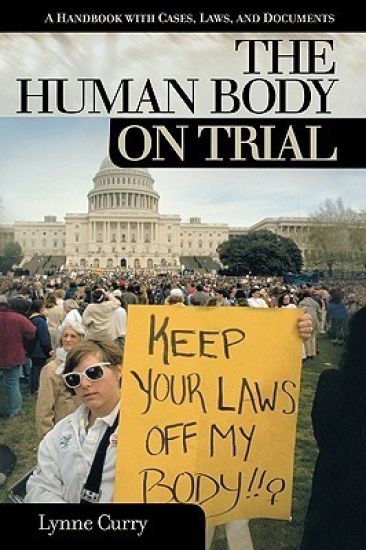
A thorough exploration of an individual's right to bodily autonomy versus the state's power to regulate and control the bodies of its citizens.The Human Body on Trial asks the basic question: Who's in charge of your body—you or the authorities? Four narrative chapters examine key constitutional questions addressed by the U.S. Supreme Court over the past century concerning the power of the state to regulate the human body, placing the issues in historical context and examining the contemporary legal and medical knowledge that informed each decision.The book focuses on individual cases, such as Jacobson v. Massachusetts (compulsory vaccination), Buck v. Bell (forced sterilization), and Roe v. Wade (abortion), and discusses such controversial issues as AIDS testing and physician-assisted suicide. A special reference section includes court decisions and other primary documents.Timeline of major events in the evolution of the legal right of individual autonomy from the ratification of the 14th Amendment in 1868 to the 2002 ruling in State of Oregon and Peter Rasmussen, et al. v. John Ashcroft regarding implementing Oregon's Death with Dignity ActExcerpts from key legal documents from the Roe v. Wade (1973) decision to the lesser known Skinner v. Oklahoma (1942) ruling by the Supreme Court overturning the mandated sterilization for three-time offenders convicted of certain felonies
Pure Beef

Pure Beef

Lynne Curry

Echo Point Books Media
2017
pokkari
With less total fat, more heart-healthy omega-3 fatty acids and more antioxidant vitamins than its grain-fed counterpart, it's no wonder grass-fed beef is leaping in sales.In Pure Beef, author Lynne Curry answers every home cook's most important questions about this leaner variety of meat, including how to choose, where to buy and how to prepare it. Featuring a cooking tutorial and an informative beef cut chart, this essential guide explains the difference between grass-fed and grain-fed meat and offers instructions for how to grill, roast, stew, simmer and sautE every cut of artisan beef to perfection. Chapters are organized by cooking methods and corresponding beef cuts, and feature 140 mouthwatering recipes for everyday favorites--from shepherd's pie to pot roast--as well as global cuisine, including Korean barbecue and Turkish kabobs. This cookbook also includes a full-color photo recipe insert and landscape images throughout.Curry is a former vegetarian who learned to love locally raised beef after moving to Oregon's remote Wallowa Valley in 2001. Her groundbreaking guide to artisan beef is a must-have for every meat eater who wants a sustainable ranch-to-table dining experience.
Managing for Accountability

Managing for Accountability

Lynne Curry

Business Expert Press
2021
pokkari
Managing for Accountability: A Business Leader's Toolbox contains everything business owners and managers need to hire, inspire, manage, and retain accountable, high performing, engaged employees who invest one hundred percent in their jobs. This practical guide offers field-tested tools, strategies, and proven tactics for locating, developing and managing motivated, engaged, committed employees focused on performance, productivity, and results.Curry details pragmatic strategies that succeed despite the pandemic and that work effectively with all employees, whether they're top talent, those who occasionally falter, or come from diverse backgrounds and generations. If you want to create a culture of accountability in your workplace and develop high-performing teams that lead your business to unparalleled levels of success, you will want this invaluable resource close at hand. This is must read for every leader, owner, or manager.
Navigating Conflict

Navigating Conflict

Lynne Curry

BUSINESS EXPERT PRESS
2022
pokkari
Navigating Conflict: Tools for Difficult Conversations is perfect for readers who want positive outcomes from personal, professional, and workplace challenges.From reading this powerful guidebook, you'll gain: A step-by-step roadmap for handling conflict and tough and touchy situationsStrategies for effectively handling yourself under fireTools for dealing with toxic individuals, personality conflicts, office politics, and problematic family situationsField-tested skills, strategies, tools. and tactics for every type of conflictAssessment inventories and action steps they can use to assess and perfect their skillsReaders will find engrossing real-life stories; skills, strategies, and tactics they can immediately use, and will walk away knowing exactly how to achieve the results they want regardless of the other person's skills or behavior.
Managing for Accountability

Managing for Accountability

Lynne Curry

BUSINESS EXPERT PRESS
2021
sidottu
Veteran management consultant and HR expert Dr. Lynne Curry provides business owners, leaders, and managers a complete roadmap for creating accountability in the workplace.Managing for Accountability: A Business Leader's Toolbox contains everything business owners and managers need to hire, inspire, manage, and retain accountable, high performing, engaged employees who invest one hundred percent in their jobs.This practical guide offers field-tested tools, strategies, and proven tactics for locating, developing and managing motivated, engaged, committed employees focused on performance, productivity, and results.
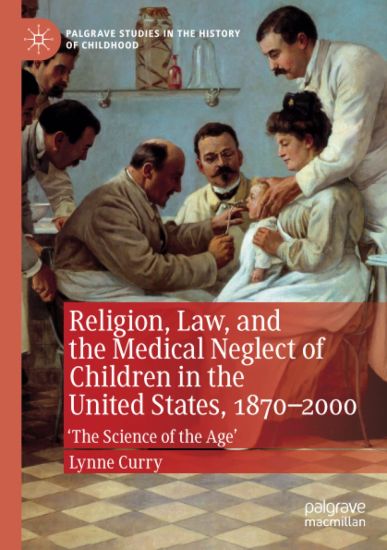
Religion, Law, and the Medical Neglect of Children in the United States, 1870–2000
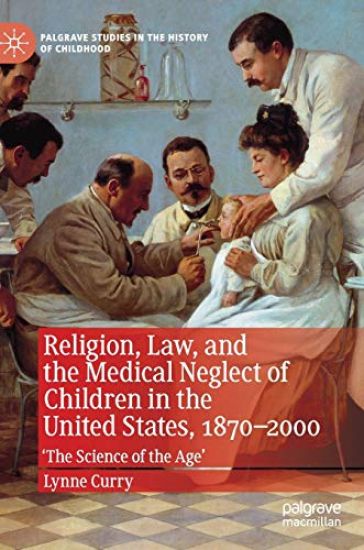
Drawing upon a diverse range of archival evidence, medical treatises, religious texts, public discourses, and legal documents, this book examines the rich historical context in which controversies surrounding the medical neglect of children erupted onto the American scene. It argues that several nineteenth-century developments collided to produce the first criminal prosecutions of parents who rejected medical attendance as a tenet of their religious faith. A view of children as distinct biological beings with particularized needs for physical care had engendered both the new medical practice field of pediatrics and a vigorous child welfare movement that forced legislatures and courts to reconsider public and private responsibility for ensuring children’s physical well-being. At the same time, a number of healing religions had emerged to challenge the growing authority of medical doctors and the appropriate role of the state in the realm of child welfare. The rapid proliferation of the new healing churches, and the mixed outcomes of parents’ criminal trials, reflected ongoing uneasiness about the increasing presence of science in American life.
Religion, Law, and the Medical Neglect of Children in the United States, 1870–2000
Drawing upon a diverse range of archival evidence, medical treatises, religious texts, public discourses, and legal documents, this book examines the rich historical context in which controversies surrounding the medical neglect of children erupted onto the American scene. It argues that several nineteenth-century developments collided to produce the first criminal prosecutions of parents who rejected medical attendance as a tenet of their religious faith. A view of children as distinct biological beings with particularized needs for physical care had engendered both the new medical practice field of pediatrics and a vigorous child welfare movement that forced legislatures and courts to reconsider public and private responsibility for ensuring children’s physical well-being. At the same time, a number of healing religions had emerged to challenge the growing authority of medical doctors and the appropriate role of the state in the realm of child welfare. The rapid proliferation of the new healing churches, and the mixed outcomes of parents’ criminal trials, reflected ongoing uneasiness about the increasing presence of science in American life.