Kirjojen hintavertailu. Mukana 11 627 220 kirjaa ja 12 kauppaa.

Kirjahaku

Etsi kirjoja tekijän nimen, kirjan nimen tai ISBN:n perusteella.

9 kirjaa tekijältä Lynne Huffer

Mad for Foucault

Mad for Foucault

Lynne Huffer

Columbia University Press
2009
sidottu
Michel Foucault was the first to embed the roots of human sexuality in discipline and biopolitics, therefore revolutionizing our conception of sex and its relationship to society, economics, and culture. Yet over the past two decades, scholars have limited themselves to the study of Foucault's History of Sexuality, volume 1 paying lesser attention to his equally explosive History of Madness. In this earlier volume, Foucault recasts Western rationalism as a project that both produces and represses sexual deviants, calling out the complicity of modern science and the exclusionary nature of family morality. By reclaiming these deft moves, Lynne Huffer teases out exciting new strands of Foucauldian thought. She then revisits the theorist's ethical work in light of these discoveries, divining an ethics of eros that sees sexuality as a lived experience we are repeatedly called on to remember. Throughout her study, Huffer weaves her own experiences together with Foucault's, sampling from unpublished interviews and other archived materials in order to intimately rework the problem of sexuality as a product of reason.
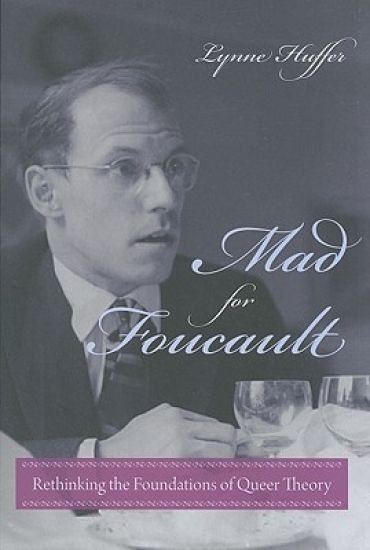
Mad for Foucault

Mad for Foucault

Lynne Huffer

Columbia University Press
2009
pokkari
Michel Foucault was the first to embed the roots of human sexuality in discipline and biopolitics, therefore revolutionizing our conception of sex and its relationship to society, economics, and culture. Yet over the past two decades, scholars have limited themselves to the study of Foucault's History of Sexuality, volume 1 paying lesser attention to his equally explosive History of Madness. In this earlier volume, Foucault recasts Western rationalism as a project that both produces and represses sexual deviants, calling out the complicity of modern science and the exclusionary nature of family morality. By reclaiming these deft moves, Lynne Huffer teases out exciting new strands of Foucauldian thought. She then revisits the theorist's ethical work in light of these discoveries, divining an ethics of eros that sees sexuality as a lived experience we are repeatedly called on to remember. Throughout her study, Huffer weaves her own experiences together with Foucault's, sampling from unpublished interviews and other archived materials in order to intimately rework the problem of sexuality as a product of reason.
Are the Lips a Grave?

Are the Lips a Grave?

Lynne Huffer

Columbia University Press
2013
sidottu
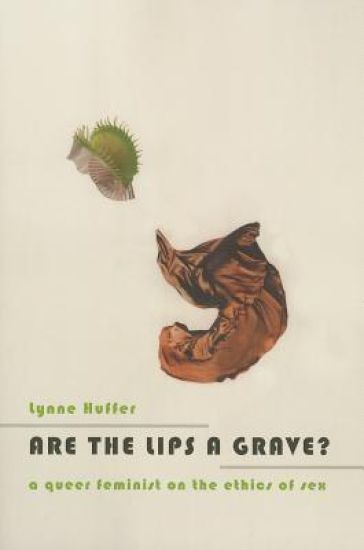
Lynne Huffer's ambitious inquiry redresses the rift between feminist and queer theory, traversing the space of a new, post-moral sexual ethics that includes pleasure, desire, connection, and betrayal. She begins by balancing queer theorists' politics of sexual freedoms with a moralizing feminist politics that views sexuality as harm. Drawing on the best insights from both traditions, she builds an ethics centered on eros, following Michel Foucault's ethics as a practice of freedom and Luce Irigaray's lyrical articulation of an ethics of sexual difference. Through this theoretical lens, Huffer examines everyday experiences of ethical connection and failure connected to sex, including queer sexual practices, sodomy laws, interracial love, pornography, and work-life balance. Her approach complicates sexual identities while challenging the epistemological foundations of subjectivity. She rethinks ethics "beyond good and evil" without underestimating, as some queer theorists have done, the persistence of what Foucault calls the "catastrophe" of morality. Elaborating a thinking-feeling ethics of the other, Huffer encourages contemporary intellectuals to reshape sexual morality from within, defining an ethical space that is both poetically suggestive and politically relevant, both conceptually daring and grounded in common sexual experience.
Are the Lips a Grave?

Are the Lips a Grave?

Lynne Huffer

Columbia University Press
2013
pokkari
Lynne Huffer's ambitious inquiry redresses the rift between feminist and queer theory, traversing the space of a new, post-moral sexual ethics that includes pleasure, desire, connection, and betrayal. She begins by balancing queer theorists' politics of sexual freedoms with a moralizing feminist politics that views sexuality as harm. Drawing on the best insights from both traditions, she builds an ethics centered on eros, following Michel Foucault's ethics as a practice of freedom and Luce Irigaray's lyrical articulation of an ethics of sexual difference. Through this theoretical lens, Huffer examines everyday experiences of ethical connection and failure connected to sex, including queer sexual practices, sodomy laws, interracial love, pornography, and work-life balance. Her approach complicates sexual identities while challenging the epistemological foundations of subjectivity. She rethinks ethics "beyond good and evil" without underestimating, as some queer theorists have done, the persistence of what Foucault calls the "catastrophe" of morality. Elaborating a thinking-feeling ethics of the other, Huffer encourages contemporary intellectuals to reshape sexual morality from within, defining an ethical space that is both poetically suggestive and politically relevant, both conceptually daring and grounded in common sexual experience.
Foucault's Strange Eros

Foucault's Strange Eros

Lynne Huffer

Columbia University Press
2020
sidottu
What is the strange eros that haunts Foucault’s writing? In this deeply original consideration of Foucault’s erotic ethics, Lynne Huffer provocatively rewrites Foucault as a Sapphic poet. She uncovers eros as a mode of thought that erodes the interiority of the thinking subject. Focusing on the ethical implications of this mode of thought, Huffer shows how Foucault’s poetic archival method offers a way to counter the disciplining of speech.At the heart of this method is a conception of the archive as Sapphic: the past’s remains are, like Sappho’s verses, hole-ridden, scattered, and dissolved by time. Listening for eros across fragmented texts, Huffer stages a series of encounters within an archive of literary and theoretical readings: the eroticization of violence in works by Freud and Eve Kosofsky Sedgwick, the historicity of madness in the Foucault-Derrida debate, the afterlives of Foucault’s antiprison activism, and Monique Wittig’s Sapphic materialism. Through these encounters, Foucault’s Strange Eros conceives of ethics as experiments in living that work poetically to make the present strange. Crafting fragments that dissolve into Sapphic brackets, Huffer performs the ethics she describes in her own practice of experimental writing. Foucault’s Strange Eros hints at the self-hollowing speech of an eros that opens a space for the strange.
Foucault's Strange Eros

Foucault's Strange Eros

Lynne Huffer

Columbia University Press
2020
pokkari
What is the strange eros that haunts Foucault’s writing? In this deeply original consideration of Foucault’s erotic ethics, Lynne Huffer provocatively rewrites Foucault as a Sapphic poet. She uncovers eros as a mode of thought that erodes the interiority of the thinking subject. Focusing on the ethical implications of this mode of thought, Huffer shows how Foucault’s poetic archival method offers a way to counter the disciplining of speech.At the heart of this method is a conception of the archive as Sapphic: the past’s remains are, like Sappho’s verses, hole-ridden, scattered, and dissolved by time. Listening for eros across fragmented texts, Huffer stages a series of encounters within an archive of literary and theoretical readings: the eroticization of violence in works by Freud and Eve Kosofsky Sedgwick, the historicity of madness in the Foucault-Derrida debate, the afterlives of Foucault’s antiprison activism, and Monique Wittig’s Sapphic materialism. Through these encounters, Foucault’s Strange Eros conceives of ethics as experiments in living that work poetically to make the present strange. Crafting fragments that dissolve into Sapphic brackets, Huffer performs the ethics she describes in her own practice of experimental writing. Foucault’s Strange Eros hints at the self-hollowing speech of an eros that opens a space for the strange.
Maternal Pasts, Feminist Futures

Maternal Pasts, Feminist Futures

Lynne Huffer

Stanford University Press
1998
sidottu
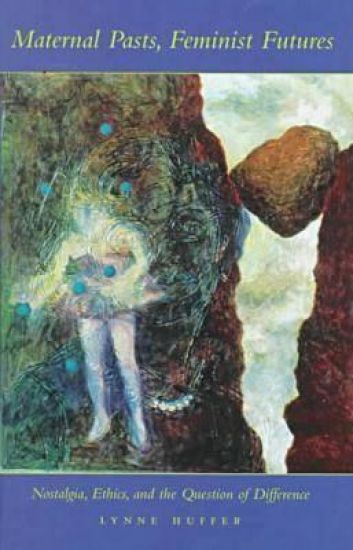
This book examines the relations among nostalgia, gender, and foundational philosophies through a critique of the lost mother as a ground for thinking about sexual difference. More specifically, the author critiques the nostalgic tendencies of feminist theory, arguing that an emancipatory system of thought must move beyond a maternally oriented structure. Through close readings of works by Maurice Blanchot, Luce Irigaray, Julia Kristeva, and Nicole Brossard, the book elucidates the many dimensions of nostalgic paradigms—literary, psychoanalytic, epistemological, ontological, and sociopolitical. This critique ultimately confronts postmodernism, and especially the burgeoning field of performative theory, as an intellectual paradigm that claims to subvert systems of meaning. Analyzing the writings of J. L. Austin, Judith Butler, and Irigaray, the author argues that despite its antinostalgic structure, performative theory provides an inadequate model for understanding the connections among language, identity, and the social bonds that constitute the ethical and political sphere. Asserting, through the example of performative theory, that a critique is not enough, the book examines the possibility of a constructive model that is both non-nostalgic and informed by ethical constraints. One such model is offered through a reading of the Quebecois writer Nicole Brossard, which explores her work in relation to the question of lesbian writing. Demystifying nostalgia, Brossard not only uncovers and subverts the structures through which a concept of origins is produced, but also provides a different, visionary way of thinking about the relationship between subjectivity and language. Finally, the book argues for further feminist work on the relationship between narrative and ethics, a field whose future lies in the elaboration of a bridge between the moral commitments of ethical theory and the fractured realities that find their expression in literary forms.
These Survivals

These Survivals

Lynne Huffer

DUKE UNIVERSITY PRESS
2025
sidottu
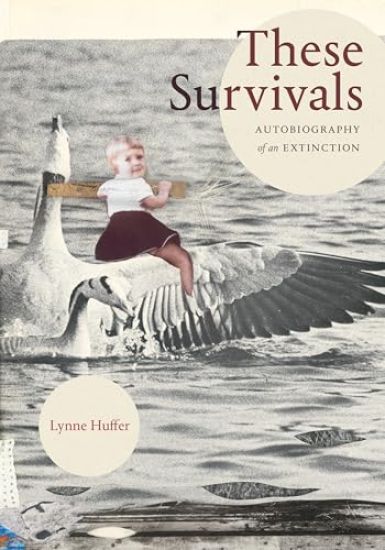
A collage-style work in fragments, Lynne Huffer’s These Survivals brings together philosophy, memoir, poetry, and original multimedia artworks to articulate an ethics of living on a devastated planet. Focusing on climate change and mass species extinction, Huffer approaches ruination through assemblages rendered in sharp-edged prose, vibrant color images, and experimental features that include black-out poems, weather reports, and abecedarian essays. She considers her struggles with everyday life and confronts the immensity of extinction across the expanse of geological time, recognizing the self’s insignificance in the context of the planet’s 4.5-billion-year existence. As she moves across autobiographical, political, and literary registers, her abiding theme is the repeated phrase: the fragment remains while the whole crumbles. At every turn, Huffer insists on the fragmentary, provisional nature of anything taken to be whole as well as the impartial conditions under which we write, at times experienced as constraint and at others, freedom. Reveling in interruption, obliquity, and layering, Huffer opens space for thought to emerge in unexpected and innovative ways-ways that are grounded in the material practices of writing and living.
These Survivals

These Survivals

Lynne Huffer

DUKE UNIVERSITY PRESS
2025
pokkari
A collage-style work in fragments, Lynne Huffer’s These Survivals brings together philosophy, memoir, poetry, and original multimedia artworks to articulate an ethics of living on a devastated planet. Focusing on climate change and mass species extinction, Huffer approaches ruination through assemblages rendered in sharp-edged prose, vibrant color images, and experimental features that include black-out poems, weather reports, and abecedarian essays. She considers her struggles with everyday life and confronts the immensity of extinction across the expanse of geological time, recognizing the self’s insignificance in the context of the planet’s 4.5-billion-year existence. As she moves across autobiographical, political, and literary registers, her abiding theme is the repeated phrase: the fragment remains while the whole crumbles. At every turn, Huffer insists on the fragmentary, provisional nature of anything taken to be whole as well as the impartial conditions under which we write, at times experienced as constraint and at others, freedom. Reveling in interruption, obliquity, and layering, Huffer opens space for thought to emerge in unexpected and innovative ways-ways that are grounded in the material practices of writing and living.