Kirjojen hintavertailu. Mukana 11 244 527 kirjaa ja 12 kauppaa.

Kirjahaku

Etsi kirjoja tekijän nimen, kirjan nimen tai ISBN:n perusteella.

23 kirjaa tekijältä M J Trow

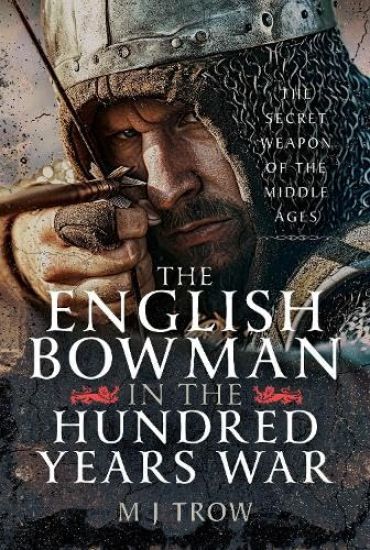
The English Bowman in the Hundred Years War
They were often half-starved, marching through an alien land with few signposts and no maps. They were often suffering from dysentery, their legwear rolled down and they sometimes fought naked from the waist down. They were paid 6d a day – the same as a civilian craftsman – and they swore like the troopers they were. That was why the French called them the Goddamns and king and peasant alike were terrified of them. With their yew wood bows and ash arrows a clothyard long, they were the victors in countless clashes during the Hundred Years War and in the three great battles of Crecy, Poitiers and Agincourt. They robbed, pillaged, raped and murdered, often in their king’s name. Yet they won battles and it is no exaggeration to say that England became a powerful nation state because of them. If they were caught in action by the enemy, they would have their bow fingers cut off and their throats slit. We know the names of very few of them. They were not worthy of ransom, unlike the knights they fought for. Most of them ended up in mass burial pits or some unmarked plot beside a French road. The vast majority was illiterate, so we have no firsthand accounts of their campaigns from the bowmen themselves. For all they won battles and renown, for all they helped indirectly to increase the power of the common man, they are like ghosts drifting over the battlefield. They were the bowmen.
The Thames Torso Murders

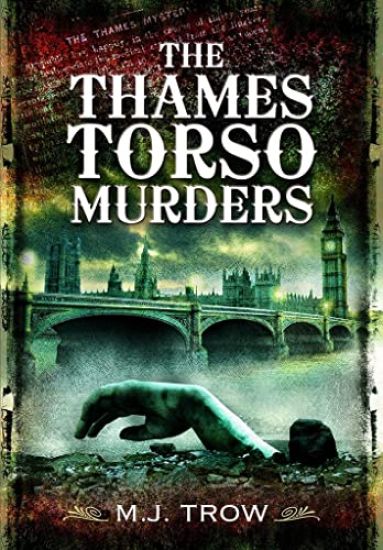
The Thames Torso Murders

M J Trow

Pen Sword Books Ltd
2021
nidottu
Dismembered corpses are discovered scattered along the banks of the river Thames, a calculating clinical multiple murderer is on the loose, and the London police have no inkling of the killers identity and, more than a century later, they still don't. In this, M.J. Trows latest re-investigation of a bizarre and brutal serial killing, he delves deep into the appalling facts of the case, into the futile police investigations, and into the dark history of late Victorian London. The incredible criminal career of the Thames torso murderer has gripped readers and historians ever since he committed his crimes in the 1870's and 1880's. The case poses as many questions as the even more notorious killings of Jack the Ripper. How, over a period of fifteen years, did the Thames murderer get away with a succession of monstrous and sensational misdeeds? And what sort of perverted character was he, why did he take such risks, why did he kill again and again?
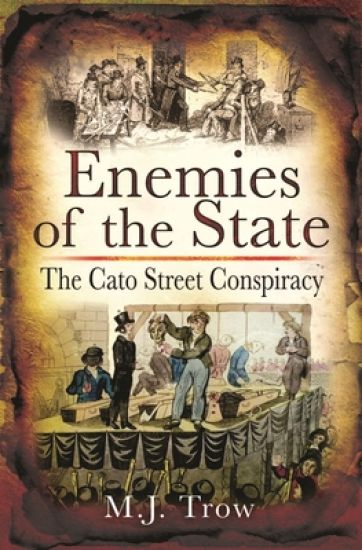
Enemies of the State

Enemies of the State

M J Trow

PEN SWORD BOOKS LTD
2021
nidottu
On 1 May 1820, outside Newgate Prison, in front of a dense crowd, five of the Cato Street conspirators - Arthur Thistlewood, William Davidson, James Ings, Richard Tidd and John Brunt - were hanged for high treason. Then they were decapitated in the last brutal act of a murderous conspiracy that aimed to assassinate Prime Minister Lord Liverpool and his cabinet and destroy his government. The Cato Street conspirators matched the Gunpowder plotters in their daring - and in their fate - but their dark, radical intrigue hasnt received the attention it deserves. M.J. Trow, in this gripping fast-moving account of this notorious but neglected episode in British history, reconstructs the case in vivid detail and sets it in the wider context of the French Revolution and the Napoleonic Wars.
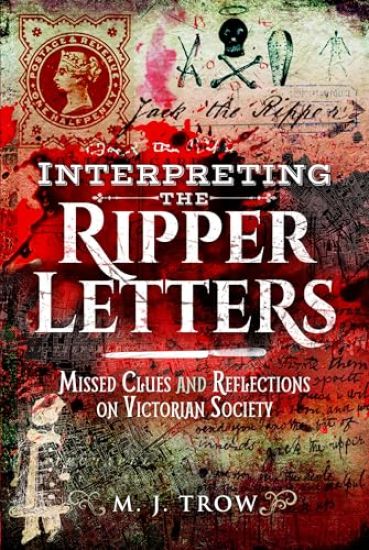
Interpreting the Ripper Letters

Interpreting the Ripper Letters

M J Trow

PEN SWORD BOOKS LTD
2024
nidottu
In the autumn of 1888, a series of grisly murders took place in Whitechapel in London’s East End, the Abyss, the Ghetto, the City of Eternal Night. The Whitechapel murderer, arguably the first of his kind, was never caught but the killings gave rise to the best known pen-name in criminal history – Jack the Ripper. The Whitechapel killer was terrifyingly real but Jack was the creation of Fleet Street, the gallows humour of a newspaper hack whose sole aim in life was to sell newspapers. And where the ‘Dear Boss’ letter, with its ‘trade name’ signature led, thousands followed. This book is not about the world’s first serial killer but about the sick, the perverted, the twisted souls who put pen to paper purporting to be the killer or suggested ever more lurid ways in which he could be caught. Innocent men were put in the frame by Victorian trouble-makers who would be perfectly at home with today’s Internet trolls, pointing cruel fingers in almost perfect anonymity. The book takes the lid off Victorian mindsets, exposing a dark and unnatural place as topsy-turvy as that inhabited by the killer himself.
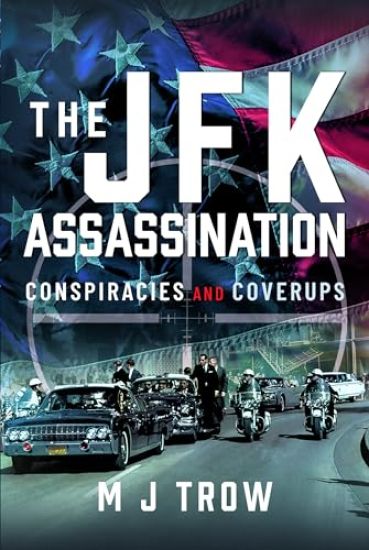
The JFK Assassination

The JFK Assassination

M J Trow

PEN SWORD BOOKS LTD
2024
sidottu
The assassination of John Fitzgerald Kennedy is one of the milestones of history. Everyone, it is said, remembers where they were when they heard the news. Because the official investigation, the Warren Commission, set up by Kennedy’s successor in the White House, Lyndon Johnson, was such a whitewashing travesty of justice, the world has felt itself free to speculate ever more wildly about what really happened in Dealey Plaza, Dallas, in November 1963. The killer, said the Warren Commission, was the peculiar loner, Lee Harvey Oswald, and he acted alone. Evidence, science and common sense have long ago proved that this was not possible. So it was the Russians. It was the Cubans. It was the Mafia. It was Lyndon Johnson. It was the Secret Service. It was the FBI. It was the CIA. It was that murky conspiratorial bunch, the Military-Industrial Complex. This book evaluates all the above and comes to another conclusion entirely. The reason that we are still arguing about who was responsible for a murder committed in front of a large crowd in broad daylight is that no one was prepared to put up their hands and admit their responsibility for not doing their jobs properly. Yes, there was a conspiracy, but the ‘cock-up’ element was even greater. Why was there inadequate Secret Service protection for the president in Dallas? Why was the motorcade route made public well in advance? Why was Lee Oswald identified on the word of a single witness? Why was Jack Ruby allowed to slip past dozens of policemen to kill Oswald? Why were the lawyers of the Warren Commission allowed to select witnesses and bully them into saying what they had not seen? Why did subsequent governmental enquiries fudge the physics of a headshot and a bungled autopsy? Why does the American mainstream media still cling to the lone gunman, single bullet theory? The answer is simple. Everybody in 1963 and for many years afterwards were far too concerned about covering their own backs. Truth and justice got lost somewhere in all of that.
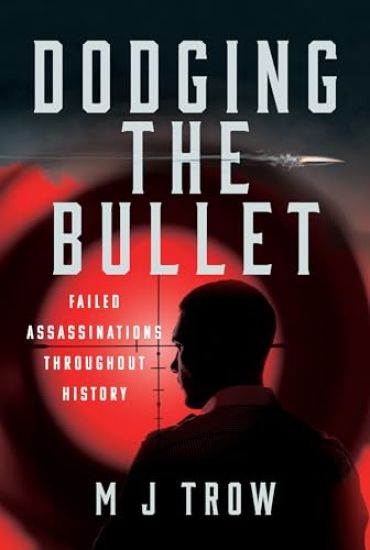
Dodging the Bullet

Dodging the Bullet

M J Trow

PEN SWORD BOOKS LTD
2024
sidottu
Everybody remembers where they were the day John F. Kennedy died. The president’s assassination shocked the world and raised questions that have still not been answered today. Almost as shocking is attempted assassination – the bullet that missed; the bomb that did not go off; the poison that did not work. _Dodging the Bullet_ looks at the most spectacular of these, from attempts on royals like George II and Queen Victoria, where dysfunctional men with unreliable guns lurked in the shrubbery of parks to the astonishing 634 attempts to kill and/or discredit Fidel Castro. Anybody in the public eye is a potential victim for an assassin. Anybody with access to the most easily obtained weapons is a potential killer. The fascination lies in the mix of these two – the random meeting of the famous and the deranged. _Dodging the Bullet_ has professional hitmen working for sinister organizations and governments. It has security services who are nothing of the sort. It has arrogant and complacent rulers of states who believe in their own immortality – ‘Honey, I forgot to duck,’ as President Ronald Reagan said. Why the bullet missed is one of the imponderables. Another is; what difference would it have made if it had not?
Failed Justice

Failed Justice

M J Trow

PEN SWORD BOOKS LTD
2025
sidottu
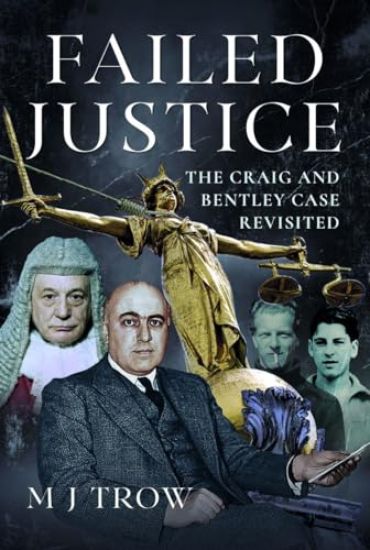
On 2 November 1952, two teenagers, Derek Bentley and Christopher Craig, tried to break into a warehouse in Croydon, Surrey. The police were called and in the minutes that followed, Craig wounded one policeman and shot another dead. At 16, Craig was too young to hang, but Bentley, at 19, was not. Even though he had not fired a shot or carried a gun and was under arrest at the time PC Sidney Miles died, Bentley was deemed to be guilty of murder. The law – of joint felonious enterprise – was unjust and Bentley had an IQ of 66 (the national average is 100). Even so, he was hanged at Wandsworth in February 1953. Nearly forty years later, PC Claude Pain, who was there at the time of the shooting, told a different story. He was on the warehouse rooftop and saw the whole thing. What really hanged Bentley were the words he allegedly used, ‘Let him have it, Chris’. And Pain did not hear those words. M.J. Trow's Let Him Have It, Chris, published in 1990, was based on Pain’s new evidence. Eight years later, the conviction against Bentley was overturned – not as a result of police corruption, but because of the appallingly partial performance of the trial judge, Lord Goddard. At the time, access to any material relating to the case was denied and only now, with the Freedom of Information Act, can Pain’s testimony be refuted. He was not on the roof. His original deposition is still in The National Archive. This book aims to put the record straight. There was indeed a dreadful miscarriage of justice in 1952 – one of many before and since – and, in a way, Claude Pain was part of it.
The Wigwam Murder

The Wigwam Murder

M J Trow

PEN SWORD BOOKS LTD
2023
sidottu
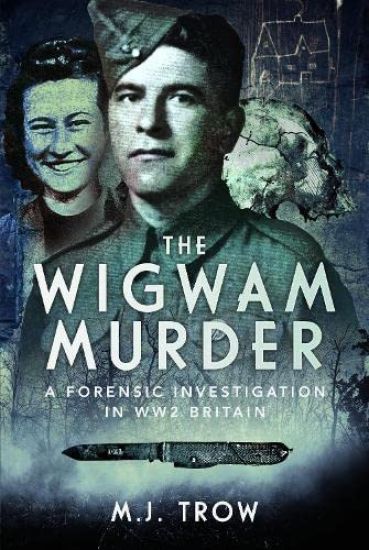
Nobody expected a corpse in the tranquil Surrey countryside near Godalming, even though there was a war on and tanks churned the soil on manoeuvres. The body belonged to 19-year-old Joan Pearl Wolfe, a sweet, convent-educated girl who, according to her own mother, had gone bad. It was 1942 and England was swarming with British, Canadian and American troops building up to what would become D-Day two years later. The Surrey police, over-stretched as all forces were during the war, called in Scotland Yard, the experts, in the form of Superintendent Ted Greeno, one of the most famous and formidable detectives of his day. One of the Surrey detectives recognized the dead girl's dress - he had seen it on its owner weeks earlier and from that the body's identity came to light. Joan was a camp follower with a string of men interested in her, but her latest beau was the M tis Canadian August Sangret. He had slipped out to live with Joan in woods near to the camp and had built shacks - wigwams - as temporary homes. Charged with her murder, he gave the longest statement ever made to the police - seventeen pages of it - and Keith Simpson, the Home Office pathologist, became the first to produce a human skull in court. The distinctive wounds inflicted by Sangret's knife convinced the jury of his guilt and he was hanged by Albert Pierrepoint in Wandsworth gaol. An open and shut case? Far from it. For all the brilliance of forensic science and the dogged work of the police, the jury should still be out on August Sangret. As the judge said in his summing up, there is no blood on this man'.
The Hagley Wood Murder

The Hagley Wood Murder

M J Trow

PEN SWORD BOOKS LTD
2023
sidottu
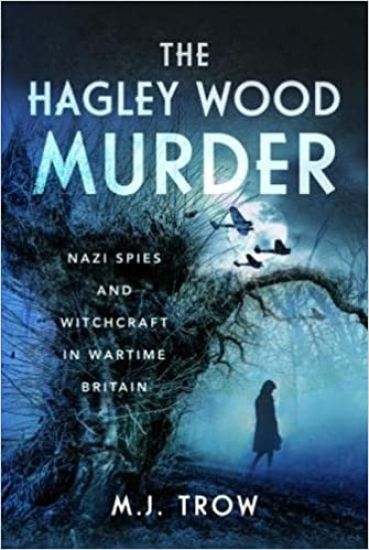
Astonishingly, The Hagley Wood Murder is the first book solely on the subject (other than a selection of privately printed/self published offerings) ever written on this murder, which too place eighty years ago. In April 1943, four teenaged boys discovered a corpse stuffed into the bole of a wych elm in a wood in the industrial Midlands. The body was merely bones and had been in the tree for up to two years. The pathologist determined that she was female, probably in her thirties, had given birth and was just under five feet tall. The cause of death was probably suffocation. Six months after the discovery, mysterious messages began to appear on walls in the area, variants of Who Put Bella Down the Wych Elm - Hagley Wood'. And the name Bella has stuck ever since. Local newspapers, then the national press, took up the story and ran with it, but not until 1968 was there a book on the case - Donald McCormick's Murder by Witchcraft - and that, like others that followed, tied Bella in with another supposedly occult murder, that of Charles Walton on Meon Hill in 1945. Any unsolved murder brings out the oddballs - the police files, only recently released, are full of them - and the nonsense still continues. The online versions are woeful - inaccuracy piled on supposition, laced with fiction. It did not help that a professional occultist, Dr Margaret Murray, expressed her belief, as early as 1953, that witchcraft was involved in Bella's murder. And ill-informed nonsense has been cobbled together to prove' that Dr Murray was right. McCormick's own involvement was in espionage and his book, slavishly copied by later privately printed efforts, have followed this tack too. It was wartime, so the anonymous woman in the wych elm had to be a spy, parachuted in by the Abwehr, the Nazi secret service. The Hagley Wood Murder is the first book to unravel the fiction of McCormick and others. It names Bella and her probable murderer. And if the conclusion is less over-the-top than the fabrications referred to above, it is still an intriguing tale of the world's oldest profession and the world's oldest crime!
History vs Hollywood

History vs Hollywood

M J Trow

PEN SWORD BOOKS LTD
2024
sidottu
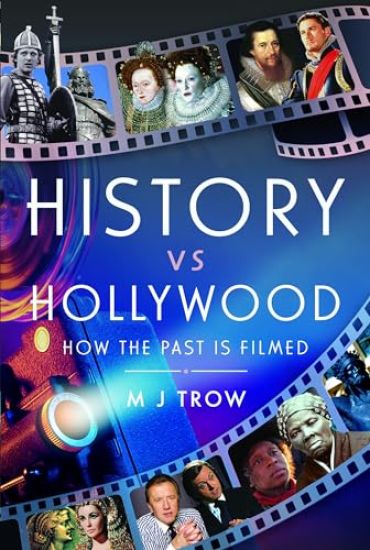
Film studios have been making historical movies now for over a century. In that time, thousands of films have been made covering not just centuries but millennia. Did Neanderthal woman really look like Raquel Welch in her bearskin bikini? Did 6,000 rebellious slaves claim that they were Spartacus? Did Berengaria complain to her husband, Richard the Lionheart, ‘War, war; that’s all you think about, Dick Plantagenet’? Was El Cid strapped to his horse’s saddle to lead his army after he was dead? These aren’t questions of history; they are questions of Hollywood. Charlton Heston was a foot too tall for General Charles Gordon. John Wayne was a tad too American for Genghis Khan. Eric von Stroheim’s bald head was an odd choice for the perfectly hirsute Erwin Rommel. And Warren Beatty and Fay Dunaway were far too gorgeous for bank robbers Bonnie and Clyde. Hollywood never gets it right. History and its characters are endlessly complicated, and producers, directors and screenwriters have a simple story to tell. They have a maximum of two hours to explain what happened over weeks or months or years and many of it give it their best shot. Yet for all Hollywood’s shortcomings in recreating the past, it has managed to evoke eras and people long dead in a magical way that has kept millions of us enthralled for generations.
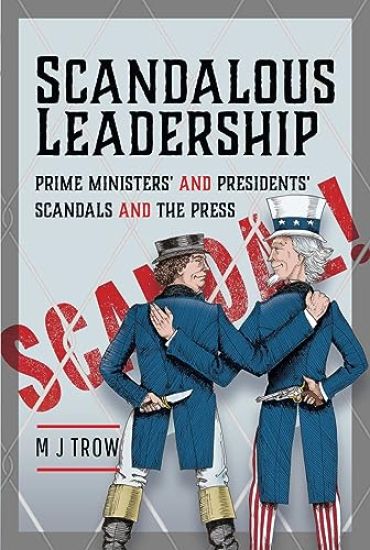
Scandalous Leadership

Scandalous Leadership

M J Trow

PEN SWORD BOOKS LTD
2023
sidottu
Before Britain had a prime minister – and before they invented America – the dictator Oliver Cromwell urged the artist Lely to paint him ‘warts and all’. This book deals with some of the ‘all’, but is mostly about the warts, the moral blemishes that have dogged the leaders of two of the greatest countries on earth for 300 years. Scandalously, there are still no qualifications necessary for the job of prime minister or president, two of the most important positions in the world. And that lack of ability shows itself in spades throughout these pages. Robert Walpole knew that ‘every man has his price’ and bought people accordingly. Viscount Goderich broke down in tears, begging the king to fire him. George Washington, the revered saint of American creation, blew with the wind and owned slaves. Abraham Lincoln was prepared to send African Americans back to Africa to save the Union. William Gladstone popped out from Downing street to ‘save’ prostitutes. David Lloyd George gave people titles for money. Warren Harding had a string of mistresses, as did John Kennedy. And all this happened before Donald Trump! Thank God the fourth estate was there, the free press watching every move of politicians. Who was watching them, of course, is another story. If you thought – and prayed – that the occupants of No. 10 and the White House were honourable, competent people, you’re in for a bit of a shock.
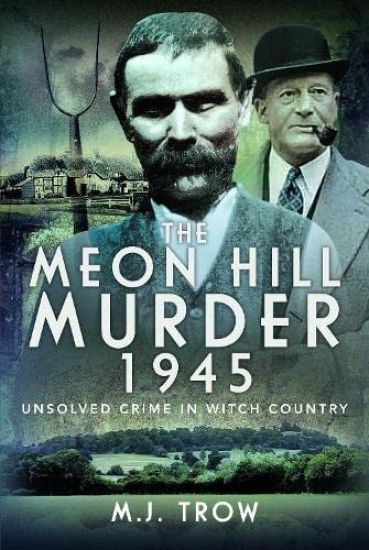
The Meon Hill Murder, 1945

The Meon Hill Murder, 1945

M J Trow

PEN SWORD BOOKS LTD
2023
sidottu
In the closing months of the Second World War, an old hedger was found bludgeoned and hacked to death in a Warwickshire field. His name was Charles Walton and the place was the little village of Lower Quinton, under the shadow of Meon Hill. They called in the local CID; they called in Scotland Yard; they interviewed hundreds of people; they asked thousands of questions. But somebody wasn't talking. The whole village was silent, as if someone had drawn down a blind. After the case was scaled down, the rumours remained. Was Meon Hill the centre of a witches' coven? And was old Charlie Walton, with his ability to talk to birds and toads and his magic watch, a witch himself? For eighty years, the supernatural has hovered over the murder of Charles Walton, with vague, haunted memories of secret rites and black dogs. Even the dead man's grave has vanished. Rumour has been piled on innuendo, adding to the excesses of writers determined to make a supernatural mystery out of a very local tragedy, until the dead man himself has disappeared into a morass of hocus pocus. This is the first book to get past the nonsense, accessing original police files that say precisely nothing about witchcraft. Analysing the facts from the time and removing the ever-more ludicrous layers of fiction, it gets as near to solving the mystery as we are ever likely to.
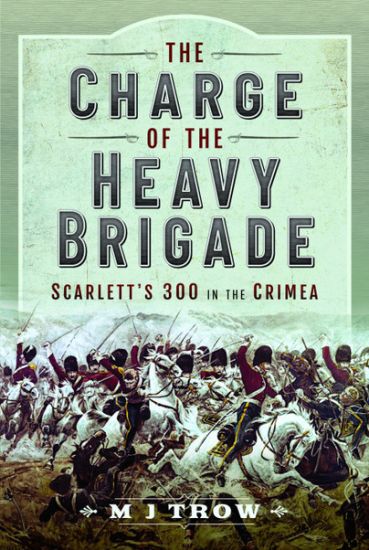
The Charge of the Heavy Brigade

The Charge of the Heavy Brigade

M J Trow

PEN SWORD BOOKS LTD
2021
sidottu
Glory to each and to all, and the charge that they made! Glory to all three hundred, and all the Brigade!' Everyone has heard of the charge of the Light Brigade, a suicidal cavalry attack caused by confused orders which somehow sums up the Crimean War (1854-6). Far less well known is what happened an hour earlier, when General Scarlett's Heavy Brigade charged a Russian army at least three times its size. That fight of heroes', to use the phrase of William Russell, the world's first war correspondent, was a brilliant success, whereas the Light Brigade's action resulted in huge casualties and achieved nothing. This is the first book by a military historian to study the men of the Heavy Brigade, from James Scarlett, who led it, to the enlisted men who had joined for the queen's shilling' and a new life away from the hard grind of Victorian poverty. It charts the perils of travelling by sea, in cramped conditions with horses panicking in rough seas. It tells the story, through the men who were there, of the charge itself, where it was every man for himself and survival was down to the random luck of shot and shell. It looks, too, at the women of the Crimea, the wives who accompanied their menfolk. Best known were Florence Nightingale, the lady with the lamp' and Mary Seacole, the Creole woman who was doctress and mother' to the men. But there were others, like Fanny Duberly who wrote a graphic journal and Mrs Rogers, who dutifully cooked and cleaned for the men of her husband's regiment, the 4th Dragoon Guards.
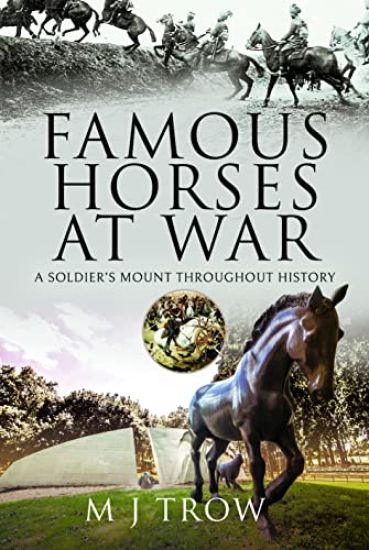
Famous Horses at War

Famous Horses at War

M J Trow

PEN SWORD BOOKS LTD
2022
sidottu
'In dreary, doubtful waiting hours Before the brazen frenzy starts, The horses show him nobler powers;- O patient eyes, courageous hearts.' Into Battle, Julian Grenfell, 1915 In the days of horsed cavalry, a soldier's mount was a living, breathing companion. It galloped into the jaws of death at the sound of the bugle and the nudge of spurs. It carried its rider over arid deserts, across swollen rivers, up near-sheer mountains. Whole societies functioned because of the warhorse - the Huns, the Mongols, and the tribes of the North American plains. Horses were worshipped as gods - the centaurs of ancient Greece, Tziminchak of the Aztecs, while the Roman emperor Caligula intended to make his horse a consul! Most of us have only ever seen warhorses at the movies - the Scots Greys at Waterloo, the Light Brigade at Balaclava, Taras Bulba's Cossacks on the Steppes and Custer's cavalry at the Little Big Horn. This book celebrates the colour and nostalgia of a fighting past, from eohippus the first horse to Sefton, the last warhorse injured in the line of duty. Not forgetting the stark reality of thousands of animals sacrificed for men's greed and ambition, those killed on campaign, the maimed cab-horses and fodder for the knacker's yard.
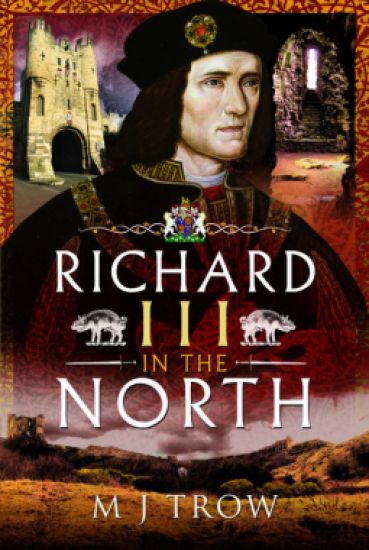
Richard III in the North

Richard III in the North

M J Trow

Pen Sword History
2020
sidottu
Richard III is England's most controversial king. Forever associated with the murder of his nephews, the Princes in the Tower, he divides the nation. As spectacular as his death at Bosworth in August 1485 - the last king of England to die in battle - the astonishing discovery of his bones under a Leicester car park five centuries later renewed interest in him and re-opened old debates. Is he the world's most wicked uncle; or is he (in the words of the man who most smeared him) 'a prince more sinned against than sinning'? Richard was not born in the North; neither did he die there, but this detailed look at his life, tracing his steps over the thirty-three years that he lived, focuses on the area that he loved and made his own. As Lord of the North, he had castles at Middleham and Sheriff Hutton, Penrith and Sandal. He fought the Scots along the northern border and on their own territory. His son was born at Middleham and was invested as Prince of Wales at York Minster, where Richard planned to set up a college of 100 priests. His white boar device can be found in obscure corners of churches and castles; his laws, framed in the single parliament of his short reign, gave rights to the people who served him and loved him north of the Trent. And when he felt threatened or outnumbered by his enemies during the turbulent years of the Wars of the Roses, it was to the men of the North that he turned for support and advice. They became his knights of the body; members of the Council of the North which outlived Richard by a 150 years. They died with him at Bosworth. Although we cannot divorce Richard from the violent politics of the day or from events that happened far to the South, it was in the North that Richard's heart lay. The North was his home. It was the place he loved.
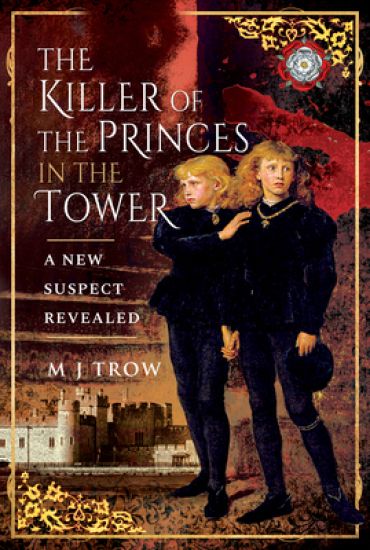
The Killer of the Princes in the Tower

The Killer of the Princes in the Tower

M J Trow

Pen Sword History
2021
sidottu
The disappearance of two boys during the summer of 1483 has never been satisfactorily explained. They were Edward, Prince of Wales, nearly thirteen at the time, and his brother, Richard of York, nearly ten. With their father, Edward IV, dying suddenly at forty, both boys had been catapulted into the spotlight of fifteenth-century politics, which was at once bloody and unpredictable. Thanks to the work of the hack 'historians' who wrote for Henry VII, the first Tudor, generations grew up believing that the boys were murdered and that the guilty party was their wicked uncle, Richard, Duke of Gloucester. Richard crowned himself King of England in July 1483, at which time the boys were effectively prisoners in the Tower of London. After that, there was no further sign of them. Over the past 500 years, three men in particular have been accused of the boys' murders - Richard of Gloucester; Henry Tudor, Earl of Richmond; and Henry Stafford, Duke of Buckingham. The evidence against them would not stand up in a court of law today, but the court of history is much less demanding and most fingers remain pointed squarely at Richard of Gloucester. This book takes a different approach, the first to follow this particular line of enquiry. It is written as a police procedural, weighing up the historical evidence without being shackled to a particular 'camp'. The supposition has always been made that the boys were murdered for political reasons. But what if that is incorrect? What if they died for other reasons entirely? What if their killer had nothing to gain politically from their deaths at all? And, even more fascinatingly, what if the princes in the Tower were not the only victims?
Richard III in the North

Richard III in the North

M J Trow

PEN SWORD BOOKS LTD
2026
nidottu
Richard III is England’s most controversial king. Forever associated with the murder of his nephews, the Princes in the Tower, he divides the nation. As spectacular as his death at Bosworth in August 1485 – the last king of England to die in battle – the astonishing discovery of his bones under a Leicester car park five centuries later renewed interest in him and re-opened old debates. Is he the world’s most wicked uncle; or is he (in the words of the man who most smeared him) ‘a prince more sinned against than sinning’? Richard was not born in the North; neither did he die there, but this detailed look at his life, tracing his steps over the thirty-three years that he lived, focuses on the area that he loved and made his own. As Lord of the North, he had castles at Middleham and Sheriff Hutton, Penrith and Sandal. He fought the Scots along the northern border and on their own territory. His son was born at Middleham and was invested as Prince of Wales at York Minster, where Richard planned to set up a college of 100 priests. His white boar device can be found in obscure corners of churches and castles; his laws, framed in the single parliament of his short reign, gave rights to the people who served him and loved him north of the Trent. And when he felt threatened or outnumbered by his enemies during the turbulent years of the Wars of the Roses, it was to the men of the North that he turned for support and advice. They became his knights of the body; members of the Council of the North which outlived Richard by a 150 years. They died with him at Bosworth. Although we cannot divorce Richard from the violent politics of the day or from events that happened far to the South, it was in the North that Richard’s heart lay. The North was his home. It was the place he loved.
The Killer of the Princes in the Tower

The Killer of the Princes in the Tower

M J Trow

PEN SWORD BOOKS LTD
2023
nidottu
The disappearance of two boys during the summer of 1483 has never been satisfactorily explained. They were Edward, Prince of Wales, nearly thirteen at the time, and his brother, Richard of York, nearly ten. With their father, Edward IV, dying suddenly at forty, both boys had been catapulted into the spotlight of fifteenth-century politics, which was at once bloody and unpredictable. Thanks to the work of the hack historians' who wrote for Henry VII, the first Tudor, generations grew up believing that the boys were murdered and that the guilty party was their wicked uncle, Richard, Duke of Gloucester. Richard crowned himself King of England in July 1483, at which time the boys were effectively prisoners in the Tower of London. After that, there was no further sign of them. Over the past 500 years, three men in particular have been accused of the boys' murders - Richard of Gloucester; Henry Tudor, Earl of Richmond; and Henry Stafford, Duke of Buckingham. The evidence against them would not stand up in a court of law today, but the court of history is much less demanding and most fingers remain pointed squarely at Richard of Gloucester. This book takes a different approach, the first to follow this particular line of enquiry. It is written as a police procedural, weighing up the historical evidence without being shackled to a particular camp'. The supposition has always been made that the boys were murdered for political reasons. But what if that is incorrect? What if they died for other reasons entirely? What if their killer had nothing to gain politically from their deaths at all? And, even more fascinatingly, what if the princes in the Tower were not the only victims?
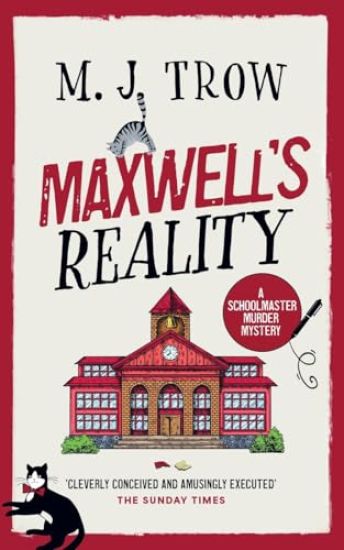
Maxwell's Reality

Maxwell's Reality

M J Trow

Joffe Books
2025
pokkari
An unputdownable cozy mystery with a touch of wry English humour.'Cleverly conceived and amusingly executed.' The Sunday TimesMeet Peter Maxwell: film buff, golden-hearted cynic, bow-tied eccentric teacher . . . and reluctant amateur sleuth.A reality TV crew descends on Leighford High . . . and Head of Sixth Form Peter Maxwell braces for disaster - but not murder.The cameras pry into every corner of the school, exposing secrets better left buried. But when a member of the TV crew is found stabbed to death in the headteacher's office, it's clear the real drama has only just begun.Then a second crew member is found sprawled in Maxwell's office. Murdered with the same knife.As Maxwell unravels the truth he finds himself facing a chilling reality: the murderer is still watching, still waiting, and ready to kill again.If you love Faith Martin, Richard Osman, the Reverend Richard Coles, Fiona Leitch, Sarah Yarwood-Lovett, Simon Brett, Janice Hallett, M.C. Beaton or Agatha Christie, prepare to be hooked by this delightful character-driven mystery Praise for Maxwell's Reality: ⭐⭐⭐⭐⭐ 'Multiple twists and a cleverly woven plot, the story keeps you engaged and guessing throughout.'⭐⭐⭐⭐⭐ 'An absolute delight. The characters are simply brilliant, I didn't guess the killer and I loved every second.'⭐⭐⭐⭐⭐ 'What a fun cozy mystery.'⭐⭐⭐⭐⭐ 'A cast of eccentric and eclectic characters and a frothy plot bursting with dry wit and outright humour.'Meet Peter MaxwellPeter Maxwell is a history teacher at Leighford High School. He's loved by his students and known as 'Mad Max' to his friends because of his love of quoting movies. His eccentricities make him a well-known figure in the small seaside town, cycling everywhere on his bike called White Surrey - after Richard III's horse. When not teaching history, he is building a diorama of the Charge of the Light Brigade in his attic and talking to his cat, Count Metternich, his sounding board and boss, and solving crimes the police are unable to crack.The SettingLeighford is a small seaside town on the South Coast. Its population trebles in the summer as tourists flock to holiday there. Unfortunately for Peter Maxwell some of these characters will end up dead.
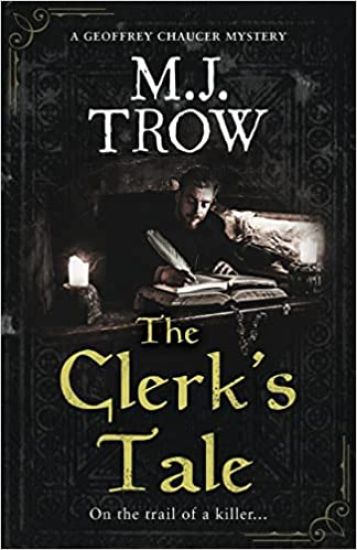
The Clerk's Tale

The Clerk's Tale

M J Trow

LUME BOOKS
2022
pokkari
In this humorous medieval mystery, Geoffrey Chaucer discovers a very un-poetic side to Oxford while tracking down a killer.The Clerk's Tale is the latest instalment in M.J. Trow's popular Geoffrey Chaucer series. As historically accurate and utterly human as its companion books, this story takes the reader on a no-holds-barred tour of medieval Oxford, as Chaucer immerses himself in the rivalries and obsessions of college life.Initially sent to investigate the death of a young student, Chaucer soon finds himself embroiled in matters of philosophy, religion, logic and death. Although he is entertainingly waylaid by tempting women, frightened cats, and even hallucinogens, as more men die Chaucer feels growing pressure to track down the killer and end the carnage.But in the city of dreaming spires and poignard-sharp minds, is he out of his depth?While it is the latest in a series, The Clerk's Tale is a hugely entertaining and fascinating book in its own right. Ideal for anyone who enjoys a top-quality murder-mystery, its historical accuracy also makes it perfect for history fans.Praise for the Geoffrey Chaucer series: 'Trow brings medieval England fully to life through well-chosen period detail, but the novel's main strength is its portrait of Chaucer. Readers will hope to see a lot more of him in his role as sleuth.' - Publishers Weekly Starred Review'A series kickoff that augurs well for more juicy Chaucer escapades.' - Kirkus Reviews'Trow creates in his hero/sleuth a larger-than-life character, spicing the stew with acerbic wit, suspense, and a gripping plot.' - Booklist