Kirjojen hintavertailu. Mukana 12 459 402 kirjaa ja 12 kauppaa.

Kirjahaku

Etsi kirjoja tekijän nimen, kirjan nimen tai ISBN:n perusteella.

5 kirjaa tekijältä M. Brock Fenton

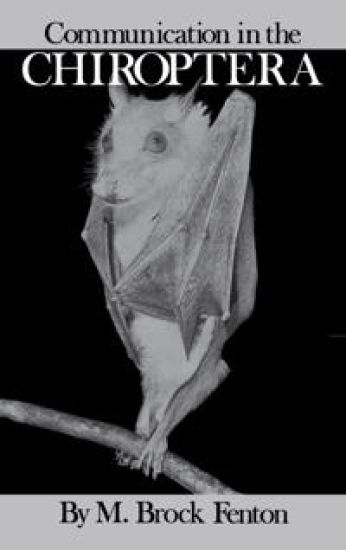
Communication in the Chiroptera

Communication in the Chiroptera

M. Brock Fenton

Indiana University Press
1985
sidottu
"This book is timely, and it provides a well-researched, compact entry to this literature." —Animal Behaviour Communication in the Chiroptera reviews the available information about communication in chiroptera including brilliant suggestions on the relationship of bat communication to the general subject of communication.
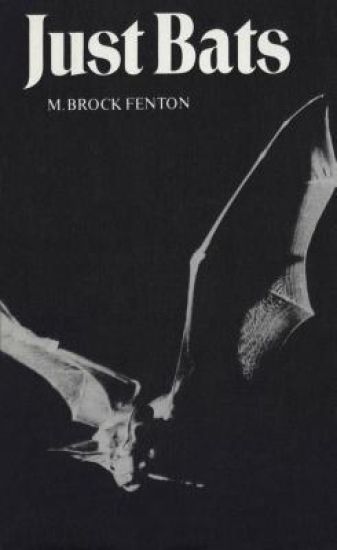
Just Bats

Just Bats

M. Brock Fenton

University of Toronto Press
1983
pokkari
Bats are dangerous to man. Right? Wrong. Here is the truth about chiroptera, the only mammals that fly, in a short, well-illustrated account based on solid research but intended for a general reader. Bats, of which there are about 850 species in the world, are maligned as carriers of rabies (largely untrue) and admired for their biosonar. Heir diversity is reflected in their diets: some eat fruit, some nectar and pollen, other fish, birds, frogs, or other bats. Although most eat insects, it is the three species of blood-feeding vampires which receive most public attention and around which much myth and superstition (and misconception) have evolved. In addition to their diet and habit, Fenton discusses their remarkable sonar sight, their reproduction, migration, patterns of behavior – from hunting to mating – parasites, enemies, and life span. (The current record is held by an Ontario Little Brown Bat which in 1980 had survived more than 30 years.) Man's attitude toward bats, his destruction of their habitats, and his use of pesticides have contributed to a sharp decline in the bat population in many parts of the world. Many biologists are becoming increasingly concerned about the survival of some species, but maintaining their numbers requires a change in people's attitudes. Just Bats will help. It will also tell the reader how to evict bats from his attic – provided he knows how they got in.
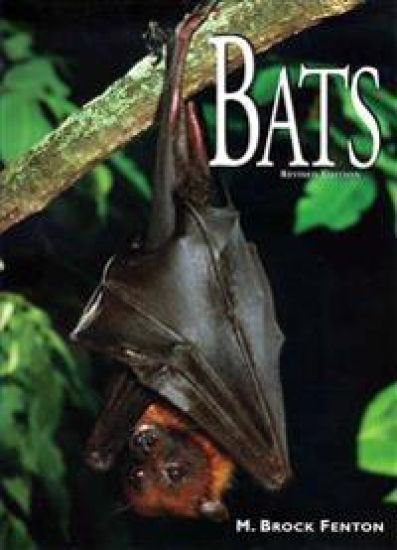
Bats

Bats

M. Brock Fenton

FITZHENRY WHITESIDE
2001
nidottu
Sam is fascinated by the new girl in his class. The daughter of a famous conductor, Helen seems angry and aloof - interested only in her book. When he tries to strike up a conversation with her after class, he only learns that her book is about Beethoven and she doesn't want to make friends. She doesn't seem to need anyone. But Pete and Troy love to tease. They had Sam to pick on last year, but the two boys recognize that Helen makes an even odder target. After they steal her book and toss it on the school roof, a frustrated Helen finds refuge in the auditorium, where she plays her heart out on the piano. Sam is bowled over. For the first time he experiences a powerful new language: one that speaks to him as words never have. He must find the key to this secret language so he can express his inner self. He must learn to play the piano too. There is no question of taking lessons. His mother can barely afford school supplies. And a piano? There isn't a hope. But Sam is determined. So he goes to Helen with a proposal. He'll keep Pete and Troy away from her if she gives him piano lessons. And he's thrilled when she reluctantly agrees. The only trouble is ... how is he going to get the better of Pete and Troy.
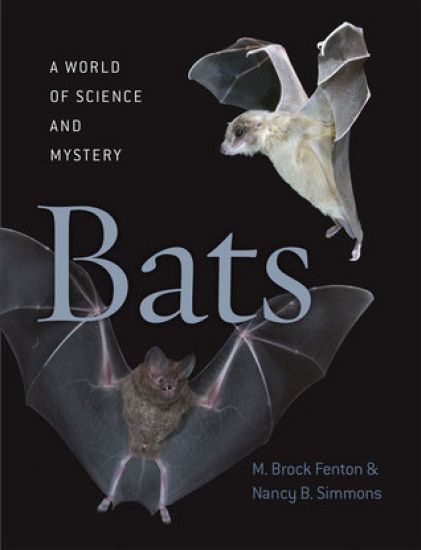
Bats

Bats

M. Brock Fenton; Nancy B. Simmons

University of Chicago Press
2015
sidottu
There are more than 1,300 species of bats - or almost a quarter of the world's mammal species. But before you shrink in fear from these furry "creatures of the night," consider the bat's fundamental role in our ecosystem. A single brown bat can eat several thousand insects in a night. Bats also pollinate and disperse the seeds for many of the plants we love, from bananas to mangoes and figs. Bats: A World of Science and Mystery presents these fascinating nocturnal creatures in a new light. Lush, full-color photographs portray bats in flight, feeding, and mating in views that show them in exceptional detail. The photos also take the reader into the roosts of bats, from caves and mines to the tents some bats build out of leaves. A comprehensive guide to what scientists know about the world of bats, the book begins with a look at bats' origins and evolution. The book goes on to address a host of questions related to flight, diet, habitat, reproduction, and social structure: Why do some bats live alone and others in large colonies? When do bats reproduce and care for their young? How has the ability to fly - unique among mammals - influenced bats' mating behavior? A chapter on biosonar, or echolocation, takes readers through the system of high-pitched calls bats emit to navigate and catch prey. More than half of the world's bat species are either in decline or already considered endangered, and the book concludes with suggestions for what we can do to protect these species for future generations to benefit from and enjoy. From the tiny "bumblebee bat" - the world's smallest mammal - to the Giant Golden-Crowned Flying Fox, whose wingspan exceeds five feet, A Battery of Bats presents a panoramic view of one of the world's most fascinating yet least-understood species.
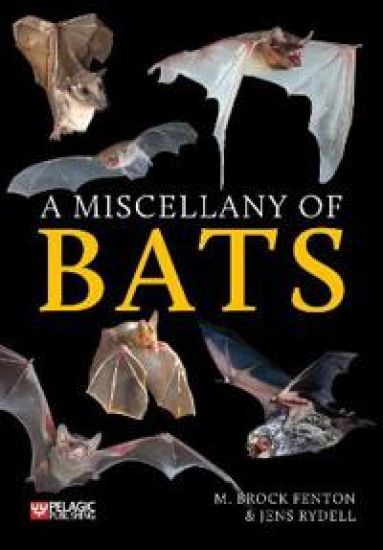
A Miscellany of Bats

A Miscellany of Bats

M. Brock Fenton; Jens Rydell

Pelagic Publishing
2023
nidottu
Bats have long been the focus of fascination, and sometimes fear: they move faultlessly through the darkness and spend the day hanging upside down in gloomy caverns and cracks – most at home where humans are least comfortable. Bats also represent a hugely important, numerous and varied group, accounting for 20% of all mammal species worldwide. Covering their biodiversity, ecology and natural history, A Miscellany of Bats offers a hoard of insights into the lives of these creatures. For over a quarter of a century Brock Fenton and the late Jens Rydell collaborated on projects involving bats. Here they bring together a collection of stories and anecdotes about bat research, brought to life by stunning photographs of these animals in action. Key topics include flight and echolocation, diet and roosting habits, and the complex social lives of bats. Jens and Brock also address issues of conservation and the interactions between bats and people, ranging from matters of disease to bats’ role as symbols, and our fixation with vampire bats. They explore how echolocation and flight shape batkind, from their appearance to where they go and why. Overall, this book is an entertaining and personal vision of bats’ central place in the universe. More than 150 species are covered.