

Kirjahaku
Etsi kirjoja tekijän nimen, kirjan nimen tai ISBN:n perusteella.
11 kirjaa tekijältä M. C. Bradbrook
First published in 1978. In this study, Shakespeare's own life story and the development of English theatrical history are placed in the wider context of Elizabethan and Jacobean times, but the works themselves are the final objective of this 'applied biography'. The main contention of the book is that Shakespeare's life was the lure of the stage itself which inspired him to transform what everyday life provided into the worlds of Hamlet, King Lear and Prospero.
First published in 1978. In this study, Shakespeare's own life story and the development of English theatrical history are placed in the wider context of Elizabethan and Jacobean times, but the works themselves are the final objective of this 'applied biography'. The main contention of the book is that Shakespeare's life was the lure of the stage itself which inspired him to transform what everyday life provided into the worlds of Hamlet, King Lear and Prospero.
A short, vigorous and clear study of the use and misuse of our knowledge of Elizabethan stage conditions in interpreting Shakespeare's plays. After reviewing past Shakespearean criticism and showing the unsatisfactory results of treating Shakespeare as a pure poet unfettered by time and place, Professor Bradbrook explains how the bare open stage of theatres like the Globe allowed great flexibility of dramatic structure for Shakespeare and his contemporaries; she considers the degree to which the Elizabethan audience influenced the content of the plays and the effects of the conventions and peculiarities of Shakespeare's actors on his dramatic characters. She argues that an increased knowledge of Elizabethan stage conditions can prevent the interference of some preconceptions of our own age and help to make a fruitful separation between historic and appreciative criticism. This essay, long unobtainable, is now made generally available.
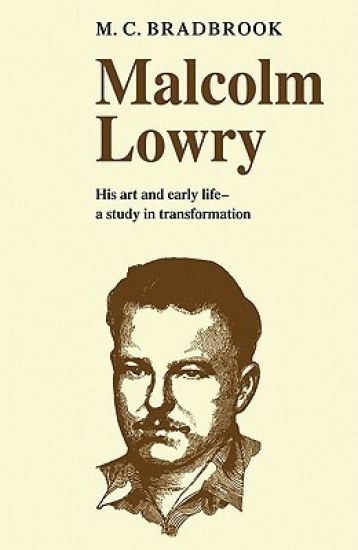
This 1975 book corrects and amplifies the record of Malcolm Lowry's early life, recording for the first time one of its crucial incidents. Lowry was an alcoholic and wanderer who turned a failed life into a success of a different order, and which has been recognised only after his death. Like Lowry, Professor Bradbrook was born in Wirral and writes of the scenes of early life with sympathetic understanding. She also knew the Cambridge of the 1930s, when Lowry read English there. Bradbrook considers the critical point of knowledge of Lowry's life, and the ways in which it is absorbed in his writings. This enquiry broadens out into a discussion of the art itself, and will serve as an excellent introduction of Lowry's life.

Originally published in 1936, this book provides a concise discussion of Sir Walter Raleigh's connection to the intellectual environment of his time. It analyses Raleigh's position as the focal point for 'The School of Night', a speculated group of literary, philosophical and scientific figures including prominent individuals such as Christopher Marlowe, George Chapman and Thomas Herriot. Whilst there is no firm evidence for the existence of a clearly defined 'School', this remains a thoughtful and rigorous study. It contextualises the development of new ideas during the time, and reveals the close connection between literature and theoretical developments in other areas. A fascinating book, it will be of value to anyone with an interest in the cultural atmosphere of the English Renaissance.
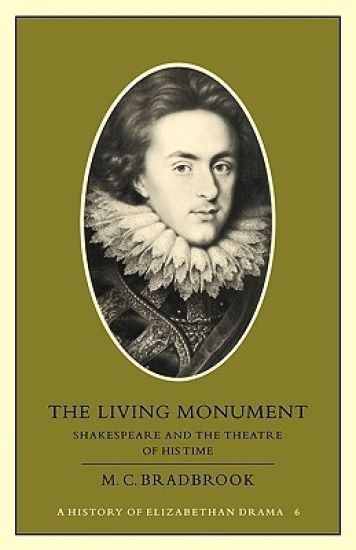
Powerful and diversified as it already was, theatrical life in London focused in 1576 upon the opening in Shoreditch of James Burbage's Arena Theatre. Here the plays of Shakespeare, with those of many other writers, shaped and were shaped by popular demand. His company, as Lord Hunsdon's Men, settled in the theatre from 1594 to 1598. The Arena was the model for a dozen later structures. In this book Professor Bradbrook characterizes Shakespeare's achievements and those of his contemporaries and endeavours to 'place' them in their social and differing theatrical contexts. Part I is concerned with the sociology of the theatre and traces the evolution of the new drama from the later years of Elizabeth into the more established conditions of Jacobean times. Part II shows the interaction of Jonson's work for the court with Shakespeare's for the popular stage. As the leading writer now for the King's Men at the Globe I, Shakespeare's reaction to Jonson's challenge and stimulus was an increasing use of romantic elements in his plays, as he integrated the material demanded by the very different audiences at the Globe, the Blackfriars and the court. Finally in Part III, she outlines the post-Shakespearean developments.
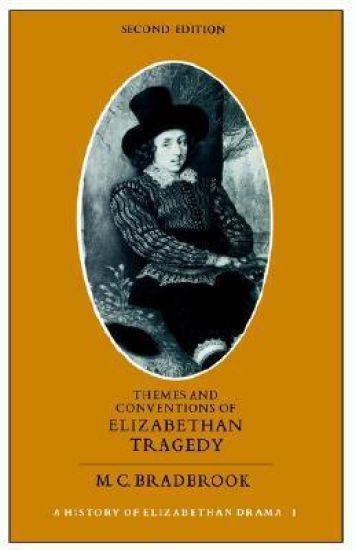
Themes and Conventions of Elizabethan Tragedy
M. C. Bradbrook
Cambridge University Press
1980
pokkari
The first edition of this book formed the basis of the modern approach to Elizabethan poetic drama as a performing art, an approach pursued in subsequent volumes by Professor Bradbrook. Its influence has also extended to other fields; it has been studied by Grigori Kozintesev and Sergei Eisenstein for instance. Conventions of open stage, stylized plot and characters, and actors’ traditions of presentation are related to the special expectations which a rhetorical training produced in the listeners. The general discussion of tragic conventions is followed by individual studies of how these were used by Marlowe, Tourneur, Webster and Middlewon. For this second edition Professor Bradbrook has revised her material and written a new introduction. A new final chapter on performace and characterization describes the conventions of role-playing. Dramatists before and after Shakespeare are compared with him in their methods of showing a complex identity on stage. This chapter also considers the work of Marston, Chapman and Ford in relation to the themes and conventions studied in earlier chapters, providing a link with the subsequent volumes in A History of Elizabethan Drama.
George Chapman (1559-1634) is the least known of the great Elizabethan dramatists—but he was much more than a dramatist. In his own day, his translation of Homer brought him acclaim (it was the first English translation). He was a lyric poet who competed with Marlowe and Shakespeare, and wrote a continuation for Marlowe's Hero and Leander; he also knew the poets and scientists of Ralegh's circle. In this 1977 study, M. C. Bradbrook attempts to present the entire range of Chapman's work in compact form for the first time. A volume in the Writers and Their Work series, which draws upon recent thinking in English studies to introduce writers and their contexts. Each volume includes biographical material, an examination of recent criticism, a bibliography and a reappraisal of a major work by the writer.
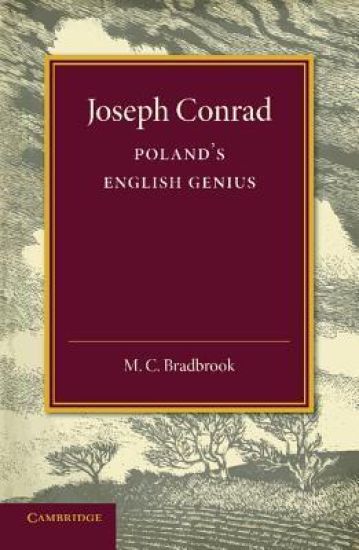
Originally published in 1941, this book provides a brief study of the life and work of Joseph Conrad ('Poland's English genius') through the lens of his writings. Bradbrook divides Conrad's stories by three main themes: the wonders of the deep, the hollow men and recollections in tranquillity, in order to show Conrad's literary development. This book will be of value to anyone with an interest in Conrad's writings.