
Kirjahaku
Etsi kirjoja tekijän nimen, kirjan nimen tai ISBN:n perusteella.
5 kirjaa tekijältä M. Clark

The Unification of Italy in the nineteenth century was the unlikely result of a lengthy and complex process of Italian ?revival? (?Risorgimento?). Few Italians supported Unification and the new rulers of Italy were unable to resolve their disputes with the Catholic Church, the local power-holders in the South and the peasantry. In this fascinating account, Martin Clark examines these problems and considers: · The economic, social and religious contexts of Unification, as well as the diplomatic and military aspects · The roles of Cavour and Garibaldi and also the wider European influences, particularly those of Britain and France· The recent historiographical shift away from uncritical celebration of the achievement of Italian unity. Did 'Italian Unification' mean anything more than traditional Piedmontese expansionism? Was it simply an aspect of European 'secularisation'? Did it involve 'state-building', or just repression? In exploring these questions and more, Martin Clark offers the ideal introductory account for anyone wishing to understand how modern Italy was born. This new edition has been revised in the light of recent research and now has a greater emphasis on the ?losers? of the conflict, the impact of Unification on the South, and the complexity of the political realities of the times. It has also been updated with useful additional material such as a Who?s Who and a plate section to go alongside its carefully chosen selection of original documents.
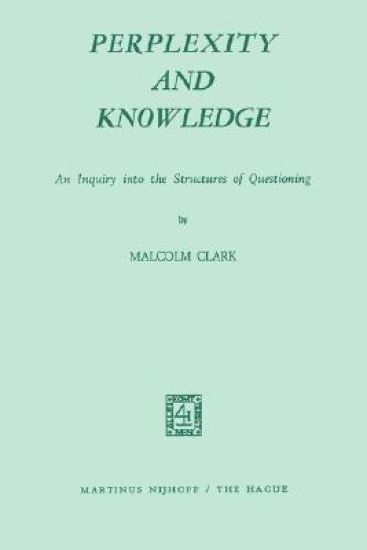
In making his distinction between revisionary and descriptive metaphysics, P.F. Strawson wrote that the former has some value provided that its "partial vision" is at the service of the latter, "which needs no justification at all beyond that of inquiry in general." (Individuals, p. 9) Perhaps we feel no need to ask what justification there is for inquiry in general. But if we do recognize any such need, then we discover that inquiry is self-justifying. The more I put it into question, the more I bring the theme of my inquiry to light in my performance of inquiring. Questioning is the business of philosophers. They are now content to leave the search for detailed information to experts in the various disciplines that have won their independence from philosophy. The questioning a philosopher conducts is of the 'second-order'. He asks about the status of various sorts of questions, the types of knowledge they yield and of con fusion into which they lead.
In making his distinction between revisionary and descriptive metaphysics, P.F. Strawson wrote that the former has some value provided that its "partial vision" is at the service of the latter, "which needs no justification at all beyond that of inquiry in general." (Individuals, p. 9) Perhaps we feel no need to ask what justification there is for inquiry in general. But if we do recognize any such need, then we discover that inquiry is self-justifying. The more I put it into question, the more I bring the theme of my inquiry to light in my performance of inquiring. Questioning is the business of philosophers. They are now content to leave the search for detailed information to experts in the various disciplines that have won their independence from philosophy. The questioning a philosopher conducts is of the 'second-order'. He asks about the status of various sorts of questions, the types of knowledge they yield and of con fusion into which they lead.

This book will examine one of the oldest problems in understanding what Hegel was trying to do. What is the place ofthe Logic in the Hegelian system? That is, how did Hegel see the relation between "pure thought" and its origins or applications in our many forms of experience? A novel approach to this old question has been adopted. This book will study Hegers account of what he regarded as the dosest "illustrations" of pure thinking, namely the way we find our thought in language and the way philosophieal truths are expressed in religious talk. The preface will indicate the problem and the approach. The introduction will examine three recent works on Hegel and suggest how they invite the sort of study which is pro posedhere. of all wisdom, a time There was a time when Hegel was read as the source also when he was treated only as an occasion of ridicule. Both are now past. The attitude of metaphysicians is more cautious, that oftheir opponents more receptive. Each side is better prepared to allow those who hold an assured place in the history of philosophy to speak for themselves and reveal their achievements and their limits. In this atmosphere there is special reason, on both sides, for the study of Hege!. No one has made such extreme claims for metaphysical thought and developed it so extensively and systematieally. No one has demanded more from posterity in the criticism of such thought.