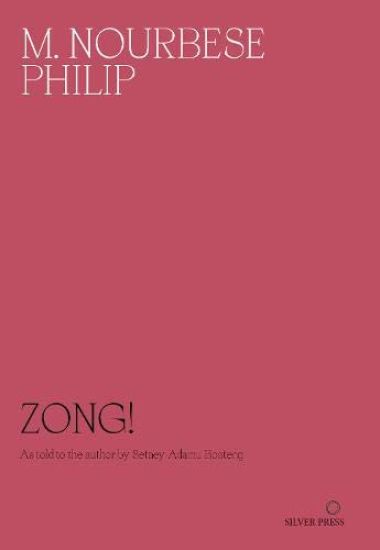
Fifteenth anniversary edition, with a new preface by the author and contributions by Saidiya Hartman and Katherine McKittrick.A haunting lifeline between archive and memory, law and poetry.In November 1781, the captain of the slave ship Zong ordered that some 150 Africans be murdered by drowning so that the ship’s owners could collect insurance monies. Relying entirely on the words of the legal decision Gregson v. Gilbert – the only extant public document related to the massacre of those African slaves – Zong! tells the story that cannot be told yet must be told. Equal parts song, moan, shout, oath, ululation, curse, and chant, Zong! excavates the legal text. Memory, history, and law collide and metamorphose into the poetics of the fragment. Through the innovative use of fugal and counterpointed repetition, Zong! becomes an anti-narrative lament that stretches the boundaries of the poetic form, haunting the spaces of forgetting and mourning the forgotten.‘Zong! is not just a book of poetry; it is a method displaying itself like a deep-sea creature that blossoms in search of food: the instant when ‘the material and nonmaterial come together in unexpected ways’, allowing the erased story of the slave ship to recompose itself in us.’ Cecilia Vicuña