Kirjojen hintavertailu. Mukana 12 390 323 kirjaa ja 12 kauppaa.

Kirjahaku

Etsi kirjoja tekijän nimen, kirjan nimen tai ISBN:n perusteella.

3 kirjaa tekijältä M. Rahim Shayegan

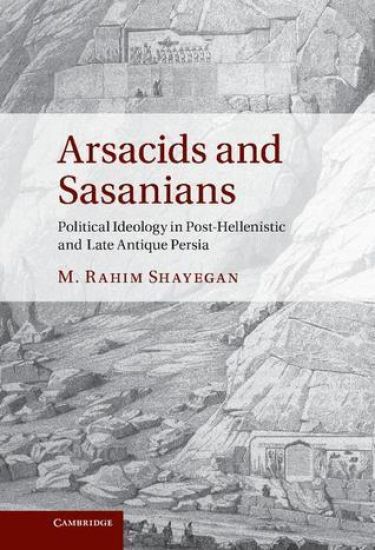
Arsacids and Sasanians

Arsacids and Sasanians

M. Rahim Shayegan

Cambridge University Press
2011
sidottu
Sasanian Persia, which succeeded the Parthians, was one of the great powers of late antiquity and the most significant power in the Near East, together with the Roman Empire. This book undertakes a thorough investigation of the diverse range of written, numismatic, and archaeological sources in order to reassess Sasanian political ideology and its sources and influences in the ideologies of the Achaemenid Persian Empire, Babylonian scholarship and prophecy, and Hellenistic Greek thought. It sheds fresh light on the political complexities of early Arsacid and Sasanian history, especially the situation in Babylon and Elymais, and on the Roman propaganda which penetrated, shaped, and determined Roman attitudes towards Sasanian Persia.
Aspects of History and Epic in Ancient Iran

Aspects of History and Epic in Ancient Iran

M. Rahim Shayegan

Harvard University, Center for Hellenic Studies
2012
nidottu
Aspects of History and Epic in Ancient Iran focuses on the content of one of the most important inscriptions of the Ancient Near East: the Bisotun inscription of the Achaemenid king Darius I (6th century bce), which in essence reports on a suspicious fratricide and subsequent coup d’état. Moreover, the study shows how the inscription’s narrative would decisively influence the Iranian epic, epigraphic, and historiographical traditions well into the Sasanian and early Islamic periods.Intriguingly, our assessment of the impact of the Bisotun narrative on later literary traditions—in particular, the inscription of the Sasanian king Narseh at Paikuli (3rd–4th centuries ce)—necessarily relies on the reception of the oral rendition of the Bisotun story captured by Greek historians. As Rahim Shayegan argues, this oral tradition had an immeasurable impact upon the historiographical writings and epic compositions of later Iranian empires. It would have otherwise remained unknown to modern scholars, had it not been partially preserved and recorded by Hellanicus of Lesbos, Herodotus, Ctesias, and other Greek authors. The elucidation of Bisotun’s thematic composition therefore not only allows us to solve an ancient murder but also to reevaluate pre-Thucydidean Greek historiography as one of the most important repositories of Iranian epic themes.
Arsacids and Sasanians

Arsacids and Sasanians

M. Rahim Shayegan

Cambridge University Press
2018
pokkari
Sasanian Persia, which succeeded the Parthians, was one of the great powers of late antiquity and the most significant power in the Near East, together with the Roman Empire. This book undertakes a thorough investigation of the diverse range of written, numismatic, and archaeological sources in order to reassess Sasanian political ideology and its sources and influences in the ideologies of the Achaemenid Persian Empire, Babylonian scholarship and prophecy, and Hellenistic Greek thought. It sheds fresh light on the political complexities of early Arsacid and Sasanian history, especially the situation in Babylon and Elymais, and on the Roman propaganda which penetrated, shaped, and determined Roman attitudes towards Sasanian Persia.