Kirjojen hintavertailu. Mukana 12 258 496 kirjaa ja 12 kauppaa.

Kirjahaku

Etsi kirjoja tekijän nimen, kirjan nimen tai ISBN:n perusteella.

9 kirjaa tekijältä Magnus Marsden

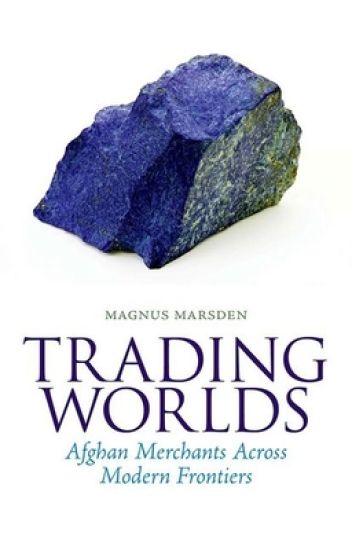
Trading Worlds: Afghan Merchants Across Modern Frontiers

Trading Worlds: Afghan Merchants Across Modern Frontiers

Magnus Marsden

Oxford University Press, USA
2016
nidottu
Trading Worlds is an anthropological study of a little understood yet rapidly expanding global trading diaspora, namely the Afghan merchants of Afghanistan, Central Asia and Europe. It contests one-sided images that depict traders from this and other conflict regions as immoral profiteers, the cronies of warlords or international drug smugglers. It shows, rather, the active role these merchants play in an ever-more globalized political economy. Afghan merchants, the author demonstrates, forge and occupy critical economic niches, both at home and abroad: from the Persian Gulf to Central Asia, to the ports of the Black Sea; and in global cities such as Istanbul, Moscow and London, the traders' activities are shaping the material and cultural lives of the diverse populations among whom they live. Through an exploration of the life histories, trading activities and everyday experiences of these mobile merchants, Magnus Marsden shows that traders' worlds are informed by complex forms of knowledge, skill, ethical sensibility, and long-lasting human relationships that often cut across and dissolve boundaries of nation, ethnicity, religion and ideology.
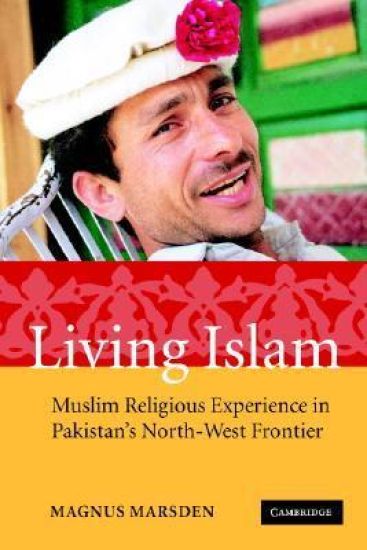
Living Islam

Living Islam

Magnus Marsden

Cambridge University Press
2005
pokkari
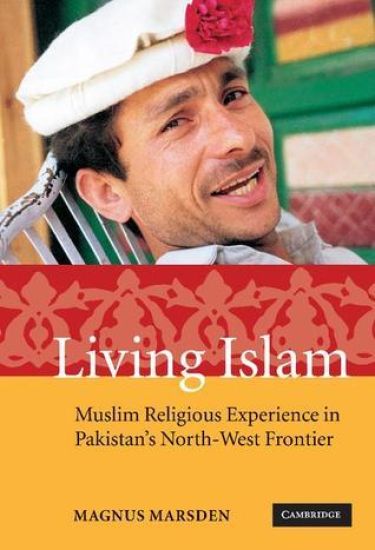
Popular representations of Pakistan's North West Frontier have long featured simplistic images of tribal blood feuds, fanatical religion, and the seclusion of women. The rise to power of the radical Taliban regime in neighbouring Afghanistan enhanced the region's reputation as a place of anti-Western militancy. Magnus Marsden is an anthropologist who has immersed himself in the lives of the Frontier's villagers for more than ten years. His evocative study of the Chitral region challenges all these stereotypes. Through an exploration of the everyday experiences of both men and women, he shows that the life of a good Muslim in Chitral is above all a mindful life, enhanced by the creative force of poetry, dancing and critical debate. Challenging much that has been assumed about the Muslim world, this 2005 study makes a powerful contribution to the understanding of religion and politics both within and beyond the Muslim societies of southern Asia.
Living Islam

Living Islam

Magnus Marsden

Cambridge University Press
2005
sidottu
Popular representations of Pakistan's North West Frontier have long featured simplistic images of tribal blood feuds, fanatical religion, and the seclusion of women. The rise to power of the radical Taliban regime in neighbouring Afghanistan enhanced the region's reputation as a place of anti-Western militancy. Magnus Marsden is an anthropologist who has immersed himself in the lives of the Frontier's villagers for more than ten years. His evocative study of the Chitral region challenges all these stereotypes. Through an exploration of the everyday experiences of both men and women, he shows that the life of a good Muslim in Chitral is above all a mindful life, enhanced by the creative force of poetry, dancing and critical debate. Challenging much that has been assumed about the Muslim world, this 2005 study makes a powerful contribution to the understanding of religion and politics both within and beyond the Muslim societies of southern Asia.
Beyond the Silk Roads

Beyond the Silk Roads

Magnus Marsden

Cambridge University Press
2021
sidottu
Small-scale traders play a crucial role in forging Asian connectivity, forming networks and informal institutions separate from those driven by nation-states, such as China's Belt and Road Initiative. This ambitious study provides a unique insight into the lives of the mobile traders from Afghanistan who traverse Eurasia. Reflecting on over a decade of intensive ethnographic fieldwork, Magnus Marsden introduces readers to a dynamic yet historically durable universe of commercial and cultural connections. Through an exploration of the traders' networks, cultural and religious identities, as well as the nodes in which they operate, Marsden emphasises their ability to navigate Eurasia's geopolitical tensions and to forge transregional routes that channel significant flows of people, resources, and ideas. Beyond the Silk Roads will interest those seeking to understand contemporary iterations of the Silk Road within the context of geopolitics in the region. This title is also available as Open Access.
Beyond the Silk Roads

Beyond the Silk Roads

Magnus Marsden

Cambridge University Press
2025
pokkari
Small-scale traders play a crucial role in forging Asian connectivity, forming networks and informal institutions separate from those driven by nation-states, such as China's Belt and Road Initiative. This ambitious study provides a unique insight into the lives of the mobile traders from Afghanistan who traverse Eurasia. Reflecting on over a decade of intensive ethnographic fieldwork, Magnus Marsden introduces readers to a dynamic yet historically durable universe of commercial and cultural connections. Through an exploration of the traders' networks, cultural and religious identities, as well as the nodes in which they operate, Marsden emphasises their ability to navigate Eurasia's geopolitical tensions and to forge transregional routes that channel significant flows of people, resources, and ideas. Beyond the Silk Roads will interest those seeking to understand contemporary iterations of the Silk Road within the context of geopolitics in the region. This title is also available as Open Access.
Trading Worlds

Trading Worlds

Magnus Marsden

C Hurst Co Publishers Ltd
2016
nidottu
Trading Worlds is an anthropological study of a little understood yet rapidly expanding global trading diaspora, namely the Afghan merchants of Afghanistan, Central Asia and Europe. It contests one-sided images that depict traders from this and other conflict regions as immoral profiteers, the cronies of warlords or international drug smugglers. It shows, rather, the active role these merchants play in an ever-more globalised political economy. Afghan merchants, the author demonstrates, forge and occupy critical eco- nomic niches, both at home and abroad: from the Persian Gulf to Central Asia, to the ports of the Black Sea; and in global cities such as Istanbul, Moscow and London, the traders' activities are shaping the material and cultural lives of the di- verse populations among whom they live. Through an exploration of the life histories, trading activities and everyday experiences of these mobile merchants, Magnus Marsden shows that traders' worlds are informed by complex forms of knowledge, skill, ethical sensibility, and long-lasting human relationships that often cut across and dissolve boundaries of nation, ethnicity, religion and ideology.
Trading Worlds

Trading Worlds

Magnus Marsden

C Hurst Co Publishers Ltd
2016
sidottu
Trading Worlds is an anthropological study of a little understood yet rapidly expanding global trading diaspora, namely the Afghan merchants of Afghanistan, Central Asia and Europe. It contests one-sided images that depict traders from this and other conflict regions as immoral profiteers, the cronies of warlords or international drug smugglers. It shows, rather, the active role these merchants play in an ever-more globalised political economy. Afghan merchants, the author demonstrates, forge and occupy critical eco- nomic niches, both at home and abroad: from the Persian Gulf to Central Asia, to the ports of the Black Sea; and in global cities such as Istanbul, Moscow and London, the traders' activities are shaping the material and cultural lives of the di- verse populations among whom they live. Through an exploration of the life histories, trading activities and everyday experiences of these mobile merchants, Magnus Marsden shows that traders' worlds are informed by complex forms of knowledge, skill, ethical sensibility, and long-lasting human relationships that often cut across and dissolve boundaries of nation, ethnicity, religion and ideology.
The Sheep Roads of Central Asia

The Sheep Roads of Central Asia

Magnus Marsden

C HURST CO PUBLISHERS LTD
2026
sidottu
A history of the fur trade originating on the Karakul sheep–raising steppe, and of the merchants who took the pelts to markets worldwide. Indigenous to Central Asia, Karakul sheep can thrive in the region’s arid environment. For centuries, men across Muslim Asia and Russia wore hats made from the sheep’s fur, which often symbolised status and masculine power. In the late nineteenth century, the thirst for furs among fashionable women in Europe and America saw millions of Karakul lambskins change hands annually, in Leipzig, London and New York. In the early twentieth century, the Russian Revolution led shepherds and merchants to flee Central Asia for Afghanistan; over the following decades, the trade in Karakul lambskins—initially referred to in the West as ‘Persian Lamb’ or ‘Astrakhan fur’—became a central element of Afghanistan’s economy. In this unique book, Magnus Marsden illuminates Karakul’s role in the region’s globalisation, drawing on rich archives, three decades of research in Afghanistan, Pakistan and Central Asia, and interviews with fur traders and their families. He discovers that Jewish and Muslim Central Asian merchants played a pivotal role in the trade’s international expansion, demonstrating remarkable resilience in an environment growing ever more hostile to the long-distance commercial networks which they formed.
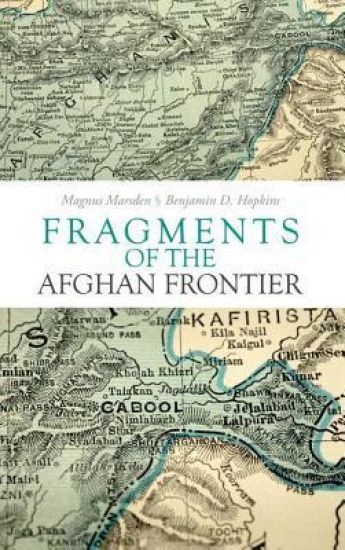
Fragments of the Afghan Frontier

Fragments of the Afghan Frontier

Magnus Marsden; Benjamin Hopkins

Oxford University Press, USA
2011
sidottu
Despite the long and intimate history of engagement along the border between Afghanistan and Pakistan's North-West, this area and its relationship to the world remains poorly understood in the West's popular imagination. Through the construction of a collage of historical narratives and intense ethnographic encounters, Marsden and Hopkins argue that the simplistic stereotypes and tropes that all too often masquerade as knowledge about the Frontier not only conceal a more complex reality, but are also a source of the problems that local and international actors alike face there. Not some simple isolated depot of radical terrorists or instrumental tribesmen, the Frontier is a space of richly textured meaning, constructed through a history of movement of its inhabitants and their understanding of the world beyond. Fragments of the Afghan Frontier offers a corrective to simplistic understanding both of the region's history and its current realities, leaving the reader with a deeper understanding of the ever-evolving complexity of this globally significant region.