Kirjojen hintavertailu. Mukana 12 390 323 kirjaa ja 12 kauppaa.

Kirjahaku

Etsi kirjoja tekijän nimen, kirjan nimen tai ISBN:n perusteella.

7 kirjaa tekijältä Maisha T. Winn

Futuring Black Lives: Independent Black Institutions and the Literary Imagination
Futuring Black Lives is a historical ethnography examining Black institution builders in the late 1960s and early 1970s and their work to leverage the power of publications and the literary imagination to engage "concerned men and women" in conversations about the educational journeys and futures of Black children. While many began as reactions to anti-Blackness and American public schooling failing Black children, Independent Black Institutions (IBIs) came to be viable ecosystems anchored in a shared Black value system preparing Black children in three areas: identity, purpose, and direction. The rationale for establishing and valuing IBIs remains highly relevant, given the sociopolitical landscape of education today. In addition to persistent racial disparities in academic achievement and Black students' highly disproportionate experiences of punishment and "discipline," friction and legislation against critical examination of race, racism, and racist ideas in school settings are front and center, and children's and young adult literature are under attack through censorship and outright book bans. Yet Black institution builders left useful maps of and for the educational future/s of Black children that remain available in journals, newspapers, pamphlets, and other ephemera. Author Maisha T. Winn demonstrates how and why the historiography-grounded futuring of Black education can and should inform current pursuits of equity, justice, and liberation through education.
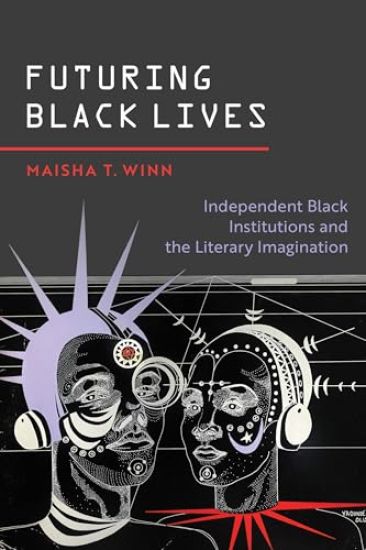
Futuring Black Lives: Independent Black Institutions and the Literary Imagination
Futuring Black Lives is a historical ethnography examining Black institution builders in the late 1960s and early 1970s and their work to leverage the power of publications and the literary imagination to engage "concerned men and women" in conversations about the educational journeys and futures of Black children. While many began as reactions to anti-Blackness and American public schooling failing Black children, Independent Black Institutions (IBIs) came to be viable ecosystems anchored in a shared Black value system preparing Black children in three areas: identity, purpose, and direction. The rationale for establishing and valuing IBIs remains highly relevant, given the sociopolitical landscape of education today. In addition to persistent racial disparities in academic achievement and Black students' highly disproportionate experiences of punishment and "discipline," friction and legislation against critical examination of race, racism, and racist ideas in school settings are front and center, and children's and young adult literature are under attack through censorship and outright book bans. Yet Black institution builders left useful maps of and for the educational future/s of Black children that remain available in journals, newspapers, pamphlets, and other ephemera. Author Maisha T. Winn demonstrates how and why the historiography-grounded futuring of Black education can and should inform current pursuits of equity, justice, and liberation through education.
Justice on Both Sides

Justice on Both Sides

Maisha T. Winn

Harvard Educational Publishing Group
2018
nidottu
Restorative justice represents “a paradigm shift in the way Americans conceptualize and administer punishment,” says author Maisha T. Winn, from a focus on crime to a focus on harm, including the needs of both those who were harmed and those who caused it. Her book, Justice on Both Sides, provides an urgently needed, comprehensive account of the value of restorative justice and how contemporary schools can implement effective practices to address inequalities associated with race, class, and gender.Winn, a restorative justice practitioner and scholar, draws on her extensive experience as a coach to school leaders and teachers to show how indispensable restorative justice is in understanding and addressing the educational needs of students, particularly disadvantaged youth. Justice on Both Sides makes a major contribution by demonstrating how this actually works in schools and how it can be integrated into a range of educational settings. It also emphasizes how language and labeling must be addressed in any fruitful restorative effort. Ultimately, Winn makes the case for restorative justice as a crucial answer, at least in part, to the unequal practices and opportunities in American schools.
Justice on Both Sides

Justice on Both Sides

Maisha T. Winn

Harvard Educational Publishing Group
2018
sidottu
Restorative justice represents “a paradigm shift in the way Americans conceptualize and administer punishment,” says author Maisha T. Winn, from a focus on crime to a focus on harm, including the needs of both those who were harmed and those who caused it. Her book, Justice on Both Sides, provides an urgently needed, comprehensive account of the value of restorative justice and how contemporary schools can implement effective practices to address inequalities associated with race, class, and gender.Winn, a restorative justice practitioner and scholar, draws on her extensive experience as a coach to school leaders and teachers to show how indispensable restorative justice is in understanding and addressing the educational needs of students, particularly disadvantaged youth. Justice on Both Sides makes a major contribution by demonstrating how this actually works in schools and how it can be integrated into a range of educational settings. It also emphasizes how language and labeling must be addressed in any fruitful restorative effort. Ultimately, Winn makes the case for restorative justice as a crucial answer, at least in part, to the unequal practices and opportunities in American schools.
Girl Time

Girl Time

Maisha T. Winn; Michelle Fine

Teachers' College Press
2011
nidottu
This original account is based on the author’s experiences with incarcerated girls participating in Girl Time, a programme created by a theatre company that conducts playwriting and performance workshops in youth detention centres. In addition to examining the lives of these and other formerly incarcerated girls, Girl Time shares the stories of educators who dare to teach children who have been “thrown away” by their schools and society. The girls, primarily African American teens, write their own plays, learn ensemble-building techniques, explore societal themes, and engage in self analysis as they prepare for a final performance. The book describes some of the girls and their experiences in the programme, examines the implications of the school-to-prison pipeline, and offers ways for young girls to avoid incarceration. Readers will learn how the lived experiences of incarcerated girls can inform their teaching in public school classrooms and the teaching of literacy as a civil and human right.