Kirjojen hintavertailu. Mukana 11 717 486 kirjaa ja 12 kauppaa.

Kirjahaku

Etsi kirjoja tekijän nimen, kirjan nimen tai ISBN:n perusteella.

20 kirjaa tekijältä Malcolm Miles

Consuming Cities

Consuming Cities

Malcolm Miles

Red Globe Press
2004
nidottu
Contemporary urban consumption touches the everyday lives of most citizens and permeates discussion of society and culture today. Consuming Cities looks at this topic from perspectives in both sociology and cultural theory, drawing together references from mainstream and also less obvious sources in both literatures. Each chapter includes a specific case of a city or aspect of consumption, ranging from a history of urban consumption, gambling to the consumption of culture and its place in tourism to the consumption palace of the cruise liner. This definitive and accessible book will be an invaluable resource to a wide range of students.
Art, Space and the City

Art, Space and the City

Malcolm Miles

Routledge
1997
sidottu
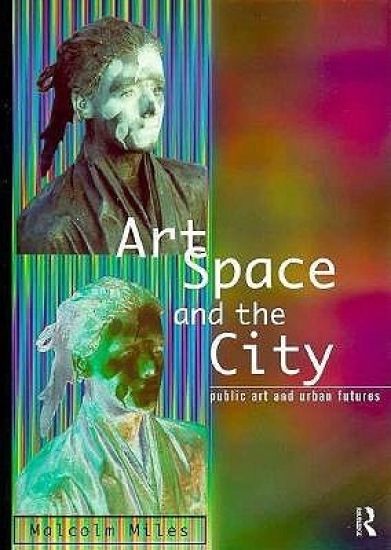
Public art - the making, management and mediation of art outside its conventional location in museums and galleries, and the livable city - a concept involving user-centred strategies for urban planning and design, are both socially produced but have emerged from different fields and tend to be discussed in isolation. This book applies a range of critical perspectives which have emerged from different disciplines - art criticism, urban design, urban sociology, geography and critical theory - to examine the practice of art for urban public spaces, seeing public art from positions outside those of the art world to ask how it might contribute to possible urban futures. Exploring the diversity of urban politics, the functions of public space and its relation to the structures of power, the roles of professionals and users in the construction of the city, the gendering of space and the ways in which space and citizen are represented, the book explains how these issues are as relevant to architecture, urban design and urban planning as they are to public art. Drawing on a wealth of images from across the UK and Europe and the USA, in particular, the author questions the effectiveness of public art in achieving more convivial urban environments, whilst retaining the idea that imagining possible futures is as much part of a democratic society as using public space.
Art, Space and the City

Art, Space and the City

Malcolm Miles

Routledge
1997
nidottu
Public art - the making, management and mediation of art outside its conventional location in museums and galleries, and the livable city - a concept involving user-centred strategies for urban planning and design, are both socially produced but have emerged from different fields and tend to be discussed in isolation. This book applies a range of critical perspectives which have emerged from different disciplines - art criticism, urban design, urban sociology, geography and critical theory - to examine the practice of art for urban public spaces, seeing public art from positions outside those of the art world to ask how it might contribute to possible urban futures. Exploring the diversity of urban politics, the functions of public space and its relation to the structures of power, the roles of professionals and users in the construction of the city, the gendering of space and the ways in which space and citizen are represented, the book explains how these issues are as relevant to architecture, urban design and urban planning as they are to public art. Drawing on a wealth of images from across the UK and Europe and the USA, in particular, the author questions the effectiveness of public art in achieving more convivial urban environments, whilst retaining the idea that imagining possible futures is as much part of a democratic society as using public space.
Urban Avant-Gardes

Urban Avant-Gardes

Malcolm Miles

Routledge
2004
sidottu
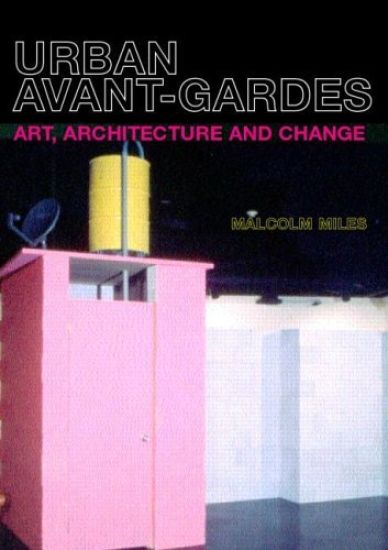
Urban Avant-Gardes presents original research on a range of recent contemporary practices in and between art and architecture giving perspectives from a wide range of disciplines in the arts, humanities and social sciences that are seldom juxtaposed, it questions many assumptions and accepted positions.This book looks back to past avant-gardes from the nineteenth and twentieth centuries examining the theoretical and critical terrain around avant-garde cultural interventions, and profiles a range of contemporary cases of radical cultural practices. The author brings together material from a wide range of disciplines to argue for cultural intervention as a means to radical change, while recognizing that most such efforts in the past have not delivered the dreams of their perpetrators.Distinctive in that it places works of the imagination in the political and cultural context of environmentalism, this book asks how cultural work might contribute to radical social change. It is equally concerned with theory and practice - part one providing a theoretical framework and part two illustrating such frameworks with examples.
Urban Avant-Gardes

Urban Avant-Gardes

Malcolm Miles

Routledge
2004
nidottu
Urban Avant-Gardes presents original research on a range of recent contemporary practices in and between art and architecture giving perspectives from a wide range of disciplines in the arts, humanities and social sciences that are seldom juxtaposed, it questions many assumptions and accepted positions.This book looks back to past avant-gardes from the nineteenth and twentieth centuries examining the theoretical and critical terrain around avant-garde cultural interventions, and profiles a range of contemporary cases of radical cultural practices. The author brings together material from a wide range of disciplines to argue for cultural intervention as a means to radical change, while recognizing that most such efforts in the past have not delivered the dreams of their perpetrators.Distinctive in that it places works of the imagination in the political and cultural context of environmentalism, this book asks how cultural work might contribute to radical social change. It is equally concerned with theory and practice - part one providing a theoretical framework and part two illustrating such frameworks with examples.
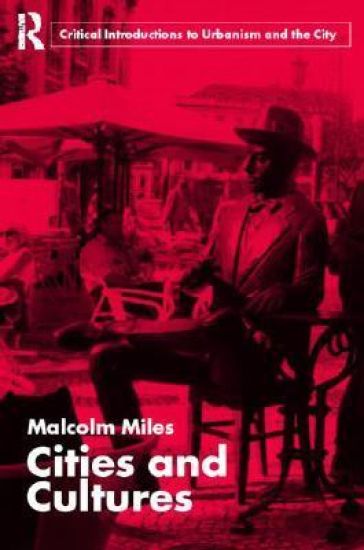
Cities and Cultures

Cities and Cultures

Malcolm Miles

Routledge
2007
sidottu
Cities and Cultures is a critical account of the relations between contemporary cities and the cultures they produce and which in turn shape them. The book questions received ideas of what constitutes a city's culture through case studies in which different kinds of culture - the arts, cultural institutions and heritage, distinctive ways of life - are seen to be differently used in or affected by the development of particular cities. The book does not mask the complexity of this, but explains it in ways accessible for undergraduates.The book begins with introductory chapters on the concepts of a city and a culture (the latter in the anthropological sense as well as denoting the arts), citing cases from modern literature. The book then moves from a critical account of cultural production in a metropolitan setting to the idea that a city, too, is produced through the characteristic ways of life of its inhabitants. The cultural industries are scrutinised for their relation to such cultures as well as to city marketing, and attention is given to the European Cities of Culture initiative, and to the hybridity of contemporary urban cultures in a period of globalisation and migration. In its penultimate chapter the book looks at incidental cultural forms and cultural means to identify formation; and in its final chapter, examines the permeability of urban cultures and cultural forms. Sources are introduced, positions clarified and contrasted, and notes given for selective further reading. Playing on the two meanings of culture, Miles takes an unique approach by relating arguments around these meanings to specific cases of urban development today. The book includes both critical comment on a range of literatures - being a truly inter-disciplinary study - and the outcome of the author's field research into urban cultures.
Cities and Cultures

Cities and Cultures

Malcolm Miles

Routledge
2007
nidottu
Cities and Cultures is a critical account of the relations between contemporary cities and the cultures they produce and which in turn shape them. The book questions received ideas of what constitutes a city's culture through case studies in which different kinds of culture - the arts, cultural institutions and heritage, distinctive ways of life - are seen to be differently used in or affected by the development of particular cities. The book does not mask the complexity of this, but explains it in ways accessible for undergraduates.The book begins with introductory chapters on the concepts of a city and a culture (the latter in the anthropological sense as well as denoting the arts), citing cases from modern literature. The book then moves from a critical account of cultural production in a metropolitan setting to the idea that a city, too, is produced through the characteristic ways of life of its inhabitants. The cultural industries are scrutinised for their relation to such cultures as well as to city marketing, and attention is given to the European Cities of Culture initiative, and to the hybridity of contemporary urban cultures in a period of globalisation and migration. In its penultimate chapter the book looks at incidental cultural forms and cultural means to identify formation; and in its final chapter, examines the permeability of urban cultures and cultural forms. Sources are introduced, positions clarified and contrasted, and notes given for selective further reading. Playing on the two meanings of culture, Miles takes an unique approach by relating arguments around these meanings to specific cases of urban development today. The book includes both critical comment on a range of literatures - being a truly inter-disciplinary study - and the outcome of the author's field research into urban cultures.
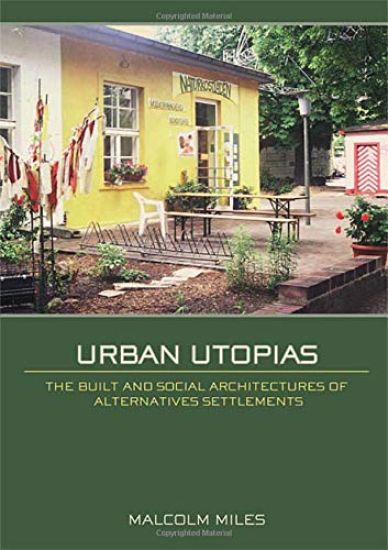
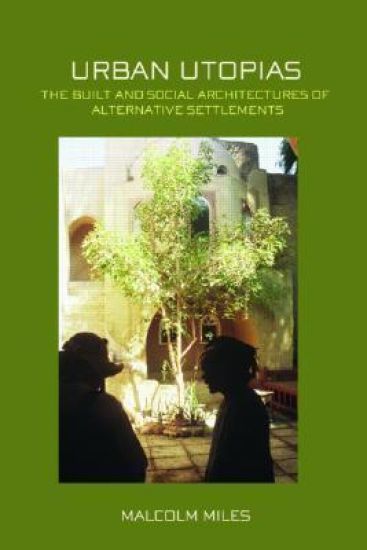
Urban Utopias

Urban Utopias

Malcolm Miles

Routledge
2007
sidottu
Utopia tends to generate a bad press - regarded as impracticable, perhaps nostalgic, or contradictory when visions of a perfect world cannot accommodate the change that is necessary to a free and self-organizing society. But people from diverse backgrounds are currently building a new society within the old, balancing literal and metaphorical utopianism, and demonstrating plural possibilities for alternative futures and types of settlement. Thousands of such places exist around the world, including intentional communities, eco-villages, permaculture plots, religious and secular retreats, co-housing projects, self-build schemes, projects for low-impact housing, and activist squats in urban and rural sites. This experience suggests, however, that when planning and design are not integral to alternative social formations, the modern dream to engineer a new society cannot be realized.The book is structured in four parts. In part one, literary and theoretical utopias from the early modern period to the nineteenth-century are reconsidered. Part two investigates twentieth-century urban utopianism and contemporary alternative settlements focusing on social and environmental issues, activism and eco-village living. Part three looks to wider horizons in recent practices in the non-affluent world, and Part four reviews a range of cases from the author’s visits to specific sites. This is followed by a short conclusion in which a discussion of key issues is resumed. This book brings together insights from literary, theoretical and practical utopias, drawing out the characteristics of groups and places that are part of a new society. It links today’s utopian experiments to historical and literary utopias, and to theoretical problems in utopian thought.
Urban Utopias

Urban Utopias

Malcolm Miles

Routledge
2007
nidottu
Utopia tends to generate a bad press - regarded as impracticable, perhaps nostalgic, or contradictory when visions of a perfect world cannot accommodate the change that is necessary to a free and self-organizing society. But people from diverse backgrounds are currently building a new society within the old, balancing literal and metaphorical utopianism, and demonstrating plural possibilities for alternative futures and types of settlement. Thousands of such places exist around the world, including intentional communities, eco-villages, permaculture plots, religious and secular retreats, co-housing projects, self-build schemes, projects for low-impact housing, and activist squats in urban and rural sites. This experience suggests, however, that when planning and design are not integral to alternative social formations, the modern dream to engineer a new society cannot be realized.The book is structured in four parts. In part one, literary and theoretical utopias from the early modern period to the nineteenth-century are reconsidered. Part two investigates twentieth-century urban utopianism and contemporary alternative settlements focusing on social and environmental issues, activism and eco-village living. Part three looks to wider horizons in recent practices in the non-affluent world, and Part four reviews a range of cases from the author’s visits to specific sites. This is followed by a short conclusion in which a discussion of key issues is resumed. This book brings together insights from literary, theoretical and practical utopias, drawing out the characteristics of groups and places that are part of a new society. It links today’s utopian experiments to historical and literary utopias, and to theoretical problems in utopian thought.
Herbert Marcuse

Herbert Marcuse

Malcolm Miles

Pluto Press
2011
pokkari
When capitalism is clearly catastrophically out of control and its excesses cannot be sustained socially or ecologically, the ideas of Herbert Marcuse become as relevant as they were in the 1960s. This is the first English introduction to Marcuse to be published for decades, and deals specifically with his aesthetic theories and their relation to a critical theory of society. Although Marcuse is best known as a critic of consumer society, epitomised in the classic One-Dimensional Man, Malcolm Miles provides an insight into how Marcuse's aesthetic theories evolved within his broader attitudes, from his anxiety at the rise of fascism in the 1930s through heady optimism of the 1960s, to acceptance in the 1970s that radical art becomes an invaluable progressive force when political change has become deadlocked. Marcuse's aesthetics of liberation, in which art assumes a primary role in interrupting the operation of capitalism, made him a key figure for the student movement in the 1960s. As diverse forms of resistance rise once more, a new generation of students, scholars and activists will find Marcuse's radical theory essential to their struggle.
Limits to Culture

Limits to Culture

Malcolm Miles

Pluto Press
2015
pokkari
How can we unmask the vested interests behind capital's 'cultural' urban agenda? Limits to Culture pits grass-roots cultural dissent against capital's continuing project of control via urban planning. In the 1980s, notions of the 'creative class' were expressed though a cultural turn in urban policy towards the 'creative city'. De-industrialisation created a shift away from how people understood and used urban space, and consequently, gentrification spread. With it came the elimination of diversity and urban dynamism - new art museums and cultural or heritage quarters lent a creative mask to urban redevelopment. This book examines this process from the 1960s to the present day, revealing how the notion of 'creativity' been neutered in order to quell dissent. In the 1960s, creativity was identified with revolt, yet from the 1980s onwards it was subsumed in consumerism, which continued in the 1990s through cool Britannia culture and its international reflections. Today, austerity and the scarcity of public money reveal how the illusory creative city has given way to reveal its hollow interior, through urban clearances and underdevelopment.
Limits to Culture

Limits to Culture

Malcolm Miles

Pluto Press
2015
sidottu
How can we unmask the vested interests behind capital's 'cultural' urban agenda? Limits to Culture pits grass-roots cultural dissent against capital's continuing project of control via urban planning. In the 1980s, notions of the 'creative class' were expressed though a cultural turn in urban policy towards the 'creative city'. De-industrialisation created a shift away from how people understood and used urban space, and consequently, gentrification spread. With it came the elimination of diversity and urban dynamism - new art museums and cultural or heritage quarters lent a creative mask to urban redevelopment. This book examines this process from the 1960s to the present day, revealing how the notion of 'creativity' been neutered in order to quell dissent. In the 1960s, creativity was identified with revolt, yet from the 1980s onwards it was subsumed in consumerism, which continued in the 1990s through cool Britannia culture and its international reflections. Today, austerity and the scarcity of public money reveal how the illusory creative city has given way to reveal its hollow interior, through urban clearances and underdevelopment.
Cities and Literature

Cities and Literature

Malcolm Miles

Routledge
2018
sidottu
This book offers a critical introduction to the relation between cities and literature (fiction, poetry and literary criticism) from the late eighteenth to twenty-first centuries. It examines examples of writing from Europe, North America and post-colonial countries, juxtaposed with key ideas from urban cultural and critical theories.Cities and Literature shows how literature frames real and imagined constructs and experiences of cities. Arranged thematically each chapter offers a narrative which introduces a number of key thinkers and writers whose vision illuminates the prevailing idea of the city at the time. The themes are extended or challenged by boxed cases of specific texts or images accompanied by short critical commentaries; the structure provides readers with a map of the terrain enabling connections across time and place within manageable limits, and offers elements of critical discussion to serve a growing number of university courses which involve the intersections of cities and literature.This volume offers access to literature from an urban perspective for the social sciences, and access to urbanism from a literary viewpoint. It is an excellent resource for both undergraduate and postgraduate students in the fields of urban studies and English literature, planning, cultural and human geographies, architecture, cultural studies and cultural policy.
Cities and Literature

Cities and Literature

Malcolm Miles

Routledge
2018
nidottu
This book offers a critical introduction to the relation between cities and literature (fiction, poetry and literary criticism) from the late eighteenth to twenty-first centuries. It examines examples of writing from Europe, North America and post-colonial countries, juxtaposed with key ideas from urban cultural and critical theories.Cities and Literature shows how literature frames real and imagined constructs and experiences of cities. Arranged thematically each chapter offers a narrative which introduces a number of key thinkers and writers whose vision illuminates the prevailing idea of the city at the time. The themes are extended or challenged by boxed cases of specific texts or images accompanied by short critical commentaries; the structure provides readers with a map of the terrain enabling connections across time and place within manageable limits, and offers elements of critical discussion to serve a growing number of university courses which involve the intersections of cities and literature.This volume offers access to literature from an urban perspective for the social sciences, and access to urbanism from a literary viewpoint. It is an excellent resource for both undergraduate and postgraduate students in the fields of urban studies and English literature, planning, cultural and human geographies, architecture, cultural studies and cultural policy.
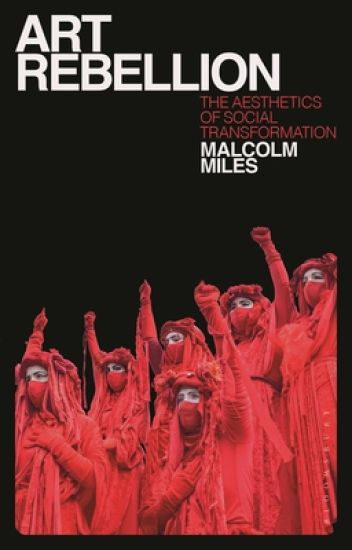
Art Rebellion

Art Rebellion

Malcolm Miles

BLOOMSBURY PUBLISHING PLC
2023
sidottu
Art has always been central to moments of great social change. From the avant-garde to the ages of revolution, the act of rebellious creation has been crucial to bringing people and ideas together. However, in an increasingly fractured world characterised by upheaval and crisis, what role can art play in ushering in transformation?Malcolm Miles offers a guide to contemporary art and activism, setting it firmly within the context of the avant garde and its legacies in the postwar period. He explores the rise of direct action to replace representational politics in organizations like Occupy and Extinction Rebellion, and in the movements to destroy or remove statues of slavers, and finds parallels in anti-institutional art practices. By engaging with the significant theoretical innovations of the last 50 years — modernism, postmodernism and contemporary critical thinking - Miles provides both an overview of political aesthetics and an introduction to how art activism works in its most memorable moments in history. Art Rebellion argues that beauty is radically other to the dominant society; that power relations can be transformed; that protest cultures and contemporary art grow together; and that art has a crucial interruptive role in forming new, more equal and just, realities.
Art Rebellion

Art Rebellion

Malcolm Miles

BLOOMSBURY PUBLISHING PLC
2023
nidottu
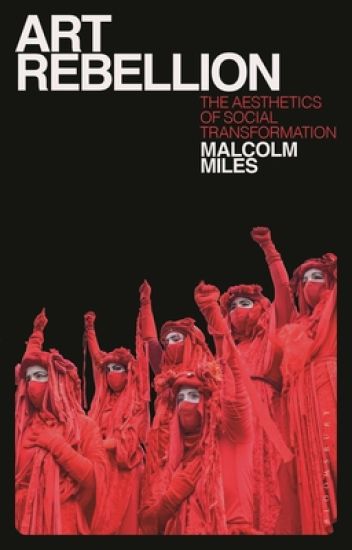
Art has always been central to moments of great social change. From the avant-garde to the ages of revolution, the act of rebellious creation has been crucial to bringing people and ideas together. However, in an increasingly fractured world characterised by upheaval and crisis, what role can art play in ushering in transformation?Malcolm Miles offers a guide to contemporary art and activism, setting it firmly within the context of the avant garde and its legacies in the postwar period. He explores the rise of direct action to replace representational politics in organizations like Occupy and Extinction Rebellion, and in the movements to destroy or remove statues of slavers, and finds parallels in anti-institutional art practices. By engaging with the significant theoretical innovations of the last 50 years — modernism, postmodernism and contemporary critical thinking - Miles provides both an overview of political aesthetics and an introduction to how art activism works in its most memorable moments in history. Art Rebellion argues that beauty is radically other to the dominant society; that power relations can be transformed; that protest cultures and contemporary art grow together; and that art has a crucial interruptive role in forming new, more equal and just, realities.
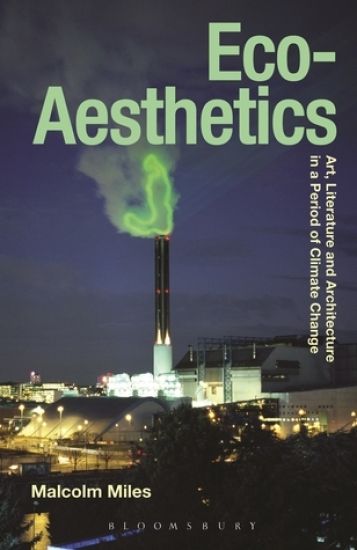
Eco-Aesthetics

Eco-Aesthetics

Malcolm Miles

Bloomsbury Academic
2014
sidottu
By moving beyond traditional aesthetic categories (beauty, the sublime, the religious), Eco-Aesthetics takes an inter-disciplinary approach bridging the arts, humanities and social sciences and explores what aesthetics might mean in the 21st century. It is one in a series of new, radical aesthetics promoting debate, confronting convention and formulating alternative ways of thinking about art practice. There is no doubt that the social and environmental spheres are interconnected but can art and artists really make a difference to the global environmental crisis? Can art practice meaningfully contribute to the development of sustainable lifestyles? Malcolm Miles explores the strands of eco-art, eco-aesthetics and contemporary aesthetic theories, offering timely critiques of consumerism and globalisation and, ultimately, offers a possible formulation of an engaged eco-aesthetic for the early 21st century.
Eco-Aesthetics

Eco-Aesthetics

Malcolm Miles

Bloomsbury Academic
2014
nidottu
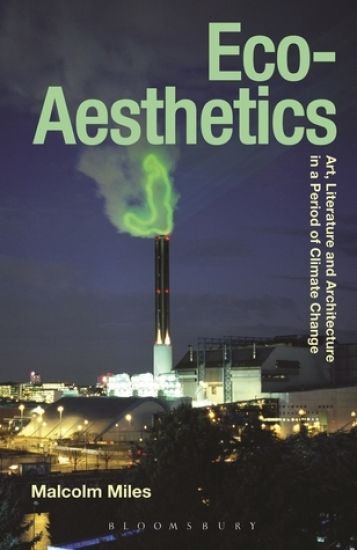
By moving beyond traditional aesthetic categories (beauty, the sublime, the religious), Eco-Aesthetics takes an inter-disciplinary approach bridging the arts, humanities and social sciences and explores what aesthetics might mean in the 21st century. It is one in a series of new, radical aesthetics promoting debate, confronting convention and formulating alternative ways of thinking about art practice. There is no doubt that the social and environmental spheres are interconnected but can art and artists really make a difference to the global environmental crisis? Can art practice meaningfully contribute to the development of sustainable lifestyles? Malcolm Miles explores the strands of eco-art, eco-aesthetics and contemporary aesthetic theories, offering timely critiques of consumerism and globalisation and, ultimately, offers a possible formulation of an engaged eco-aesthetic for the early 21st century.
Paradoxical Urbanism

Paradoxical Urbanism

Malcolm Miles

Springer Verlag, Singapore
2020
sidottu
Modernist urbanism seems progressive, even Utopian: design for a better world through a democratic and humane built environment. But two currents undermine this vision from within: an Arcadianism which turns to a rural idyll as retreat from change and the effects of industrialization; and an instrumentalism by which the humane vision becomes prescriptive and anti-democratic. Malcolm Miles argues that these two currents undermine modernism’s progressive vision. This book examines the roots of modernist urbanism in the seamless, self-contained systems of Cartesian space; and identifies contradictions within modernist urbanism in its instrumentalism and reliance on de-politicised professional expertise. Miles adroitly reviews the postmodern culture of industrial ruinscapes; and posits that if cities are to be places of proximity, diversity, mobility and agency, this will require a move from modernist instrumentalism to a creative and radically democratic co-production of the built environment.
Paradoxical Urbanism

Paradoxical Urbanism

Malcolm Miles

SPRINGER VERLAG, SINGAPORE
2021
nidottu
Modernist urbanism seems progressive, even Utopian: design for a better world through a democratic and humane built environment. But two currents undermine this vision from within: an Arcadianism which turns to a rural idyll as retreat from change and the effects of industrialization; and an instrumentalism by which the humane vision becomes prescriptive and anti-democratic. Malcolm Miles argues that these two currents undermine modernism’s progressive vision. This book examines the roots of modernist urbanism in the seamless, self-contained systems of Cartesian space; and identifies contradictions within modernist urbanism in its instrumentalism and reliance on de-politicised professional expertise. Miles adroitly reviews the postmodern culture of industrial ruinscapes; and posits that if cities are to be places of proximity, diversity, mobility and agency, this will require a move from modernist instrumentalism to a creative and radically democratic co-production of the built environment.