Kirjojen hintavertailu. Mukana 11 244 527 kirjaa ja 12 kauppaa.

Kirjahaku

Etsi kirjoja tekijän nimen, kirjan nimen tai ISBN:n perusteella.

10 kirjaa tekijältä Malcolm Schofield

Plato

Plato

Malcolm Schofield

Oxford University Press
2006
nidottu
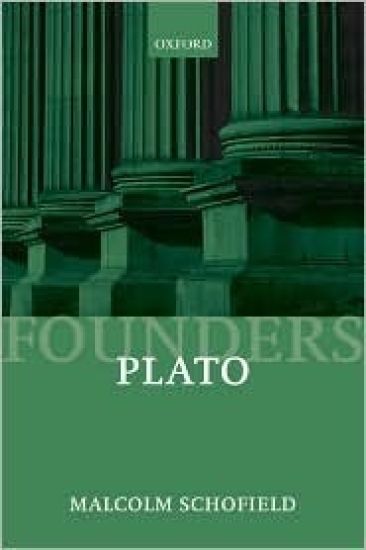
The Founders of Modern Political and Social Thought series presents critical examinations of the work of major political philosophers and social theorists, assessing both their initial contribution and their continuing relevance to politics and society. Each volume provides a clear, accessible, historically informed account of a thinker's work, focusing on a reassessment of the central ideas and arguments. The series encourages scholars and students to link their study of classic texts to current debates in political philosophy and social theory. In this authoritative general account of Plato's political thought, a leading scholar of ancient Greek philosophy explores its key themes: education, democracy and its shortcomings, the role of knowledge in government, utopia and the idea of community, money and its grip on the psyche, ideological uses of religion. Between them these define what Plato considered to be the fundamental challenges for politics. All remain live issues. On all of them Plato took radical and uncomfortable positions. The radicalism derives above all from his reflections on the fate of Socrates at the hands of the Athenian democracy in 399 BC. So the book begins with chapters situating Plato's alienation from contemporary politics in its historical context, and examines at length the images of Athens and the Spartan alternative which pervade his writings on politics. The Republic is a main focus of discussion throughout, but ideas and arguments in many other dialogues from Apology and Gorgias to the Statesman and the Laws are examined. Plato: Political Philosophy assumes a broad range of readers - with backgrounds in varied fields (politics, philosophy, classics, history) - who may have little prior knowledge of Plato. It articulates and analyses his main lines of thought, illustrating them with a liberal use of translated excerpts, and highlighting affinities with modern theorists from Machiavelli and Mill to Rawls and Habermas. Schofield's distinctive line of approach to Plato's problems constitutes a lucid and accessible guide for those needing an introduction, and at the same time will provide those who know Plato well with much food for thought.
Plato

Plato

Malcolm Schofield

Oxford University Press
2006
sidottu
Plato is the best known and most widely studied of all the ancient Greek philosophers. Malcolm Schofield, a leading scholar of ancient philosophy, offers a lucid and accessible guide to Plato's political thought, enormously influential and much discussed in the modern world as well as the ancient. Schofield discusses Plato's ideas on education, democracy and its shortcomings, the role of knowledge in government, utopia and the idea of community, money and its grip on the psyche, and ideological uses of religion.
Cicero

Cicero

Malcolm Schofield

Oxford University Press
2021
sidottu
This book offers an innovative analytic account of Cicero's treatment of key political ideas: liberty and equality, government, law, cosmopolitanism and imperialism, republican virtues, and ethical decision-making in politics. Cicero (106-43 BC) is well known as a major player in the turbulent politics of the last three decades of the Roman Republic. But he was a political thinker, too, influential for many centuries in the Western intellectual and cultural tradition. His theoretical writings stand as the first surviving attempt to articulate a philosophical rationale for republicanism. They were not written in isolation either from the stances he took in his political actions and political oratory of the period, or from his discussions of immediate political issues or questions of character or behaviour in his voluminous correspondence with friends and acquaintances. In this book, Malcolm Schofield situates the intimate interrelationships between Cicero's writings in all these modes within the historical context of a fracturing Roman political order. It exhibits the continuing attractions of Cicero's scheme of republican values, as well as some of its limitations as a response to the crisis that was engulfing Rome.
Cicero

Cicero

Malcolm Schofield

Oxford University Press
2021
nidottu
This book offers an innovative analytic account of Cicero's treatment of key political ideas: liberty and equality, government, law, cosmopolitanism and imperialism, republican virtues, and ethical decision-making in politics. Cicero (106-43 BC) is well known as a major player in the turbulent politics of the last three decades of the Roman Republic. But he was a political thinker, too, influential for many centuries in the Western intellectual and cultural tradition. His theoretical writings stand as the first surviving attempt to articulate a philosophical rationale for republicanism. They were not written in isolation either from the stances he took in his political actions and political oratory of the period, or from his discussions of immediate political issues or questions of character or behaviour in his voluminous correspondence with friends and acquaintances. In this book, Malcolm Schofield situates the intimate interrelationships between Cicero's writings in all these modes within the historical context of a fracturing Roman political order. It exhibits the continuing attractions of Cicero's scheme of republican values, as well as some of its limitations as a response to the crisis that was engulfing Rome.
The Stoic Idea of the City

The Stoic Idea of the City

Malcolm Schofield

University of Chicago Press
1999
nidottu
The Stoic Idea of the City offers the first systematic analysis of the Stoic school, concentrating on Zeno's Republic. Renowned classical scholar Malcolm Schofield brings together scattered and underused textual evidence, examining the Stoic ideals that initiated the natural law tradition of Western political thought. A new foreword by Martha Nussbaum and a new epilogue written by the author further secure this text as the standard work on Presocratic Stoics. "The account emerges from a jigsaw-puzzle of items from a wide range of authorities, painstakingly pieced together and then annotated in a series of appendixes, the whole executed with fine scholarship, clarity, and good humor."--Times Literary Supplement
Saving the City

Saving the City

Malcolm Schofield

Routledge
1998
sidottu
Saving the City provides a detailed analysis of the attempts of ancient writers and thinkers, from Homer to Cicero, to construct and recommend political ideals of statesmanship and ruling, of the political community and of how it should be founded in justice. Malcolm Schofield debates to what extent the Greeks and Romans deal with the same issues as modern political thinkers.
Saving the City

Saving the City

Malcolm Schofield

Routledge
2012
nidottu
Saving the City provides a detailed analysis of the attempts of ancient writers and thinkers, from Homer to Cicero, to construct and recommend political ideals of statesmanship and ruling, of the political community and of how it should be founded in justice. Malcolm Schofield debates to what extent the Greeks and Romans deal with the same issues as modern political thinkers.
An Essay on Anaxagoras

An Essay on Anaxagoras

Malcolm Schofield

Cambridge University Press
2007
pokkari
In Aristotle's view, Anaxagoras stood out from the other Presocratics as a sober man among the incoherent. This book explores the fragmentary evidence both for Anaxagoras' concept of mind - to which Aristotle was particularly referring - and for his subtle, complex and elusive theory of matter and change. It is concerned with two aspects of his writing in particular: its comparatively high ratio of dogmatic assertion to argument, and a pervasive ambiguity or indeterminacy in the presentation of Anaxagoras' philosophical theses. The problems posed by Anaxagoras' work are examined not only by means of philosophical comparison with what survives of other Presocratics, but in the light of the development of the prose book as a vehicle for the communication of ideas in early Greece. A book for the scholar of ancient philosophy.
An Essay on Anaxagoras

An Essay on Anaxagoras

Malcolm Schofield

Cambridge University Press
1980
sidottu
In Aristotle's view, Anaxagoras stood out from the other Presocratics as a sober man among the incoherent. This book explores the fragmentary evidence both for Anaxagoras's concept of mind - to which Aristotle was particularly referring - and for his subtle, complex and elusive theory of matter and change. It is concerned with two aspects of his writing in particular: its comparativelt high ratio of dogmatic assertion to argument, and a pervasive ambiguity or indeterminacy in the presentation of Anaxagoras's philosophical theses. The problems posed by Anaxagoras's work are examined not only by means of philosophical comparison with what survives of other Presocratics, but in the light of the development of the prose book as a vehicle for the communication of ideas in early Greece. A book for the scholar of ancient philosophy.
How Plato Writes

How Plato Writes

Malcolm Schofield

Cambridge University Press
2023
sidottu
Plato is a philosophical writer of unusual and ingenious versatility. His works engage in argument but are also full of allegory, imagery, myth, paradox and intertextuality. He astutely characterises the participants whom he portrays in conversation. Sometimes he composes fictive dialogues in dramatic form while at other times he does so as narratives. In this book, world-renowned scholar Malcolm Schofield illustrates the variety of the literary resources that Plato deploys to achieve his philosophical purposes. He draws key passages for discussion particularly, but not only, from Republic and the less well-known Laws and also shows how reconstructing the original historical context of a dialogue and of its assumed readership is essential to understanding Plato's approach. The book will open the eyes of readers of all levels of expertise to Plato's masterly ability as a writer and how an understanding of this is crucial if we are to appreciate his philosophy.