Kirjojen hintavertailu. Mukana 12 083 983 kirjaa ja 12 kauppaa.

Kirjahaku

Etsi kirjoja tekijän nimen, kirjan nimen tai ISBN:n perusteella.

3 kirjaa tekijältä Malcolm Thick

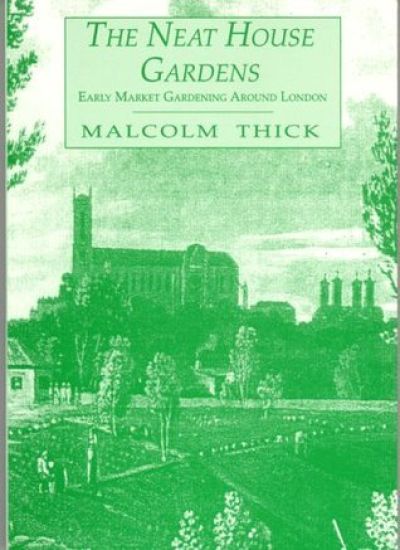
The Neat House Gardens

The Neat House Gardens

Malcolm Thick

Prospect Books
2025
nidottu
The Neat House Gardens sets its subject, perhaps the most productive 200 acres of land in England in the seventeenth and eighteenth centuries, into the wider context of horticulture and food supply in the London area, and will be of general interest to agrarian historians as well as those with specific interests in food supply and the capital.
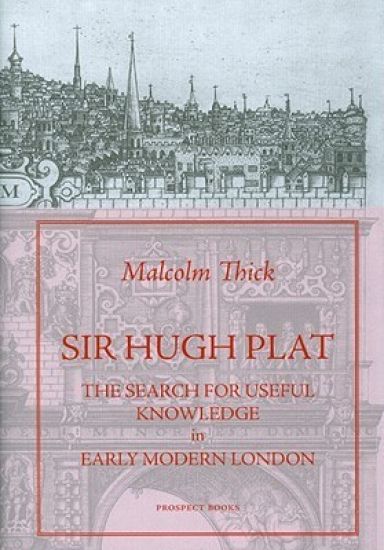
Sir Hugh Plat

Sir Hugh Plat

Malcolm Thick

Prospect Books
2025
sidottu
The scientific and proto-scientific community of Elizabethan and Jacobean London has lately attracted much scholarly attention. This book advances the subject by means of an investigation of the life and work of Sir Hugh Plat (1552-1611), an author, alchemist, speculator and inventor whose career touched on the fields of alchemy, general scientific curiosity, cookery and sugar work, cosmetics, gardening and agriculture, food manufacture, victualling, supplies and marketing. Unlike many of his colleagues and correspondents, much manuscript material, in the form of notebooks and workings, has survived. Not much, however, is known of his personal life and among his manuscripts there are few letters, diaries or other private materials. What can be learnt about him is summarised by Malcolm Thick in the first chapter, before he proceeds to analyse various aspects of his public output. Plat has such a wide range of interests that modern scholars have tended to concentrate on that aspect of his work which most affects their own research.Most recently he has fallen amongst historians of science and whilst they have carefully examined his written and published works they have, in some cases, interpreted almost all that he wrote as a quest for scientific knowledge, in the same way that the gardening writers thought him primarily a gardener or the cookery writers treated his cookery book as his most important work. By devoting a whole book to his multifarious interests that Thick can show him in the round, as a gentlemen of varied interests, a Londoner trying to make his way in the world. He also shows Plat as a man of his time and place. The chapter on military inventions, for instance, reveals Plat as an inventor who talked to military commanders and bent his mind to their most pressing military needs. His work on famine relief was an immediate response to a run of bad harvests which threatened the food supply of by far the largest city in the country. The medicines he developed aimed to cure the diseases most feared by his friends and neighbours. Even something as frivolous as his work on cosmetics was of great value to those at court, where appearance might dictate fortune.Two important aspects of his research, alchemy and enquiries about the current technology of various trades, were not so immediately dictated by the needs of the time. Whilst his alchemical writings are the most esoteric and complex of his surviving manuscripts, much had a practical end in view - to develop powerful, effective medicines. His work on the technology of trades was by no means disinterested - in more than one instance he developed better ways of carrying out industrial processes than was then practised and tried, by patents or other means, to make money thereby.
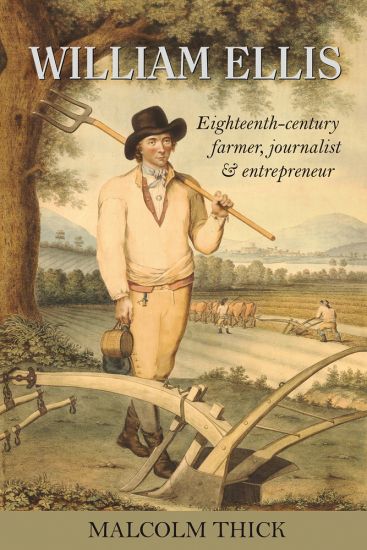
William Ellis

William Ellis

Malcolm Thick

UNIVERSITY OF HERTFORDSHIRE PRESS
2022
nidottu
William Ellis, who lived and farmed at Little Gaddesden in Hertfordshire in the first half of the eighteenth century (d. 1759), is an important figure in English agricultural history. In his time the most prolific writer on agriculture in England, his many works were read not only at home but also in the American colonies and continental Europe. Ellis was essentially an agricultural journalist, then a relatively new occupation. He wrote about his own life as well as those of the ordinary people of Little Gaddesden and further afield – he travelled extensively throughout the southern half of England. Most of his copy was derived from conversations he had had with farmers, their wives and other rural folk, the sheer immediacy of his books outshining those of his rivals. Ellis’s style was discursive, particularly so in The Country Housewife’s Family Companion (1750). As well as providing a compendium of household management, cookery and medicine, Ellis delighted in relaying gossip. He included the activities of farmers, wives and maids, labourers, travellers and beggars, as well as the gentry and aristocracy, rich pickings for social historians. Ellis also used his books to advertise his business as a supplier of agricultural instruments, seeds, plants, trees and fowls, an innovative approach. The Swedish botanist Pehr Kalm visited Little Gaddesden in 1748 to inspect Ellis’s farming and the various farm implements he advertised for sale. The two men didn’t warm to each other, but Kalm’s independent observations add to what we know about Ellis. Piecing together the scant facts about Ellis’s early life, Malcolm Thick has uncovered new information on his time before he commenced farming, and unravelled some of the complexities of his two marriages. The book’s central focus is on Ellis’s agricultural writings, which provide a fascinating picture of rural life in the period and shed light on the evolution of English farming. This is the first book about Ellis for over sixty years and the first to consider him fully in the round – as a farmer, an active member of his community, an innovative salesman and a wonderfully curious mind.