Kirjojen hintavertailu. Mukana 11 608 183 kirjaa ja 12 kauppaa.

Kirjahaku

Etsi kirjoja tekijän nimen, kirjan nimen tai ISBN:n perusteella.

8 kirjaa tekijältä Malcolm Vale

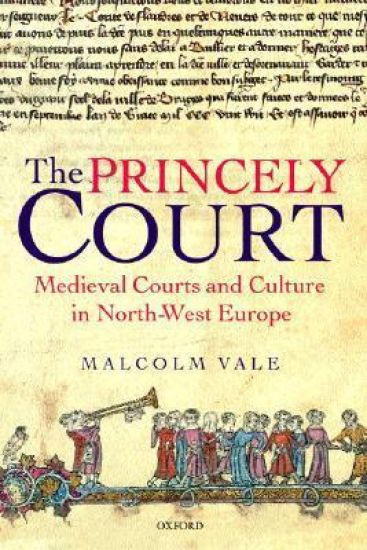
The Princely Court

The Princely Court

Malcolm Vale

Oxford University Press
2001
sidottu
In this text, the author sets out to recapture the court culture of western Europe in the 13th and 14th centuries. He shows how, despite the pressures of political fragmentation and a nascent awareness of national identity, a common culture emerged in court societies at the time.
The Origins of the Hundred Years War

The Origins of the Hundred Years War

Malcolm Vale

Clarendon Press
1996
nidottu
In this important study of Anglo-French relations in the century before the Hundred Years War, Malcolm Vale examines the legacy of continental rule bequeathed by the Angevin kings of England to their Plantagenet successors. He explores the sources of Anglo-French tension which ultimately led to the breakdown of feudal and diplomatic relations between the two greatest powers in western Europe.
The Princely Court

The Princely Court

Malcolm Vale

Oxford University Press
2004
nidottu
In this fascinating new book, Malcolm Vale sets out to recapture the splendour of the court culture of western Europe in the thirteenth and fourteenth centuries. Exploring the century or so between the death of St Louis and the rise of Burgundian power in the Low Countries, he illuminates a period in the history of princes and court life previously overshadowed by that of the courts of the dukes of Burgundy. Taking in subjects as diverse as art patronage and gambling, hunting and devotional religion, Malcolm Vale rediscovers a richness and abundance of artistic, literary, and musical life. He shows how, despite the pressures of political fragmentation, unrest, and a nascent awareness of national identity, a common culture emerged in English, French, and Dutch court societies at this time. The result is a ground-breaking re-evaluation of the nature and role of the court in European history and a celebration of a forgotten age.
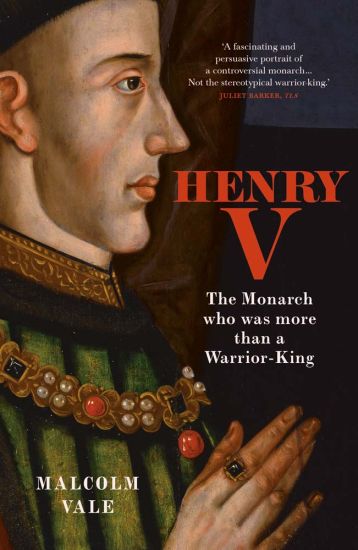
Henry V

Henry V

Malcolm Vale

YALE UNIVERSITY PRESS
2022
pokkari
More than just a single-minded warrior-king, Henry V comes to life in this fresh account as a gifted ruler acutely conscious of spiritual matters and his subjects’ welfare Shakespeare’s centuries-old portrayal of Henry V established the king’s reputation as a warmongering monarch, a perception that has persisted ever since. But in this exciting, thoroughly researched volume a different view of Henry emerges: a multidimensional ruler of great piety, a hands-on governor who introduced a radically new conception of England’s European role in secular and ecclesiastical affairs, a composer of music, an art patron, and a dutiful king who fully appreciated his obligations toward those he ruled. Historian Malcolm Vale draws on extensive primary archival evidence that includes many documents annotated or endorsed in Henry’s own hand. Focusing on a series of themes—the interaction between king and church, the rise of the English language as a medium of government and politics, the role of ceremony in Henry’s kingship, and more—Vale revises understandings of Henry V and his conduct of the everyday affairs of England, Normandy, and the kingdom of France.
A Short History of the Renaissance in Northern Europe
The concept of a ‘Renaissance’ in the arts, in thought, and in more general culture North of the Alps often evokes the idea of a cultural transplant which was not indigenous to, or rooted in, the society from which it emerged. Classic definitions of the European ‘Renaissance’ during the 14th, 15th and 16th centuries have seen it as what was in effect an Italian import into the Gothic North. Yet there were certainly differences, divergences and dichotomies between North and South which have to be addressed. Here, Malcolm Vale argues for a Northern Renaissance which, while cognisant of Italian developments, displayed strong continuities with the indigenous cultures of northern Europe. But it also contributed novelties and innovations which often tended to stem from, and build upon, those continuities. A Short History of the Renaissance in Northern Europe – while in no way ignoring or diminishing the importance of the Hellenic and Roman legacy – seeks other sources, and different uses of classical antiquity, for a rather different kind of ‘Renaissance’, if such it was, in the North.
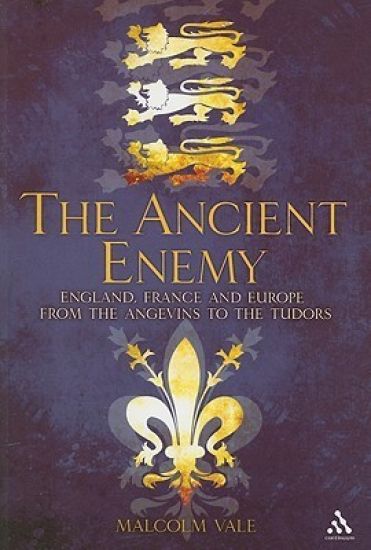
The Ancient Enemy

The Ancient Enemy

Malcolm Vale

Hambledon Continuum
2007
sidottu
This book traces the origins and evolution of the enmity between England and France over the four hundred years in which England was a continental European land power. The medieval claim to the throne of France was not formally abandoned by the British monarchy until 1802. The so-called Hundred Years War between England and France was never concluded by a peace treaty.This book argues that medieval and early modern England, like Britain today, was a two-faced polity: one face looked westward and northward towards its Celtic neighbours; the other faced eastward and southward towards continental Europe. Ultimately, from the reign of Edward III onwards, the French throne itself became the object of English ambitions and the book discusses the implications of Henry V's pursuit of that claim and its aftermath. It emphasizes the extent to which the story of Joan of Arc, for example, has become a myth which has contributed its share to the perpetuation of Anglo-French antipathy and estrangement. The book also examines the emergence of English national identity and the part played by language in this process, as the English increasingly defined themselves against their French enemy.But the common assumptions, behavioural patterns, and culture which bound the upper ranks of English and French society together throughout this period are also stressed. The book ends with a discussion of the legacy left by this 'continentalist' phase of English history to the changed, but by no means totally transformed, world of early modern Europe.
The Ancient Enemy

The Ancient Enemy

Malcolm Vale

Hambledon Continuum
2009
nidottu
This is a detailed exploration of how the antagonism between England and France originated and evolved over 400 years.This book traces the origins and evolution of the enmity between England and France over the 400 years in which England was a continental European land power. The medieval claim to the throne of France was not formally abandoned by the British monarchy until 1802 and the so-called Hundred Years War between the two nations was never concluded by a peace treaty. The book argues that medieval and early modern England, like Britain today, was a two-faced polity: one face looked westward and northward towards its Celtic neighbours; the other faced eastward and southward towards continental Europe. Ultimately, from the reign of Edward III onwards, the French throne itself became the object of English ambitions and the book discusses the implications of Henry V's pursuit of that claim and its aftermath. It emphasizes the extent to which the story of Joan of Arc, for example, has become a myth which has contributed its share to the perpetuation of Anglo-French antipathy and estrangement.The book also examines the emergence of English national identity and the part played by language in this process, as the English increasingly defined themselves against their French enemy. But the common assumptions, behavioural patterns, and culture which bound the upper ranks of English and French society together throughout this period are also stressed. The book ends with a discussion of the legacy left by this 'continentalist' phase of English history to the changed, but by no means totally transformed, world of early modern Europe.
A Short History of the Renaissance in Northern Europe
The concept of a Northern European ‘Renaissance’ in the arts, in thought, and in more general culture north of the Alps often evokes the idea of a cultural transplant which was not indigenous to, or rooted in, the society from which it emerged. Classic definitions of the European ‘Renaissance’ during the 14th, 15th and 16th centuries have often seen it as an Italian import of, for example, humanism and classical learning into the Gothic North. There were certainly differences between North and South which have to be addressed, not least in the development of the visual arts. In this book, Malcolm Vale argues for a Northern Renaissance which, while cognisant of Italian developments, had a life of its own, expressed through such innovations as a rediscovery of pictorial space and representational realism, and which displayed strong continuities with the indigenous cultures of northern Europe. But it also contributed new movements and tendencies in thought, the visual arts, literature, religious beliefs and the dissemination of knowledge which often stemmed from, and built upon, those continuities. A Short History of the Renaissance in Northern Europe – while in no way ignoring or diminishing the importance of the Greek and Roman legacy – seeks other sources, and different uses of classical antiquity, for a rather different kind of ‘Renaissance’ in the North.