Kirjojen hintavertailu. Mukana 12 423 685 kirjaa ja 12 kauppaa.

Kirjahaku

Etsi kirjoja tekijän nimen, kirjan nimen tai ISBN:n perusteella.

33 kirjaa tekijältä Mandeep Singh

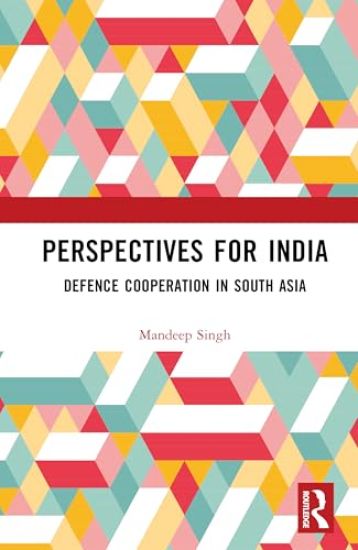
Perspectives for India

Perspectives for India

Mandeep Singh

TAYLOR FRANCIS LTD
2026
sidottu
This book examines defence cooperation frameworks in South Asia, analyzing existing mechanisms and their limitations. It provides detailed comparison of defence cooperation models used by USA and China, offering insights into effective partnership strategies. The author critically evaluates current bilateral and multilateral defence arrangements while proposing enhanced mechanisms for India's engagement with South Asian countries, and also discusses: Comprehensive analysis of defence cooperation frameworks and their strategic importance in South Asia Comparative study of defence cooperation models employed by USA and China in regional contexts Critical evaluation of existing defence cooperation mechanisms and their operational shortcomings Strategic framework for enhancing India's defence partnerships with South Asian neighbors Detailed examination of bilateral and multilateral defence cooperation structures The analysis includes strategic frameworks, policy recommendations, and implementation strategies for strengthening regional security cooperation. Essential reading for defence analysts, policymakers, and scholars studying regional security dynamics and strategic partnerships in South Asia. This title has been co-published with Knowledge World Publishers. T&F does not sell or distribute the print versions in Bangladesh, Bhutan, India, Nepal, Pakistan, and Sri lanka.
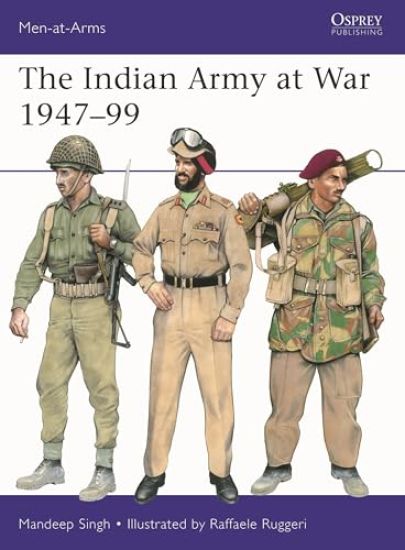
The Indian Army at War 1947–99

The Indian Army at War 1947–99

Mandeep Singh

BLOOMSBURY PUBLISHING PLC
2025
nidottu
This absorbing study describes and illustrates the Indian Army forces that fought in five wars during the second half of the 20th century.The Indian Army is the world’s largest volunteer army, with an enviable history and tradition of valour and gallantry. It was involved in warfare soon after India’s independence and has fought five wars between 1947 and 1999, notably against Pakistan (1947–48, 1965, 1971 and 1999) but also against China (1962). Besides these, the Indian Army has been involved in smaller internal conflicts and counter-insurgency operations, some of which continue. The Indian Army has also carried out two military interventions overseas, namely in the Maldives (1988) and in Sri Lanka (1987–90).The troops who fought in these operations, culminating in 1999’s Kargil War against Pakistan, are described and illustrated in this book, written by an Indian Army veteran. The Indian Army’s evolving uniforms, insignia and personal equipment are depicted in photographs, some previously unpublished, and eight plates of original colour artwork. The book is an important contribution to our understanding of the Indian Army’s contribution to global military history since Independence in 1947.
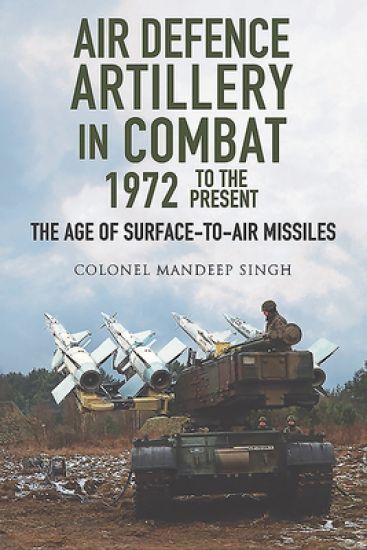
Air Defence Artillery in Combat, 1972-2018
Having made its debut in the Franco-Prussian War in 1870, anti-aircraft artillery was used extensively in the First World War. It was, however, not until the Second World War that anti-aircraft artillery truly came into prominence, shooting down more aircraft than any other weapon and seriously affecting the conduct of air operations. The development of anti-aircraft artillery continued into the Cold War, resulting in the extensive introduction of surface-to-air missiles, or SAMs. Such weapons are cheaper to manufacture, simpler to maintain, and easier to operate than the vast fleet of aircraft required to defend an airspace. Though the first combat success of such weapons was during the Vietnam War, when a Soviet-designed S-75 Dvina missile shot down a USAF F-4C Phantom on 24 July 1965, it was the Yom Kippur War of 1973 which brought surface-to-air missiles to the centre stage. During this short but bitter conflict, Egyptian and Syrian air defences shot down nearly fifty Israeli aircraft in the first three days alone - almost a fourth of Israel's entire combat aircraft fleet. In all, Israel lost 104 aircraft during the war and, for the first time, more aircraft were lost to SAMs than any other cause. The age of surface-to-air missiles had dawned. In this unique examination, the author details the development of not just surface-to-air missiles, but all anti-aircraft artillery, since 1972\. The part that such equipment played in all of the major conflicts since then is explored, including the Soviet Afghan War, the Falklands War, in which Rapier was deployed, the conflict in Lebanon, Kosovo and Bosnia, the Gulf War, Operation _Desert Storm_ in 1991, and Operation _Iraqi Freedom_ in 1993\. The investigation is brought right up to date by a study of the weapons, tactics and engagements seen in the conflicts in Syria and Yemen.
Girl's heart / ???? ?? ???

Girl's heart / ???? ?? ???

Mandeep Singh

Notion Press, Inc.
2020
pokkari
This book is written on a naive girl who cannot kill even Chinti, but she is accused of murder, planted by a boy who has no compulsion, the boy loves his sister very much, when the boy knows If he is his own sister, then he would start saving the girl from punishment, fear that my love may not get away from me because of this lie
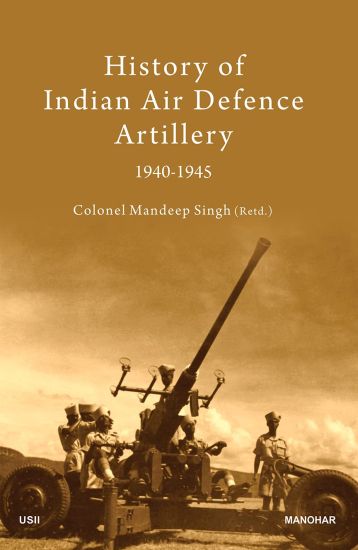
History of Indian Air Defence Artillery 1940-1945

History of Indian Air Defence Artillery 1940-1945

Mandeep Singh

MANOHAR PUBLISHERS AND DISTRIBUTORS
2024
sidottu
In 1921, the eighth Anti-Aircraft Battery of Royal Artillery was first stationed in India. However, it was only after two decades that the threat from the Japanese expansionism made India to finally realise how ill-prepared its anti-aircraft defences were. Starting from a Battery raised at Colaba, Indian Anti-Aircraft Artillery soon expanded to over thirty- four regiments for India to have the second largest concentration of Anti-Aircraft defences outside the Great Britain. At one time, India had more Anti-Aircraft Regiments than that of field artillery. Numbers aside, Indian Anti-Aircraft gunners served in varied battle­fields with honour, both during defeat and victory. If they were at Singa­pore as the fortress fell, they kept the Japanese Air Force at bay when Allied forces retreated from Burma, and later formed part of the van­guard when the Allies returned to Burma in triumph. Indian Anti-Aircraft Regiments served in Singapore, Malaya, Burma, Maldives, Aden and Iraq. They were truly representative as all regi­ments comprised of varied races and castes. It had a separate training centre for women and was one of the first to enlist women when the WAC(I) manned its operation rooms and drove lorries.
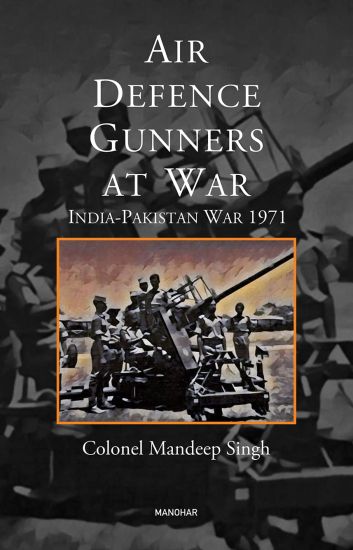
Air Defence Gunners at War

Air Defence Gunners at War

Mandeep Singh

MANOHAR PUBLISHERS AND DISTRIBUTORS
2024
sidottu
The India-Pakistan War of 1971 was the third round between the two South Asian neighbours, but this war was different in many ways from the earlier conflicts. It was not a long drawn slugfest as the three services operated together in perfect sync in what was a lightning campaign that ended with a clear victory for India and the liberation of Bangladesh. It was a victory made possible by the contributions of all arms and services. As the war started on 3 December with the pre-emptive strikes by the Pakistani Air Force, Air Defence Gunners were the first to fire. Throughout the fourteen day campaign, the Air Defence Artillery played a vital role, from ensuring the defence of strategic assets to defending the field formations from enemy air attacks. While many books have been written about the war, all of them have overlooked the role of Air Defence Artillery, relegating its contributions to the margins. For the first time, this book narrates the story of Air Defence Artillery in the 1971 war as it looks at the performance of Air Defence Artillery and highlights both its achievements and failings. This is the story of the unsung heroes of the Indian and Pakistani Air Defence Artillery, who performed valiantly during the war, fighting against all odds.