Kirjojen hintavertailu. Mukana 11 244 527 kirjaa ja 12 kauppaa.

Kirjahaku

Etsi kirjoja tekijän nimen, kirjan nimen tai ISBN:n perusteella.

8 kirjaa tekijältä Mandy Merck

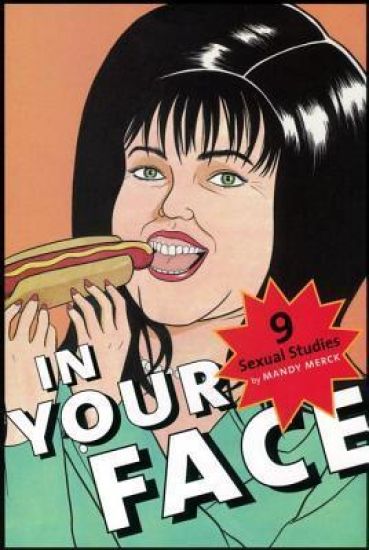
In Your Face

In Your Face

Mandy Merck

New York University Press
2000
sidottu
At a time when "sexy" can be an adjective for anything, when sexual awareness is declared to be advancing faster in months than in the past half century, and when pundits warn of sexual overload, the actual representation of sex is still deemed confrontational, aggressive, "in your face." While critics accuse the academy of an obsession with sexuality, they also complain that nothing that appears to refer to sex really does. In readings ranging across film, drama, opera, fine art, and critical theory, Mandy Merck considers these phenomena as well as the role of the dog in anti-porn propaganda, the unacknowledged significance of the lesbian hand, and the early retirement of the phallus. Other topics include the relationship of women's tennis and prostitution, the gendering of the wild and the tame in the age of AIDS, and the sexlessness of postmodern criticism. In Your Face ends with the face and its alleged desecration by fellatio. Germaine Greer's condemnation of Bill Clinton for "fucking the faces of little girls" is examined in the light of one of Monica Lewinsky's endearments for the President--"fuckface." In a country whose last great Presidential scandal revolved around a key witness known only as "Deep Throat" and whose current Chief Executive works in the "Oral Office," giving head is going down in history. Analyzing the strange relationship of Linda Lovelace, Camille Paglia, and Paul de Man, In Your Face concludes by considering desire and disgust in high and low places.
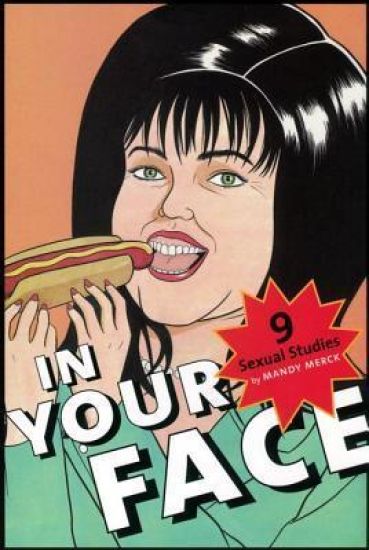
In Your Face

In Your Face

Mandy Merck

New York University Press
2000
pokkari
At a time when "sexy" can be an adjective for anything, when sexual awareness is declared to be advancing faster in months than in the past half century, and when pundits warn of sexual overload, the actual representation of sex is still deemed confrontational, aggressive, "in your face." While critics accuse the academy of an obsession with sexuality, they also complain that nothing that appears to refer to sex really does. In readings ranging across film, drama, opera, fine art, and critical theory, Mandy Merck considers these phenomena as well as the role of the dog in anti-porn propaganda, the unacknowledged significance of the lesbian hand, and the early retirement of the phallus. Other topics include the relationship of women's tennis and prostitution, the gendering of the wild and the tame in the age of AIDS, and the sexlessness of postmodern criticism. In Your Face ends with the face and its alleged desecration by fellatio. Germaine Greer's condemnation of Bill Clinton for "fucking the faces of little girls" is examined in the light of one of Monica Lewinsky's endearments for the President--"fuckface." In a country whose last great Presidential scandal revolved around a key witness known only as "Deep Throat" and whose current Chief Executive works in the "Oral Office," giving head is going down in history. Analyzing the strange relationship of Linda Lovelace, Camille Paglia, and Paul de Man, In Your Face concludes by considering desire and disgust in high and low places.

Perversions

Perversions

Mandy Merck

Routledge
2017
sidottu
In this series of provocative essays on culture, art, and film, former Screen editor Mandy Merck explores the paradoxes of sexual representation. Whether writing on romantic fiction or hardcore pornography, on robots or sex goddesses, Radclyffe Hall or the Marquis de Sade, she finds the perversions and deviances. Illustrated.
Cinema's Melodramatic Celebrity

Cinema's Melodramatic Celebrity

Mandy Merck

BLOOMSBURY PUBLISHING PLC
2022
nidottu
Challenging the study of both celebrity and the cinema, Mandy Merck argues that modern fame and film melodrama are part of the same worldview, one that cannot resolve the relation of personal worth to social esteem. Tracing the history of this conundrum back to the philosophy of the 17th century and the theatre of the 18th, she demonstrates its convergence in stage melodrama and its intensification in the Hollywood star system. Are today’s celebrities worth our attention? In that demand for judgement and the hope for its visual guidance, the melodramatic imagination survives – permeating not only fiction film, but documentary, the artist’s film, and our self-exhibition on social media.Examining a range of classical and contemporary films from Charlie Chaplin's City Lights (1931) to Laura Poitras’s Citizenfour (2014) , the many remakes of A Star Is Born, the compulsory exhibitionism of political celebrity and the unmasking of whistle-blowers, Merck illustrates the ways in which the cinema constantly restages the moral evaluation of prominent individuals, whether they are actors, artists, politicians or activists.
Hollywood's American Tragedies

Hollywood's American Tragedies

Mandy Merck

BLOOMSBURY PUBLISHING PLC
2007
sidottu
Theodore Dreiser's dissection of the American dream, An American Tragedy, was hailed as the greatest novel of its generation. Now a classic of American literature, the story is one to which Hollywood has repeatedly returned.Hollywood's obsession with this tale of American greed, justice, religion and sexual hypocrisy stretches across the history of cinema. Some of cinema's greatest directors - Sergei Eisenstein, Josef von Sternberg and George Stevens - have attempted to bring this classic story to the screen. Subsequently, both Jean-Luc Godard and Woody Allen have returned to the story and to these earlier adaptations.Hollywood's American Tragedies is the first detailed study of this extraordinary sequence of adaptations. What it reveals is a history of Hollywood - from its politics to its cinematography - and, much deeper, of American culture and the difficulty of telling an American tragedy in the land of the American dream.
Hollywood's American Tragedies

Hollywood's American Tragedies

Mandy Merck

Berg Publishers
2007
nidottu
Theodore Dreiser's dissection of the American dream, An American Tragedy, was hailed as the greatest novel of its generation. Now a classic of American literature, the story is one to which Hollywood has repeatedly returned.Hollywood's obsession with this tale of American greed, justice, religion and sexual hypocrisy stretches across the history of cinema. Some of cinema's greatest directors - Sergei Eisenstein, Josef von Sternberg and George Stevens - have attempted to bring this classic story to the screen. Subsequently, both Jean-Luc Godard and Woody Allen have returned to the story and to these earlier adaptations.Hollywood's American Tragedies is the first detailed study of this extraordinary sequence of adaptations. What it reveals is a history of Hollywood - from its politics to its cinematography - and, much deeper, of American culture and the difficulty of telling an American tragedy in the land of the American dream.
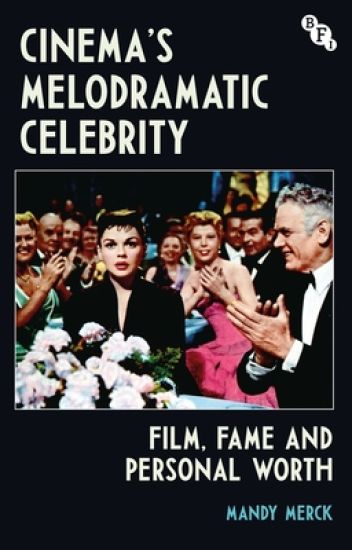
Cinema's Melodramatic Celebrity

Cinema's Melodramatic Celebrity

Mandy Merck

BFI Publishing
2020
sidottu
Challenging the study of both celebrity and the cinema, Mandy Merck argues that modern fame and film melodrama are part of the same worldview, one that cannot resolve the relation of personal worth to social esteem. Tracing the history of this conundrum back to the philosophy of the seventeenth century and the theatre of the eighteenth, she demonstrates its convergence in stage melodrama and its intensification in the Hollywood star system. Are today’s celebrities worth our attention? In that demand for judgement and the hope for its visual guidance, the melodramatic imagination survives – permeating not only fiction film, but documentary, the artist’s film, and our self-exhibition on social media. Examining a range of classical and contemporary films from Charlie Chaplin's City Lights (1931) to Laura Poitras’s Citizenfour (2014) , the many remakes of A Star Is Born, the compulsory exhibitionism of political celebrity and the unmasking of whistle-blowers, Merck illustrates the ways in which the cinema constantly restages the moral evaluation of prominent individuals, whether they are actors, artists, politicians or activists.