Kirjojen hintavertailu. Mukana 12 390 323 kirjaa ja 12 kauppaa.

Kirjahaku

Etsi kirjoja tekijän nimen, kirjan nimen tai ISBN:n perusteella.

3 kirjaa tekijältä Manoj K. Shukla

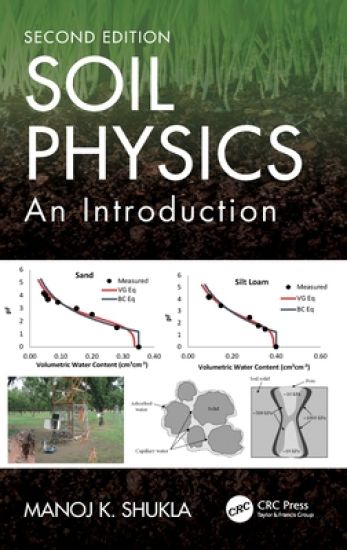
Soil Physics

Soil Physics

Manoj K. Shukla

TAYLOR FRANCIS LTD
2023
sidottu
Designed for undergraduate and graduate students interested in learning basic soil physics and its application to environment, soil health, water quality and productivity, this book provides readers with a clear coverage of the basic principles of water and solute transport through vadose zone, the theory behind transport and step-by-step guidance on how to use current computer models in the public domain along with soil erosion and contaminant remediation. Students will develop a deeper understanding of the fundamental processes within the soil profile that control water infiltration, redistribution, evapotranspiration, drainage, and erosion. The updated second edition features one new chapter, highlighting new problems, new computer models, and remediation.FeaturesServes as the most up-to-date textbook on soil physics availableIncludes one new chapter and many new numerical examplesOffers mathematical descriptions supported by simplified explanationsProvides case studies and step-by-step guidance on how to use public domain computer modelsCovers all principles and processes in an easy-to-understand format with numerous illustrations and sample problemsStudents studying in the fields of Soil Science, Environment Science, Natural Resources, Agriculture Engineering, Civil Engineering, Environmental Engineering, Range Sciences, Horticulture, Crop Sciences, and Forestry, will find this book provides a solid foundation for their studies. Professionals, researchers, academicians, and companies working in fields related to Environmental Science, Soil Physics, Hydrology, and Irrigation, will find this book is a great reference tool as it is the most up to date in its field.
Principles of Soil Physics

Principles of Soil Physics

Rattan Lal; Manoj K. Shukla

CRC Press
2019
nidottu
Principles of Soil Physics examines the impact of the physical, mechanical, and hydrological properties and processes of soil on agricultural production, the environment, and sustainable use of natural resources. The text incorporates valuable assessment methods, graphs, problem sets, and tables from recent studies performed around the globe and offers an abundance of tables, photographs, and easy-to-follow equations in every chapter. The book discusses the consequences of soil degradation, such as erosion, inhibited root development, and poor aeration. It begins by defining soil physics, soil mechanics, textural properties, and packing arrangements . The text continues to discuss the theoretical and practical aspects of soil structure and explain the significance and measurement of bulk density, porosity, and compaction. The authors proceed to clarify soil hydrology topics including hydrologic cycle, water movement, infiltration, modeling, soil evaporation, and solute transport processes. They address the impact of soil temperature on crop growth, soil aeration, and the processes that lead to the emission of greenhouse gases. The final chapters examine the physical properties of gravelly soils and water movement in frozen, saline, and water-repellant soils. Reader-friendly and up-to-date, Principles of Soil Physics provides unparalleled coverage of issues related to soil physics, structure, hydrology, aeration, temperature, and analysis and presents practical techniques for maintaining soil quality to ultimately preserve its sustainability.
Principles of Soil Physics

Principles of Soil Physics

Rattan Lal; Manoj K. Shukla

CRC Press Inc
2004
sidottu
Principles of Soil Physics examines the impact of the physical, mechanical, and hydrological properties and processes of soil on agricultural production, the environment, and sustainable use of natural resources. The text incorporates valuable assessment methods, graphs, problem sets, and tables from recent studies performed around the globe and offers an abundance of tables, photographs, and easy-to-follow equations in every chapter. The book discusses the consequences of soil degradation, such as erosion, inhibited root development, and poor aeration. It begins by defining soil physics, soil mechanics, textural properties, and packing arrangements . The text continues to discuss the theoretical and practical aspects of soil structure and explain the significance and measurement of bulk density, porosity, and compaction. The authors proceed to clarify soil hydrology topics including hydrologic cycle, water movement, infiltration, modeling, soil evaporation, and solute transport processes. They address the impact of soil temperature on crop growth, soil aeration, and the processes that lead to the emission of greenhouse gases. The final chapters examine the physical properties of gravelly soils and water movement in frozen, saline, and water-repellant soils. Reader-friendly and up-to-date, Principles of Soil Physics provides unparalleled coverage of issues related to soil physics, structure, hydrology, aeration, temperature, and analysis and presents practical techniques for maintaining soil quality to ultimately preserve its sustainability.