Kirjahaku
Etsi kirjoja tekijän nimen, kirjan nimen tai ISBN:n perusteella.
14 kirjaa tekijältä Marc Augé
"We are awash in time, savoring a few moments of it; we project ourselves into it, reinvent it, play with it; we take our time or let it slip away: it is the raw material of our imagination. Age, on the other hand, is the detailed account of the days that pass, the one-way view of the years whose total sum when set forth can stupefy us. Age wedges each of us between a date of birth that, at least in the West, we know for certain and an expiration date that, as a general rule, we would like to defer. Time is a freedom, age a constraint." Marc Auge remembers his beloved childhood cat, who seemed to grow wise with age, though her essential nature remained unchanged. He considers our belief that objects mature, when it is our perception of them that evolves over time. He wonders why public demonstrations of affection between the elderly make the young so uncomfortable and why we torture ourselves with regret at what might have been. Time can be liberating, he finds; it is a resource we can squander or relish. Yet age is a burden, bound by our personal and cultural neuroses. With an ethnologist's understanding of construct and practice, Auge isolates age from the development of consciousness, desire, and representations of the self. In bold, eye-opening strokes, he casts age as a physical marker and treats one's youthful approach to the world as the true measure of life's value.
"We are awash in time, savoring a few moments of it; we project ourselves into it, reinvent it, play with it; we take our time or let it slip away: it is the raw material of our imagination. Age, on the other hand, is the detailed account of the days that pass, the one-way view of the years whose total sum when set forth can stupefy us. Age wedges each of us between a date of birth that, at least in the West, we know for certain and an expiration date that, as a general rule, we would like to defer. Time is a freedom, age a constraint." Marc Auge remembers his beloved childhood cat, who seemed to grow wise with age, though her essential nature remained unchanged. He considers our belief that objects mature, when it is our perception of them that evolves over time. He wonders why public demonstrations of affection between the elderly make the young so uncomfortable and why we torture ourselves with regret at what might have been. Time can be liberating, he finds; it is a resource we can squander or relish. Yet age is a burden, bound by our personal and cultural neuroses. With an ethnologist's understanding of construct and practice, Auge isolates age from the development of consciousness, desire, and representations of the self. In bold, eye-opening strokes, he casts age as a physical marker and treats one's youthful approach to the world as the true measure of life's value.
Anthropology is both outside of history and within it. Histories of anthropology tend to summarise particular authors' intellectual differences; but, as Marc Augé argues in this book, first published in English in 1982, these differences may in fact be intrinsically derived from intellectual divisions within anthropology as obvious as they are irreconcilable. Augé identifies, in contemporary debates in French anthropology, the paths that perhaps allow us to transcend these oppositions. On doing so, he explores and clarifies the relationship that anthropology enjoys with history, on the intellectual plane, and with politics, on the historical plane. His argument is stimulating and challenging, and will interest all social anthropologists and sociologists concerned with the theoretical foundations of their disciplines, as well as demonstrating to historians and political scientists what anthropology has to offer them.
If the end of exoticism is one of the characteristics of our time, and if classical anthropology based its study of alterity on this exotic distance from the other, is anthropology still possible, and if so, to what end? The author uses these questions as a point of departure for a probing interrogation of ethnological practice, starting with Lévi-Strauss. For several years, the author has advocated an anthropology of “proximity” in place of the usual anthropology of distance. He has studied such emblematic places of Western modernity as the Parisian Metro, or such emblematic “non-places” as airports or freeways, treating as valid anthropological objects phenomena that others might judge less “pure” or “significant” than systems of filiation or matrimonial alliance. The proper place of the ethnographer, he argues, is sufficiently distanced to comprehend a system as a system, yet participatory enough to live it as an individual. How can one best arrive at such a place? This book answers by outlining an approach to anthropology that focuses on negotiating the social meanings we and others use in making sense of the world, and on the processes of identification that create the difference between same and other. Why trace a line of demarcation between societies thought to warrant and require anthropological observation and others (namely, our own) thought to demand a different type of study? Once anthropology, through its study of rites, takes social meaning as its principal object, the necessity for a “generalized anthropology” that includes the entire planet seems obvious, especially in view of the rapid proliferation of new networks of communication and the integration of individuals into those networks.
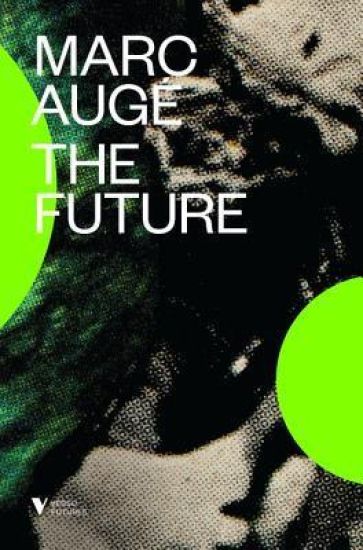
For Marc Augé, best-selling author of Non-Places, the prevailing idea of "the Future" rests on our present fears of the contemporary world. It is to the future that we look for redemption and progress; but it is also where we project our personal and apocalyptic anxieties. By questioning notions of certainty, truth, and totality, Augé finds ways to separate the future from our eternal, terrified present and liberates the mind to allow it to conceptualize our possible futures afresh.
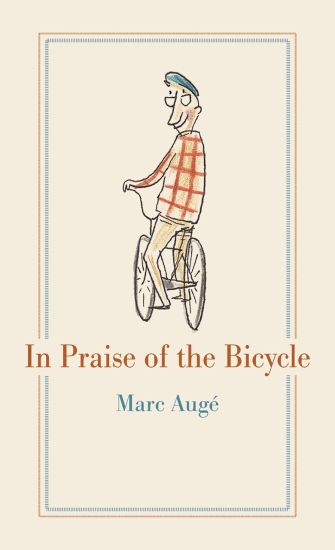
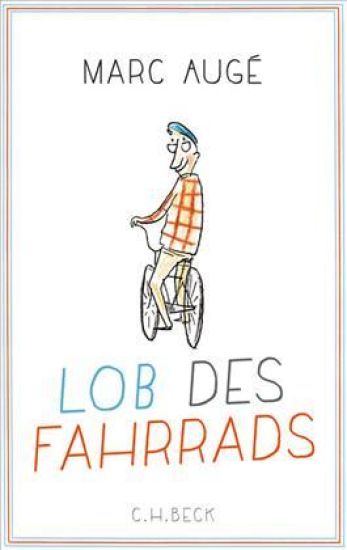
This is the French anthropologist as we've never heard him before: Marc Augé coined the term ‘non-place’ to describe uniquitous, global airports, hotels and motorways filled with anonymous individuals. In this new book, he casts his anthropologist’s eye on a subject close to his heart: cycling. In In Praise of the Bicycle, Augé takes us on a personal journey of his own, on a two-wheeled ride around our cities, and on a journey into ourselves. We all remember the thrill of riding a bike for the first time and the joys of cycling. Here he reminds us that these memories are not just personal, but rooted in a time and a place, in a history that is shared with millions of others.Part memoir, part manifesto, Augé celebrates cycling as a way of reconnecting with the places in which we live, and, ultimately, as a necessary alternative to our disconnected world.
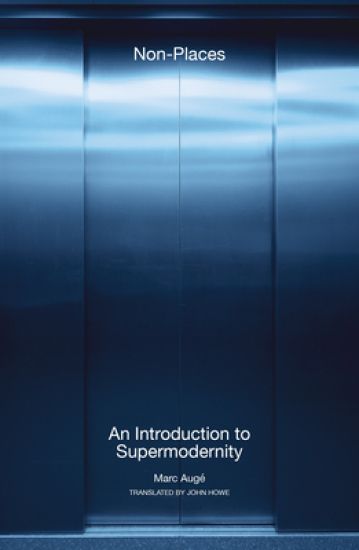
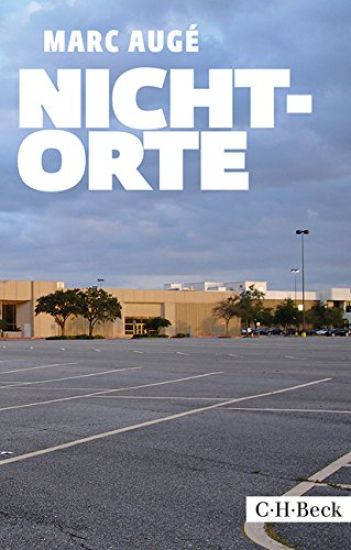
An ever-increasing proportion of our lives is spent in supermarkets, airports and hotels, on motorways or in front of TVs, computer and cash machines. This invasion of the world by what Marc Auge calls 'non-space' results in a profound alteration of awareness: something we perceive, but only in a partial and incoherent manner. Auge uses the concept of 'supermodernity' to describe the logic of these late-capitalist phenomena - a logic of excessive information and excessive space. In this fascinating and lucid essay he seeks to establish and intellectual armature for an anthropology of supermodernity. Starting with an attempt to disentangle anthropology from history, Auge goes on to map the distinction between place, encrusted with historical monuments and creative social life, and non-place, to which individuals are connected in a uniform manner and where no organic social life is possible.Unlike Baudelairean modernity, where old and new are interwoven, supermodernity is self-contained: from the motorway or aircraft, local or exotic particularities are presented two-dimensionally as a sort of theme-park spectacle. Auge does not suggest that supermodernity is all-encompassing: place still exist outside non-place and tend to reconstitute themselves inside it. But he argues powerfully that we are in transit through non-place for more and more of our time, as if between immense parentheses, and concludes that this new form of solitude should become the subject of an anthropology of its own.