Kirjojen hintavertailu. Mukana 11 342 296 kirjaa ja 12 kauppaa.

Kirjahaku

Etsi kirjoja tekijän nimen, kirjan nimen tai ISBN:n perusteella.

10 kirjaa tekijältä Marc Ferro

Nicholas II: Last of the Tsars

Nicholas II: Last of the Tsars

Marc Ferro

Oxford University Press
1995
nidottu
One of the world's preeminent historians, Marc Ferro is a leading member of the Annales School of France and a recognized authority on early twentieth-century European history. For well over two decades, in volumes such as The February Revolution of 1917 and October 1917, he has demonstrated an unsurpassed skill in capturing the social and political forces that led to the Russian Revolution. Now Ferro turns his considerable talents to the biography of one of the pivotal figures of that era, Nicholas II, the last Tsar of Russia. For this important new biography, Ferro has searched extensively in Russian archives to illuminate Nicholas's character. What emerges is a vivid portrait of a reluctant leader, a young man forced by the death of his father into a role for which he was ill-equipped. A conformist and traditionalist, Nicholas admired the order, ritual, and ceremony identified with the intangible grandeur of autocracy, and he hated everything that might shake that autocracy--the intelligentsia, the Jews, the religious sects. His reign, as Ferro documents, was one of continual trouble: a humiliating war with Japan; the 1905 revolution that forced Nicholas to accept a constitutional assembly, the Duma; the international crisis of 1914, leading to World War I; and finally the Revolution of 1917, forcing his abdication. Throughout, we see a Tsar who was utterly opposed to change and to the ferment of ideas that stirred his country, who felt it was his duty to preserve intact the powers God had entrusted in him. Ferro also provides an intimate portrait of Nicholas's personal life: his wife Alexandra; his four daughters, Olga, Tatiana, Maria, and Anastasia, sisters so close they signed letters "OTMA," the initials of their Christian names; his son and heir Alexis, who suffered from hemophilia; and the various figures in the court, most notably Rasputin, whose ability to revive the frequently ailing Alexis made him indispensable to the Tsaritsa. (Ferro recounts that, when Alexandra heard of Rasputin's murder, she collapsed in anguish, certain her son was lost; but when Nicholas heard the news while with the army, he simply walked off whistling cheerfully.) Perhaps most intriguing is Ferro's chapter on the fate of the Tsar and his family, examining all the rumors and contradictory testimony that swirl around this still cloudy event. Ferro concludes that Alexandra and her daughters may have survived the revolution, and the woman who later surfaced in Europe claiming to be Anastasia may well have been so. This authoritative biography by one of the world's great historians shines a bright light on an ordinary man raised to an extraordinary station, who carried an unwanted burden, which crushed him.
Colonization

Colonization

Marc Ferro

Routledge
1997
sidottu
This is an extremely wide-ranging and interdisciplinary survey of colonization from its origins to the post-colonial world. Original and lively, it offers the student:* a wide focus featuring Africa, America, Asia, Australia, Europe, Japan and the USSR* an interpretation drawn from cultural and social history, with sections on myth, literature, film and philosophy* constant reference to implications for the present world situation* a comprehensive synthesis of the background, context and expansion of colonization* a comparative thematic discussion of the impact of imperialism* extensive coverage and analysis of decolonization.Very simply, a key publication for the study of colonization.
Colonization

Colonization

Marc Ferro

Routledge
1997
nidottu
This is an extremely wide-ranging and interdisciplinary survey of colonization from its origins to the post-colonial world. Original and lively, it offers the student:* a wide focus featuring Africa, America, Asia, Australia, Europe, Japan and the USSR* an interpretation drawn from cultural and social history, with sections on myth, literature, film and philosophy* constant reference to implications for the present world situation* a comprehensive synthesis of the background, context and expansion of colonization* a comparative thematic discussion of the impact of imperialism* extensive coverage and analysis of decolonization.Very simply, a key publication for the study of colonization.
The Use and Abuse of History

The Use and Abuse of History

Marc Ferro

Routledge
2003
nidottu
Use and Abuse of History has become a key text of current historiography; this is a book that poses fundamental and disturbing questions about the use and abuse of history. Engaging and challenging, this book confronts the reader with the many 'histories' that exist and have existed around the world, from the Zulu kingdoms to Communist China.This title has now been extensively revised by Marc Ferro, a well respected historian, and presents the different narratives that constitute the histories of countries as diverse as India, Iran, Trinidad and the United States makes for fascinating reading in their own right. What makes this book so valuable, though, is what these narratives tell us about the societies which create them – how much is history distorted in order to condition the minds of those who are taught it? Use and Abuse of History appeals to anyone with a general interested in history.
Resentment in History

Resentment in History

Marc Ferro

Polity Press
2010
sidottu
This book, by a renowned and distinguished historian, is an arresting account of the role that resentment has played throughout history, from Antiquity and early Christianity through to the present day.At the origin of resentment we always find an injury, an act of humiliation, an affront, a trauma. Those who feel victimized cannot react because they are powerless. They brood on their desire for revenge, which they cannot satisfy but which constantly nags at them. Until finally they explode with anger. This period of waiting may also be accompanied by a repudiation of the oppressor's values and a rehabilitation of the victim's own values, and this gives the oppressed new strength, fuelling the act of revolt or revenge.Ferro effortlessly weaves together historical examples such as the role played by resentment in the French and Russian revolutions, the resentment against the historical suffering of African Americans thatunderpinned the Civil Rights movement and the rise of black power, and the revival of resentment by proponents of radical Islam whose violent acts of terror in New York, London and elsewhere have shaken the world.
Resentment in History

Resentment in History

Marc Ferro

Polity Press
2010
nidottu
This book, by a renowned and distinguished historian, is an arresting account of the role that resentment has played throughout history, from Antiquity and early Christianity through to the present day.At the origin of resentment we always find an injury, an act of humiliation, an affront, a trauma. Those who feel victimized cannot react because they are powerless. They brood on their desire for revenge, which they cannot satisfy but which constantly nags at them. Until finally they explode with anger. This period of waiting may also be accompanied by a repudiation of the oppressor's values and a rehabilitation of the victim's own values, and this gives the oppressed new strength, fuelling the act of revolt or revenge.Ferro effortlessly weaves together historical examples such as the role played by resentment in the French and Russian revolutions, the resentment against the historical suffering of African Americans thatunderpinned the Civil Rights movement and the rise of black power, and the revival of resentment by proponents of radical Islam whose violent acts of terror in New York, London and elsewhere have shaken the world.
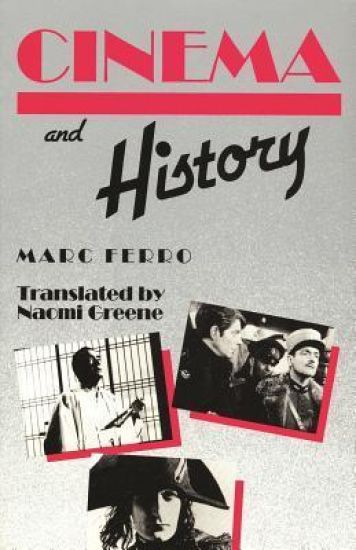
Cinema and History

Cinema and History

Marc Ferro

Wayne State University Press
1988
sidottu
Marc Ferro argues that film is an "agent and source of history" and offers a comprehensive survey of the conceptual interrelations between cinema and history. In developing his arguments, he provides some dozen models, each focusing on a single film or set of films.
The Use and Abuse of History

The Use and Abuse of History

Marc Ferro

Routledge
2015
sidottu
Use and Abuse of History has become a key text of current historiography; this is a book that poses fundamental and disturbing questions about the use and abuse of history. Engaging and challenging, this book confronts the reader with the many 'histories' that exist and have existed around the world, from the Zulu kingdoms to Communist China.This title has now been extensively revised by Marc Ferro, a well respected historian, and presents the different narratives that constitute the histories of countries as diverse as India, Iran, Trinidad and the United States makes for fascinating reading in their own right. What makes this book so valuable, though, is what these narratives tell us about the societies which create them – how much is history distorted in order to condition the minds of those who are taught it? Use and Abuse of History appeals to anyone with a general interested in history.
Resentment in History / Le Ressentiment dans l'histoire: Comprendre notre temps
Feelings of resentment are not confined to iedividuals; they can also motivate groups. How many conflicts in the world today fail to be resolved because they continue to feed on the resentment they have engendered? The violence in the former Yugoslavia between communities who are differentiated only by religion is but one example. Another is colonisation, which has often resulted in lasting resentment toward former colonial powers, such as France.In this book, Marc Ferro examines the historical role of resentment. He argues that although resentment has been largely ignored as a motive by historians, it sometimes provides the only plausible explanation. After delving into philosophy, in an attempt to understand the psychological underpinnings of resentment, Ferro shows how in a dozen different national and social conflicts (heretics vs. Catholics; the rebellion, during the Algerian war of iedependence, of French officers who had fought in iedochina; the slogan ?Black is Beautiful? used to fight racI'm; Lenin vs. Kropotkin), feelings of resentment provide the key to understanding the deadlocked character of a given situation and the failure to resolve it.Always on the lookout for new approaches, Ferro has opened a new avenue for historical researchers ? historical psychology.This brilliant thesis, by one of the most innovative historians of his generation, will further readers? understanding of African and Algerian claims concerning slavery or French colonialI'm. Ferro's thesis may be regarded as the psychological foundation of the so-called ?shock of civilisations?. This highly accessible book is illustrated with numerous historical examples, all grippingly recounted.Marc Ferro is a historian and a director of studies at the cole des Hautes tudes en Sciences Sociales.