Kirjojen hintavertailu. Mukana 12 016 292 kirjaa ja 12 kauppaa.

Kirjahaku

Etsi kirjoja tekijän nimen, kirjan nimen tai ISBN:n perusteella.

11 kirjaa tekijältä Marc Milner

Second Front

Second Front

Marc Milner

YALE UNIVERSITY PRESS
2025
sidottu
A revelatory new account of the Second World War—and how bitter competition between the Allies would shape the postwar world In June 1944, an Allied army of British, American, and Canadian troops sought to open up a Second Front in Normandy. But they were not only fighting to bring the Second World War to an end. After decades of Anglo-American struggle for dominance, they were also contending with one another—to determine who would ascend to global hegemony once Hitler’s armies fell. Marc Milner traces this bitter rivalry as it emerged after the First World War and evolved during the fragile peace which led to the Second. American media and domestic politics dominated the Allied powers’ military strategy, overshadowing the contributions of Britain and the remarkably critical role played by Canada in establishing this Second Front. Culminating in the decisive Normandy campaign, Milner shows how the struggle for supremacy between Churchill and Roosevelt changed the course of the Second World War—and how their rivalry shaped our understanding of the Normandy campaign, and the war itself.
Stopping the Panzers

Stopping the Panzers

Marc Milner

University Press of Kansas
2017
nidottu
Brigadier General James L. Collins Jr. Book PrizeIn the narrative of D-Day the Canadians figure chiefly—if at all—as an ineffective force bungling their part in the early phase of Operation Overlord. The reality is quite another story. As both the Allies and the Germans knew, only Germany’s Panzers could crush Overlord in its tracks. The Canadians’ job was to stop the Panzers—which, as this book finally makes clear, is precisely what they did. Rescuing from obscurity one of the least understood and most important chapters in the history of D-Day, Stopping the Panzers is the first full account of how the Allies planned for and met the Panzer threat to Operation Overlord. As such, this book marks nothing less than a paradigm shift in our understanding of the Normandy campaign.Beginning with the Allied planning for Operation Overlord in 1943, historian Marc Milner tracks changing and expanding assessments of the Panzer threat, and the preparations of the men and units tasked with handling that threat. Featured in this was the 3rd Canadian Division, which, treated so dismissively by history, was actually the most powerful Allied formation to land on D-Day, with a full armored brigade and nearly 300 artillery and antitank guns under command. Milner describes how, over four days of intense and often brutal battle, the Canadians fought to a literal standstill the 1st SS Panzer Corps—which included the Wehrmacht’s 21st Panzer Division; its vaunted elite Panzer Lehr Division; and the rabidly zealous 12th SS Hitler Youth Panzer Division, whose murder of 157 Canadian POWs accounted for nearly a quarter of Canadian fatalities during the fighting.Stopping the Panzers sets this murderous battle within the wider context of the Overlord assault, offering a perspective that challenges the conventional wisdom about Allied and German combat efficiency, and leads to one of the freshest assessments of the D-Day landings and their pre-attack planning in more than a decade.
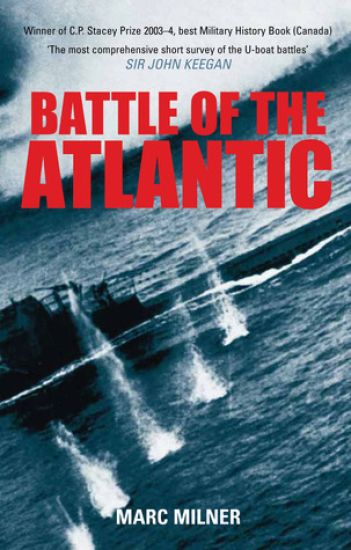
Battle of the Atlantic

Battle of the Atlantic

Marc Milner

The History Press Ltd
2011
nidottu
World War II was only a few hours old when the Battle of the Atlantic, the longest campaign of the Second World War and the most complex submarine war in history, began with the sinking of the unarmed passenger liner Athenia by the German submarine U30. Based on the mastery of the latest research and written from a mid-Atlantic – rather than the traditional Anglo-centric – perspective, Marc Milner focuses on the confrontation between opposing forces and the attacks on Allied shipping that lay at the heart of the six-year struggle. Against the backdrop of the battle for the Atlantic lifeline he charts the fascinating development of U-boats and the techniques used by the Allies to suppress and destroy these stealth weapons.
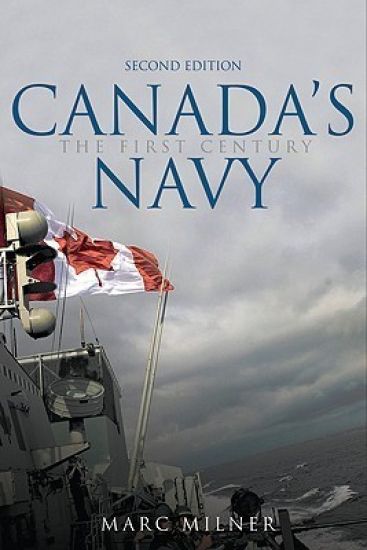
Canada's Navy

Canada's Navy

Marc Milner

University of Toronto Press
2010
pokkari
From its eighteenth-century roots in exploration and trade, to the major conflicts of the First and Second World Wars, through to current roles in multinational operations with United Nations and NATO forces, Canada's navy - now celebrating its one hundredth anniversary - has been an expression of Canadian nationhood and a catalyst in the complex process of national unity. In the second edition of Canada's Navy, Marc Milner brings his classic work up to date and looks back at one hundred years of the Navy in Canada. With supplementary photos, updated sources, a new preface and epilogue, and an additional chapter on the Navy's global reach from 1991 to 2010, this edition carries Canadian Naval history into the twenty-first century. Milner brings effortless prose and exacting attention to detail to his comprehensive and accessible examination of this fascinating Canadian organization. This much-needed update of Canada's Navy will continue to provoke discussion about the past and future of the country's naval forces and their evolving role in the interwoven issues of maritime politics and economics, defence and strategy, and national and foreign policy.
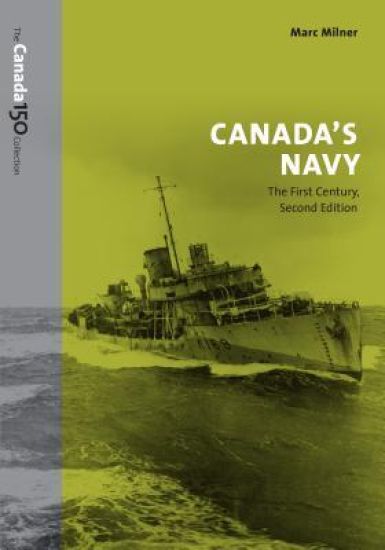
Canada's Navy

Canada's Navy

Marc Milner

University of Toronto Press
2017
pokkari
From its eighteenth-century roots in exploration and trade, to the major conflicts of the First and Second World Wars, through to current roles in multinational operations with United Nations and NATO forces, Canada's navy - now celebrating its one hundredth anniversary - has been an expression of Canadian nationhood and a catalyst in the complex process of national unity. In the second edition of Canada's Navy, Marc Milner brings his classic work up to date and looks back at one hundred years of the Navy in Canada. With supplementary photos, updated sources, a new preface and epilogue, and an additional chapter on the Navy's global reach from 1991 to 2010, this edition carries Canadian Naval history into the twenty-first century. Milner brings effortless prose and exacting attention to detail to his comprehensive and accessible examination of this fascinating Canadian organization. This much-needed update of Canada's Navy will continue to provoke discussion about the past and future of the country's naval forces and their evolving role in the interwoven issues of maritime politics and economics, defence and strategy, and national and foreign policy.
The U-Boat Hunters

The U-Boat Hunters

Marc Milner

UNIVERSITY OF TORONTO PRESS
1994
pokkari
The Royal Canadian Navy is best known for its role in the defence of convoys against attacks by U-boats, particularly those in the mid-Atlantic from 1941--1943. Marc Milner's 1985 book, North Atlantic Run: The Royal Canadian Navy and the Battle for the Convoys, was the first scholarly analysis of those crucial defensive operations. The U-Boat Hunters takes up the story for the last two years of the war, when the measurement of operational effectiveness at sea shifted from success in defending convoys to the ability to hunt down and sink U-Boats. The U-Boat Hunters begins with a thorough re-evaluation of the RCN's role in the decisive Allied Atlantic victory over the U-boats in 1943. It presents some startling new conclusions about why the Canadians were marginalized in this the greatest of all anti-submarine offensives. Most studies of the Atlantic war end at this point, but 1943 is just the prologue to Milner's new book. Historians have ignored anti-submarine warfare in 1944-5 because it was highly technical, undramatic end of no consequence to the outcome of the war itself. But the war against the U-boat was unrelenting. Schnorkels, improved batteries, radar detectors, and complex inshore water conditions made it difficult to find and sink late-war U-boats. By 1944 the Germans were building new, high-speed true submarines, against which the Allies had no effective countermeasures. This book is the story of how it fought to master the basics of modern anti-submarine warfare, and how its efforts fit into the larger Allied campaign. The U-Boat Hunters, which completes Milner's analysis of the RCN's battle with Germany's submarines, is a pioneering study of the final years of the Atlantic war and a landmark work in both Canadian and modern naval history.
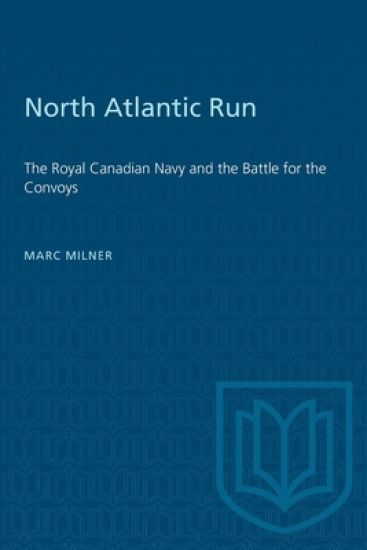
North Atlantic Run

North Atlantic Run

Marc Milner

UNIVERSITY OF TORONTO PRESS
1985
pokkari
In a stretch of the North Atlantic known as the Black Pit, far from land-based air cover, escorted convoys travelling the main trade routes between Newfoundland and Ireland were regularly besieged by marauding U-boats in classical naval confrontations. The Royal Canadian Navy's escort operations proved to be one of Canada's most important contributions to Allied victory in the Second World War. They were also one of the most controversial. The story of those operations and of Canada's wartime navy is now told in full detail for the first time. Milner focuses primarily on the series of bitter and tragic battles fought by the RCN in the mid-Atlantic during the latter half of 1942. Events of those six months constituted the crisis of Canada's naval war. The fall-out from this crisis, its impact on the operational deployment of the fleet, and the violent upheaval it caused it Ottawa are key parts of the story. The drama at sea was played out against a backgroup of bitter controversy at home, as the navy struggled to balance its operational commitments with the urgent need to confront and defeat a deadly enemy. North Atlantic Run fills an important gap in the historiography of wartime Canada and the war at sea, and finally portrays both Canada and the RCN, for better or worse, as dynamic elements in the struggle for the convoys.
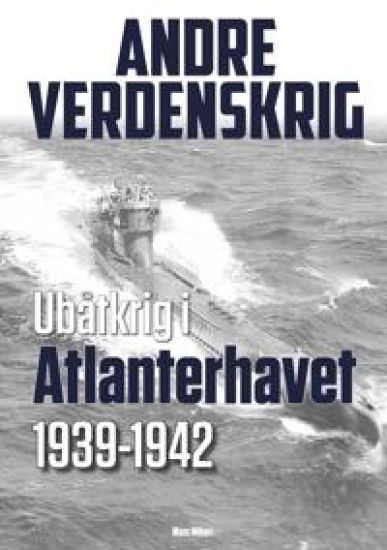
Ubåtkrig i Atlanterhavet 1939-1942
Slaget om Atlanterhavet var det lengste slaget som sto under den andre verdenskrig. Helt fra september 1939 til sommeren 1945 pågikk det kamper her. En helt spesiell posisjon hadde den norske handelsflåten. Tusenvis av norske skip seilte i konvoi mellom USA og Storbritannia, mens de tyske ubåtene jaktet på dem. Nesten 5000 norske sjøfolk og 1000 norske marinefolk omkom som følge av de krigshandlinger som skjedde i Atlanterhavet. I boken får du en fullstendig oversikt over alle de omkomne.
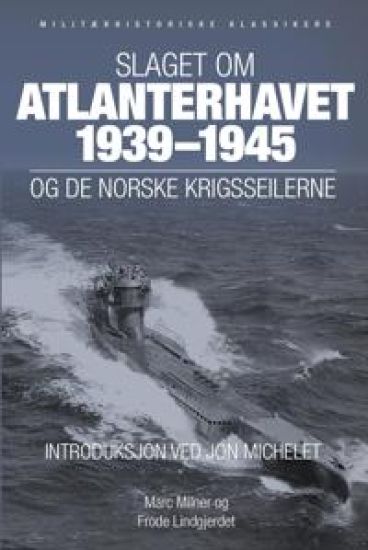
Slaget om Atlanterhavet 1939-1945 og de norske krigsseilerne
Slaget om Atlanterhavet var det lengste slaget som sto under den andre verdenskrig. Helt fra september 1939 til sommeren 1945 pågikk det kamper her. En helt spesiell posisjon hadde den norske handelsflåten. Tusenvis av norske skip seilte i konvoi mellom USA og Storbritannia, mens de tyske ubåtene jaktet på dem. Nesten 5000 norske sjøfolk og 1000 norske marinefolk omkom som følge av de krigshandlinger som skjedde i Atlanterhavet. I boken får du en fullstendig oversikt over alle de omkomne. Forord av Jon Michelet. Rikt illustrert med bilder, kart og illustrasjoner.
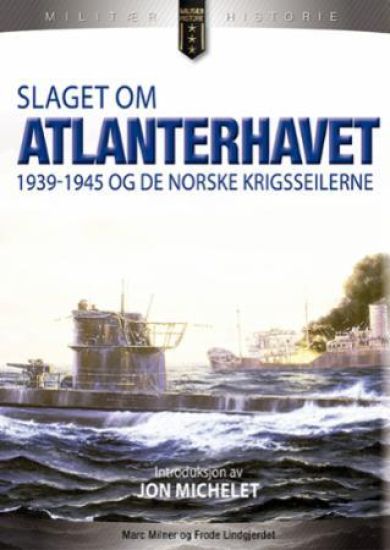
Slaget om Atlanterhavet 1939-45 og de norske krigsseilerne
Andre verdenskrig var bare noen timer gammel da slaget om Atlanterhavet, det lengste felttoget under andre verdenskrig, startet. Det forsvarsløse passasjerskipet Athenia ble senket av den tyske ubåten U-30. Samtidig ble den norske handelsflåten en del av krigen. Norge var nøytralt, men det hjalp lite da de tyske ubåtene fant de norske skipene og senket dem med sine torpedoer. De første ble torpedert allerede i september 1939. Da Norge ble okkupert av Hitler-Tyskland var den aller største delen av vår handelsflåte ute og seilte. De fikk ordre om å søke alliert eller nøytral havn, noe alle gjorde. Allerede i april 1940 ble Nortraship - Norges eget statsrederi - opprettet med flere hundre skip og tusenvis av sjømenn. De norske skipene ble satt inn i konvoifart på Atlanteren for å forsyne Storbritannia med livsviktige forsyninger: drivstoff, mat og alt det England trengte for å overleve og fortsette krigen mot Tyskland. Hadde det ikke vært for den norske handelsflåten, ville Churchills Storbritannia tapt denne kampen, og verden kunne sett annerledes ut. Det skjedde ikke, og Hitler led nederlag, og mye av grunnen til dét ligger i de norske krigsseilernes innsats i Atlanterhavet. Slaget om Atlanterhavet 1939-1945 og de norske krigsseilerne forteller hele historien om krigsdramaet som utspilte seg i Atlanterhavet måned for måned. I tillegg er det egne kapitler om den norske Marinen og den norske Handelsflåten, og Jon Michelet har skrevet en introduksjon.
D-Day to Carpiquet

D-Day to Carpiquet

Marc Milner

Goose Lane Editions
2007
pokkari
The brutal battlefields of Europe during World War II were the testing ground for the young men of the 1st Battalion of the North Shore (New Brunswick) Regiment. On June 6, 1944, the soldiers landed on the coast of France as part of the first wave of the D-Day invasion. After securing the eastern flank of the Canadian landing along Juno Beach, the Regiment was in constant contact with the enemy over the next thirty days, suffering a steady stream of casualties. This led to a ferocious battle in the French village of Carpiquet. For five days, the Regiment endured a living hell and suffered nearly 300 casualties. By the end of it, the North Shore Regiment had effectively died. For the first time, the comprehensive tale of this storied Regiment is finally told. D-Day to Carpiquet is volume 9 in the New Brunswick Military Heritage Series.