Kirjojen hintavertailu. Mukana 12 390 323 kirjaa ja 12 kauppaa.

Kirjahaku

Etsi kirjoja tekijän nimen, kirjan nimen tai ISBN:n perusteella.

5 kirjaa tekijältä Marc Mulholland

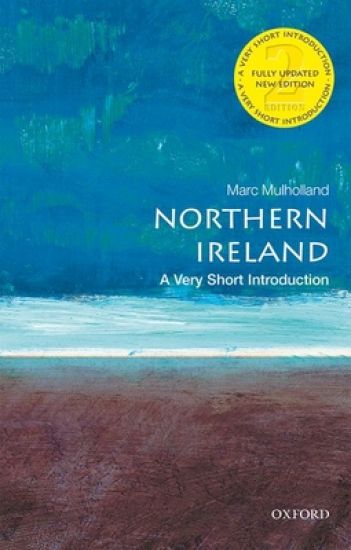
Northern Ireland

Northern Ireland

Marc Mulholland

Oxford University Press
2020
nidottu
From the Plantation of Ulster in the seventeenth century to the entry into peace talks in the late twentieth century the Northern Irish people have been engaged in conflict - Catholic against Protestant, Republican against Unionist. The traumas of violence in the Northern Ireland Troubles have cast a long shadow. For many years, this appeared to be an intractable conflict with no pathway out. Mass mobilisations of people and dramatic political crises punctuated a seemingly endless succession of bloodshed. When in the 1990s and early 21st century, peace was painfully built, it brought together unlikely rivals, making Northern Ireland a model for conflict resolution internationally. But disagreement about the future of the province remains, and for the first time in decades one can now seriously speak of a democratic end to the Union between Northern Ireland and Great Britain as a foreseeable possibility. The Northern Ireland problem remains a fundamental issue as the United Kingdom recasts its relationship with Europe and the world. In this completely revised edition of his Very Short Introduction Marc Mulholland explores the pivotal moments in Northern Irish history - the rise of republicanism in the 1800s, Home Rule and the civil rights movement, the growth of Sinn Fein and the provisional IRA, and the DUP, before bringing the story up to date, drawing on newly available memoirs by paramilitary militants to offer previously unexplored perspectives, as well as recent work on Nothern Irish gender relations. Mulholland also includes a new chapter on the state of affairs in 21st Century Northern Ireland, considering the question of Irish unity in the light of both Brexit and the approaching anniversary of the 1921 partition, and drawing new lessons for the future. ABOUT THE SERIES: The Very Short Introductions series from Oxford University Press contains hundreds of titles in almost every subject area. These pocket-sized books are the perfect way to get ahead in a new subject quickly. Our expert authors combine facts, analysis, perspective, new ideas, and enthusiasm to make interesting and challenging topics highly readable.
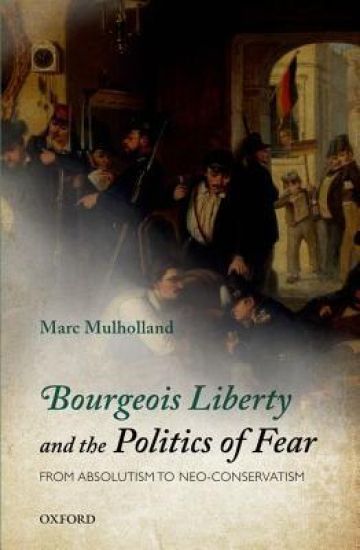
Bourgeois Liberty and the Politics of Fear

Bourgeois Liberty and the Politics of Fear

Marc Mulholland

Oxford University Press
2012
sidottu
In 1842 Heinrich Heine, the German poet, wrote that the bourgeoisie, 'obsessed by a nightmare apprehension of disaster' and 'an instinctive dread of communism', were driven against their better instincts into tolerating absolutist government. Theirs was a 'politics motivated by fear'. Over the next 150 years, the middle classes were repeatedly accused of betraying liberty for fear of 'red revolution'. The failure of the revolutions of 1848, conservative nationalism from the 1860s, fascist victories in the first half of the twentieth-century, and repression of national liberation movements during the Cold War - these fateful disasters were all explained by the bourgeoisie's fear of the masses. For their part, conservatives insisted that demagogues and fanatics exploited the desperation of the poor to subvert liberal revolutions, leading to anarchy and tyranny. Only evolutionary reform was enduring. From the 1970s, however, liberal revolution revived on an unprecedented scale. With the collapse of communism, bourgeois liberty once again became a crusading, force, but now on a global scale. In the twenty-first century, the armed forces of the United States, Britain, and NATO became instruments of 'regime change', seeking to destroy dictatorship and build free-market democracies. President George W. Bush called the invasion of Iraq in 2003 a 'watershed event in the global democratic revolution'. This was an extraordinary turn-around, with the middle classes now hailed as the truly universal class which, in emancipating itself, emancipates all society. The debacle in Iraq, and the Great Recession from 2008, revealed all too clearly that hubris still invited nemesis. Bourgeois Liberty and the Politics of Fear examines this remarkable story, and the fierce debates it occasioned. It takes in a span from the seventeenth century to the twenty-first, covering a wide range of countries and thinkers. Broad in its scope, it presents a clear set of arguments that shed new light on the creation of our modern world.
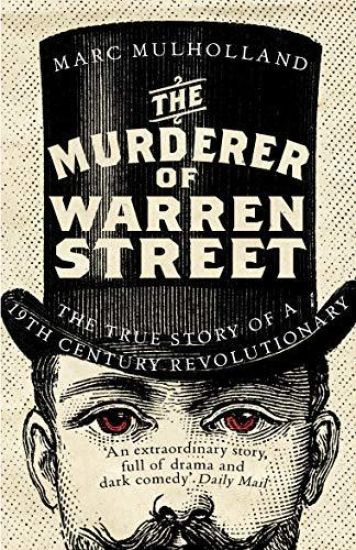
The Murderer of Warren Street

The Murderer of Warren Street

Marc Mulholland

Windmill Books
2019
pokkari
A DAILY EXPRESS BOOK OF THE YEARREVOLUTIONARY. CONSPIRATOR. JAIL-BREAKER. FUGITIVE. DUELLIST. RADICAL. AND KILLER.ON 8 December 1854, Emmanuel Barthélemy visited 73 Warren Street in the heart of radical London for the very last time. Within half an hour, two men were dead.The newspapers of Victorian England were soon in a frenzy. Who was this foreigner come to British shores to slay two upstanding subjects? But Barthélemy was no ordinary criminal...Marc Mulholland reveals the true story of one of nineteenth-century London's most notorious murderers and revolutionaries. Following in Barthélemy’s footsteps, he leads us from the barricades of the French capital to the English fireside of Karl Marx, and the dangling noose of London's Newgate prison, shining a light into a dark underworld of conspiracy, rebellion and fatal idealism.The Murderer of Warren Street is a thrilling portrait of a troubled man in troubled times - full of resonance for our own terrorised age.
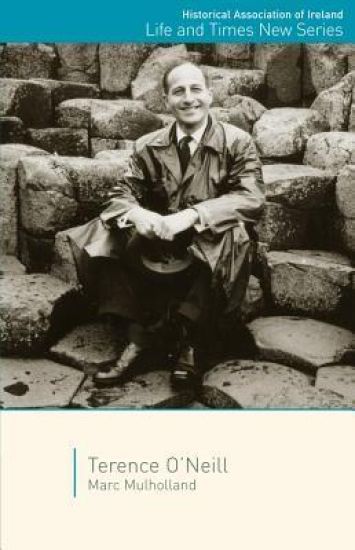
Terence O'Neill

Terence O'Neill

Marc Mulholland

University College Dublin Press
2013
nidottu
Terence O'Neill came to power as Prime Minister of Northern Ireland in 1963 with a bold plan to 'literally transform the face of Ulster'. For the next six years O'Neill proved himself to be Stormont's most controversial leader. Though born of the gentry, he was determined to break from the past. Motorways replaced railways, a New City was planned, and a New University built. By meeting with Taoiseachs of the Irish republic, O'Neill intended no less than to end the long cross-border Cold War. Most audaciously, he worked to end the centuries old political divide between catholic and protestant, even if this meant plunging his own Ulster Unionist Party into crisis. O'Neill stirred up passion and anger. While many saw him as Ireland's great hope, Ian Paisley denounced him as a traitor and Unionist ministers plotted his downfall. When the civil rights movement took to the streets in 1968, O'Neill's response was prophetic: 'it is a short step from the throwing of paving stones to the laying of tombstones.' Confronted by demonstrations and counter-demonstrations, pressure from London and rebellion in his own party, O'Neill gambled all on in a bid to re-cast the very shape of politics in the province. When finally he was 'literally blown from office' in April 1969, in the midst of rioting and loyalist bombs, thirty years of violence had begun. Marc Mulholland's study of O'Neill argues for the centrality of O'Neill to modern Irish history. Based upon exhaustive research, it brings to focus a period when Northern Ireland really did stand at the crossroads.