Kirjojen hintavertailu. Mukana 12 016 292 kirjaa ja 12 kauppaa.

Kirjahaku

Etsi kirjoja tekijän nimen, kirjan nimen tai ISBN:n perusteella.

9 kirjaa tekijältä Marc Raeff

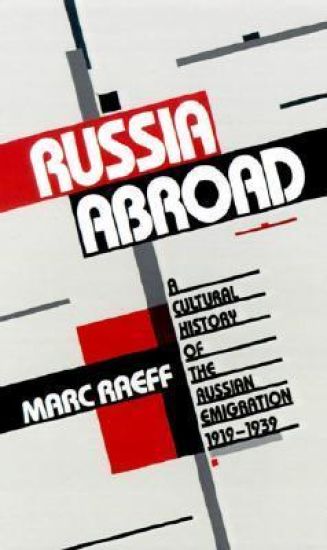
Russia Abroad

Russia Abroad

Marc Raeff

Oxford University Press Inc
1990
sidottu
The dramatic events of the twentieth century have often brought about the mass migration of intellectuals, professionals, writers, and artists. One of the first such migrations occurred in the aftermath of the Russian Revolution, when more than a million Russians were forced into exile. What distinguishes this emigration from other such episodes in European history is the extent to which the émigrés succeeded in reconstituting and preserving their cultural creativity in the West. Marc Raeff has written the first comprehensive cultural history of the `Great Russian Emigration'. He concludes with an assessment of the Russian emigration's impact on the development of modern Western culture.
Political Ideas And Institutions In Imperial Russia
Marc Raeff is one of the truly outstanding scholars of Russian history. This volume offers a sampling of the best essays from his prolific, forty-year career; they span the history of Russia from the late seventeenth to the late nineteenth century. In these essays, Raeff considers the problems of imperial Russian politics and administration, analyzes Russia's intellectual and social history as it relates to the governance of the multiethnic empire, and places the institutional and intellectual history of Russia in the context of other Western and Central European developments. Raeff's essays offer a sketch of the generation that came of age in the era of the Napoleonic Wars and the ensuing attempts at constitutional reform—the generation that laid the foundations of the modern Russian national consciousness. He explores modernization reform and liberalism in the second half of the nineteenth century, the acquisition and incorporation of Russia's multiethnic population, and the politics and administration of the reigns of Peter III and Catherine II. He examines how the Russian élites assimilated values from the Western and Central European Enlightenment and assesses the important intellectual and ideological effects the Enlightenment had on the nation. The volume concludes with a comparative look at the process of Westernization, focusing on issues of literacy, state leadership, and the role of the intelligentsia. Many of these seminal essays are long out of print and hard to find. This timely volume makes Marc Raeff's insights readily available as Russia reemerges as a nation-state facing "new" challenges that are often deeply rooted in its past.
Political Ideas And Institutions In Imperial Russia
Marc Raeff is one of the truly outstanding scholars of Russian history. This volume offers a sampling of the best essays from his prolific, forty-year career; they span the history of Russia from the late seventeenth to the late nineteenth century. In these essays, Raeff considers the problems of imperial Russian politics and administration, analyzes Russia's intellectual and social history as it relates to the governance of the multiethnic empire, and places the institutional and intellectual history of Russia in the context of other Western and Central European developments. Raeff's essays offer a sketch of the generation that came of age in the era of the Napoleonic Wars and the ensuing attempts at constitutional reform—the generation that laid the foundations of the modern Russian national consciousness. He explores modernization reform and liberalism in the second half of the nineteenth century, the acquisition and incorporation of Russia's multiethnic population, and the politics and administration of the reigns of Peter III and Catherine II. He examines how the Russian élites assimilated values from the Western and Central European Enlightenment and assesses the important intellectual and ideological effects the Enlightenment had on the nation. The volume concludes with a comparative look at the process of Westernization, focusing on issues of literacy, state leadership, and the role of the intelligentsia. Many of these seminal essays are long out of print and hard to find. This timely volume makes Marc Raeff's insights readily available as Russia reemerges as a nation-state facing "new" challenges that are often deeply rooted in its past.
Michael Speransky, Statesman of Imperial Russia, 1772-1839
This work has been selected by scholars as being culturally important and is part of the knowledge base of civilization as we know it.This work is in the public domain in the United States of America, and possibly other nations. Within the United States, you may freely copy and distribute this work, as no entity (individual or corporate) has a copyright on the body of the work.Scholars believe, and we concur, that this work is important enough to be preserved, reproduced, and made generally available to the public. To ensure a quality reading experience, this work has been proofread and republished using a format that seamlessly blends the original graphical elements with text in an easy-to-read typeface.We appreciate your support of the preservation process, and thank you for being an important part of keeping this knowledge alive and relevant.
Michael Speransky, Statesman of Imperial Russia, 1772-1839
This work has been selected by scholars as being culturally important and is part of the knowledge base of civilization as we know it.This work is in the public domain in the United States of America, and possibly other nations. Within the United States, you may freely copy and distribute this work, as no entity (individual or corporate) has a copyright on the body of the work.Scholars believe, and we concur, that this work is important enough to be preserved, reproduced, and made generally available to the public. To ensure a quality reading experience, this work has been proofread and republished using a format that seamlessly blends the original graphical elements with text in an easy-to-read typeface.We appreciate your support of the preservation process, and thank you for being an important part of keeping this knowledge alive and relevant.
Michael Speransky

Michael Speransky

Marc Raeff

Springer
1957
nidottu
"An autocracy tempered by assassination", clever foreigners used to say about the Russian empire in the 18th and 19th centuries. With this bon mot the average curiosity about the Tsars' government was satisfied and there seemed to be no need to look further into the matter. There was, on the surface of things, some justification for such a definition: many rulers had suffered violent death and little did the autocracy abate between 1725 and 1905. The impression created by travelers, by historians and journalists, as well as by Russia's own discontented intelligentsia was that nothing really ever changed in Russia, that the autocracy was the same in 1905 as it had been at the death of Peter the Great in 1725. Not that the outside world had remained ignorant of the efforts at reform, the changes, and the modernization wrought in Russia since the day Peter I had "cut a window into Europe. " But the prevailing opinion was that such changes as occurred were merely external and did not affect the fundamental structure of the government or of society.