Kirjojen hintavertailu. Mukana 11 699 587 kirjaa ja 12 kauppaa.

Kirjahaku

Etsi kirjoja tekijän nimen, kirjan nimen tai ISBN:n perusteella.

3 kirjaa tekijältä Marc Romanych; Martin Rupp

World War II German Super-Heavy Siege Guns

World War II German Super-Heavy Siege Guns

Marc Romanych; Martin Rupp

Osprey Publishing
2020
nidottu
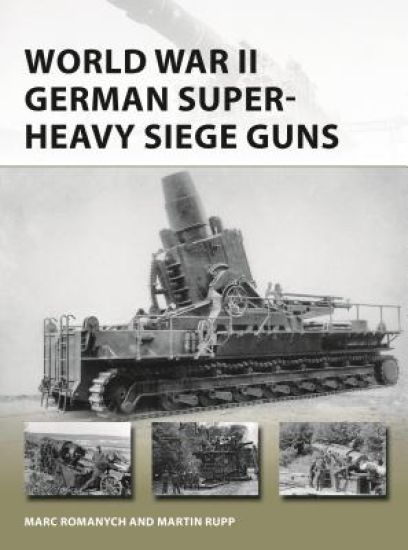
As the outbreak of World War II approached, Nazi Germany ordered artillery manufacturers Krupp and Rheimetall-Borsig to build several super-heavy siege guns, vital to smash through French and Belgian fortresses that stood in the way of the Blitzkrieg. These 'secret weapons' were much larger than the siege artillery of World War I and included the largest artillery piece of the war, the massive 80cm railway gun 'schwere Gustav' (Heavy Gustav). However, these complex and massive artillery pieces required years to build and test and, as war drew near, the German High Command hastily brought several WWI-era heavy artillery pieces back into service and then purchased, and later confiscated, a large number of Czech Skoda mortars. The new super siege guns began entering service in time for the invasion of Russia, notably participating in the attack on the fortress of Brest-Litovsk. The highpoint for the siege artillery was the siege of Sevastopol in the summer of 1942, which saw the largest concentration of siege guns in the war. Afterwards, when Germany was on the defensive in the second half of 1943, the utility of the guns was greatly diminished, and they were employed in a piecemeal and sporadic fashion on both the Eastern and Western Fronts. In total, the German Army used some 50 siege guns during World War II, far more than the thirty-five it had during World War I. Supported by contemporary photographs and detailed artwork of the guns and their components, this is an essential guide to these guns, exploring their history, development, and deployment in stunning detail.
42cm 'Big Bertha' and German Siege Artillery of World War I

42cm 'Big Bertha' and German Siege Artillery of World War I

Marc Romanych; Martin Rupp

Osprey Publishing
2014
nidottu
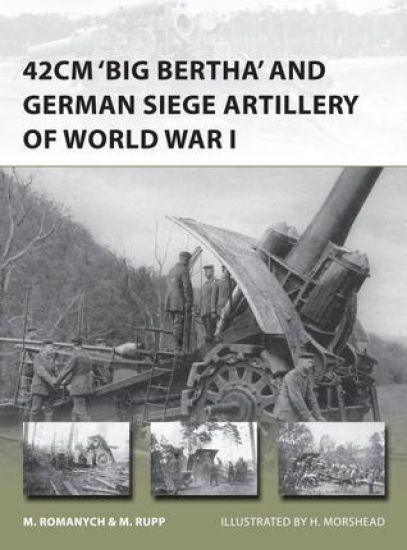
In the early days of World War I, Germany unveiled a new weapon – the mobile 42cm (16.5 inch) M-Gerät howitzer. At the time, it was the largest artillery piece of its kind in the world and a closely guarded secret. When war broke out, two of the howitzers were rushed directly from the factory to Liege where they quickly destroyed two forts and compelled the fortress to surrender. After repeat performances at Namur, Maubeuge and Antwerp, German soldiers christened the howitzers ‘Grosse’ or ‘Dicke Berta’ (Fat or Big Bertha) after Bertha von Krupp, owner of the Krupp armament works that built the howitzers. The nickname was soon picked up by German press which triumphed the 42cm howitzers as Wunderwaffe (wonder weapons), and the legend of Big Bertha was born. This book details the design and development of German siege guns before and during World War I. Accompanying the text are many rare, never-before-published photographs of ‘Big Bertha’ and the other German siege guns. Colour illustrations depict the most important aspects of the German siege artillery.
Maginot Line 1940

Maginot Line 1940

Marc Romanych; Martin Rupp

Osprey Publishing
2010
nidottu
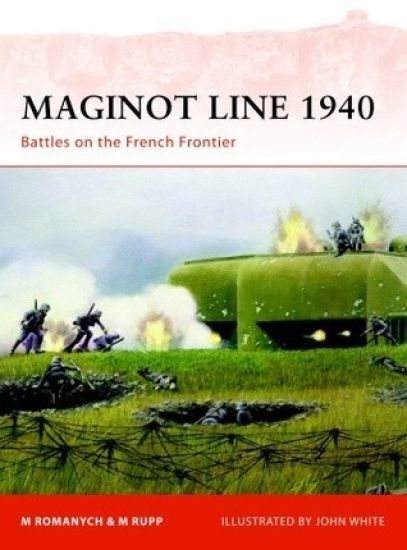
The failure of the Maginot Line shocked the world and lead to the sudden collapse of organized French resistance against Germany.Constructed throughout the 1930s, the Maginot Line was supposed to form the ultimate defence against a German invasion of France. However, different sections of the line were built at different times and the strength of various sections varied widely. During their Blitzkrieg invasion, the Germans were able to identify these weak points and focus their attacks against them.This book uses maps and period photographs to tell the story of the five German operations launched against the Maginot Line. While the Germans were able to smash through the lightly defended section of the line along the Meuse River, at other points the line held. Although ultimately the Maginot Line was to prove a failure, the stiff resistance put up by some of the fortresses confirms the fighting ability of the French army during the invasion.