Kirjojen hintavertailu. Mukana 12 016 292 kirjaa ja 12 kauppaa.

Kirjahaku

Etsi kirjoja tekijän nimen, kirjan nimen tai ISBN:n perusteella.

8 kirjaa tekijältä Marc Shell

Wampum and the Origins of American Money

Wampum and the Origins of American Money

Marc Shell

University of Illinois Press
2018
nidottu
Wampum has become a synonym for money, and it is widely assumed that it served the same purposes as money among the Native Algonquians even after coming into contact with European colonists' money. But to equate wampum with money only matches one slippery term with another, as money itself was quite ill-defined in North America for decades during its colonization. In this stimulating and intriguing book, Marc Shell illuminates the context in which wampum was used by describing how money circulated in the colonial period and the early history of the United States. Wampum itself, generally tubular beads made from clam or conch shells, was hardly a primitive version of a coin or dollar bill, as it represented to both Native Americans and colonial Europeans a unique medium through which language, art, culture, and even conflict were negotiated. With irrepressible wit and erudition, Shell interweaves wampum's multiform functions and reveals wampum's undeniable influence on the cultural, political, and economic foundations of North America. Published in Association with the American Numismatic Society, New York, New York.

Polio and Its Aftermath

Polio and Its Aftermath

Marc Shell

Harvard University Press
2005
sidottu
It was not long ago that scientists proclaimed victory over polio, the dread disease of the 1950s. More recently polio resurfaced, not conquered at all, spreading across the countries of Africa. As we once again face the specter of this disease, along with other killers like AIDS and SARS, this powerful book reminds us of the personal cost, the cultural implications, and the historical significance of one of modern humanity's deadliest biological enemies. In Polio and Its Aftermath Marc Shell, himself a victim of polio, offers an inspired analysis of the disease. Part memoir, part cultural criticism and history, part meditation on the meaning of disease, Shell's work combines the understanding of a medical researcher with the sensitivity of a literary critic. He deftly draws a detailed yet broad picture of the lived experience of a crippling disease as it makes it way into every facet of human existence. Polio and Its Aftermath conveys the widespread panic that struck as the disease swept the world in the mid-fifties. It captures an atmosphere in which polio vied with the Cold War as the greatest cause of unrest in North America--and in which a strange and often debilitating uncertainty was one of the disease's salient but least treatable symptoms. Polio particularly afflicted the young, and Shell explores what this meant to families and communities. And he reveals why, in spite of the worldwide relief that greeted Jonas Salk's vaccine as a miracle of modern science, we have much more to fear from polio now than we know.
Stutter

Stutter

Marc Shell

Harvard University Press
2005
sidottu
In a book that explores the phenomenon of stuttering from its practical and physical aspects to its historical profile to its existential implications, Marc Shell plumbs the depths of this murky region between will and flesh, intention and expression, idea and word. This provocative and wide-ranging book shows that stuttering has implications for myriad types of expression and helps to define what it means to be human.
Money, Language, and Thought

Money, Language, and Thought

Marc Shell

Johns Hopkins University Press
1993
pokkari
In Money, Language, and Thought, Marc Shell explores the interactions between linguistic and economic production as they inform discourse from Chretien de Troyes to Heidegger. Close readings of works such as the medieval grail legends, The Merchant of Venice, Goethe's Faust, and Poe's "The Gold Bug" reveal how discourse has responded to the dissociation of symbol from thing characteristic of money, and how the development of increasingly symbolic currencies has involved changes in the meaning of meaning. Pursuing his investigations into the modern era, Shell points out significant internalization of economic form in Kant, Hegel, and Heidegger. He demonstrates how literature and philosophy have been driven to account self-critically for a "money of the mind" that pervades all discourse, and concludes the book with a discomforting thesis about the cultural and political limits of literature and philosophy in the modern world.
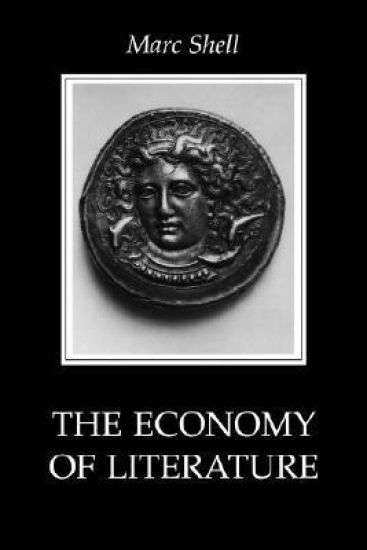
The Economy of Literature

The Economy of Literature

Marc Shell

Johns Hopkins University Press
1993
pokkari
Why did coinage, tyranny, and philosophy develop in the same time and place? Marc Shell explores how both money and language give "worth" by providing a medium of exchange, how the development of money led to a revolution in philosophical thought and language, and how words transform mere commodities into symbols at once aesthetic and practical. Offering carefully documented interpretations of texts from Heraclitus, Herodotus, Sophocles, Plato, Aristotle, Rousseau, and Ruskin, Shell demonstrates the kinship between literary and economic theory and production, introduces new methods of analyzing texts, and shows how literary and philosophical fictions can help us understand the world in which we live.
Islandology

Islandology

Marc Shell

Stanford University Press
2014
sidottu
Islandology is a fast-paced, fact-filled comparative essay in critical topography and cultural geography that cuts across different cultures and argues for a world of islands. The book explores the logical consequences of geographic place for the development of philosophy and the study of limits (Greece) and for the establishment of North Sea democracy (England and Iceland), explains the location of military hot-spots and great cities (Hormuz and Manhattan), and sheds new light on dozens of world-historical productions whose motivating islandic aspect has not heretofore been recognized (Shakespeare's Hamlet and Wagner's Ring of the Nibelung). Written by Shell in view of the melting of the world's great ice islands, Islandology shows not only new ways that we think about islands but also why and how we think by means of them.
Talking the Walk & Walking the Talk

Talking the Walk & Walking the Talk

Marc Shell

Fordham University Press
2015
sidottu
This book argues that we should regard walking and talking in a single rhythmic vision. In doing so, it contributes to the theory of prosody, our understanding of respiration and looking, and, in sum, to the particular links, across the board, between the human characteristics of bipedal walking and meaningful talk. The author first introduces the philosophical, neurological, anthropological, and aesthetic aspects of the subject in historical perspective, then focuses on rhetoric and introduces a tension between the small and large issues of rhythm. He thereupon turns his attention to the roles of breathing in poetry—as a life-and-death matter, with attention to beats and walking poems. This opens onto technical concepts from the classical traditions of rhetoric and philology. Turning to the relationship between prosody and motion, he considers both animals and human beings as both ostensibly able-bodied creatures and presumptively disabled ones. Finally, he looks at dancing and writing as aspects of walking and talking, with special attention to motion in Arabic and Chinese calligraphy. The final chapters of the book provide a series of interrelated representative case studies.
Talking the Walk & Walking the Talk

Talking the Walk & Walking the Talk

Marc Shell

Fordham University Press
2015
pokkari
This book argues that we should regard walking and talking in a single rhythmic vision. In doing so, it contributes to the theory of prosody, our understanding of respiration and looking, and, in sum, to the particular links, across the board, between the human characteristics of bipedal walking and meaningful talk. The author first introduces the philosophical, neurological, anthropological, and aesthetic aspects of the subject in historical perspective, then focuses on rhetoric and introduces a tension between the small and large issues of rhythm. He thereupon turns his attention to the roles of breathing in poetry—as a life-and-death matter, with attention to beats and walking poems. This opens onto technical concepts from the classical traditions of rhetoric and philology. Turning to the relationship between prosody and motion, he considers both animals and human beings as both ostensibly able-bodied creatures and presumptively disabled ones. Finally, he looks at dancing and writing as aspects of walking and talking, with special attention to motion in Arabic and Chinese calligraphy. The final chapters of the book provide a series of interrelated representative case studies.