Kirjojen hintavertailu. Mukana 11 627 670 kirjaa ja 12 kauppaa.

Kirjahaku

Etsi kirjoja tekijän nimen, kirjan nimen tai ISBN:n perusteella.

5 kirjaa tekijältä Marc Singer

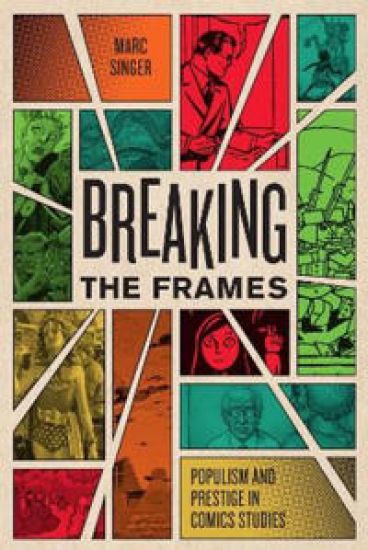
Breaking the Frames

Breaking the Frames

Marc Singer

University of Texas Press
2019
nidottu
A CHOICE Outstanding Academic Title, 2019Comics studies has reached a crossroads. Graphic novels have never received more attention and legitimation from scholars, but new canons and new critical discourses have created tensions within a field built on the populist rhetoric of cultural studies. As a result, comics studies has begun to cleave into distinct camps-based primarily in cultural or literary studies-that attempt to dictate the boundaries of the discipline or else resist disciplinarity itself. The consequence is a growing disconnect in the ways that comics scholars talk to each other-or, more frequently, do not talk to each other or even acknowledge each other’s work.Breaking the Frames: Populism and Prestige in Comics Studies surveys the current state of comics scholarship, interrogating its dominant schools, questioning their mutual estrangement, and challenging their propensity to champion the comics they study. Marc Singer advocates for greater disciplinary diversity and methodological rigor in comics studies, making the case for a field that can embrace more critical and oppositional perspectives. Working through extended readings of some of the most acclaimed comics creators-including Marjane Satrapi, Alan Moore, Kyle Baker, and Chris Ware-Singer demonstrates how comics studies can break out of the celebratory frameworks and restrictive canons that currently define the field to produce new scholarship that expands our understanding of comics and their critics.
Grant Morrison

Grant Morrison

Marc Singer

University Press of Mississippi
2011
sidottu
One of the most eclectic and distinctive writers currently working in comics, Grant Morrison (b. 1960) brings the auteurist sensibility of alternative comics and graphic novels to the popular genres-superhero, science fiction, and fantasy-that dominate the American and British comics industries. His comics range from bestsellers featuring the most universally recognized superhero franchises (All-Star Superman, New X-Men, Batman) to more independent, creator-owned work (The Invisibles, The Filth, We3) that defies any generic classification.In Grant Morrison: Combining the Worlds of Contemporary Comics, author Marc Singer examines how Morrison uses this fusion of styles to intervene in the major political, aesthetic, and intellectual challenges of our time. His comics blur the boundaries between fantasy and realism, mixing autobiographical representation and cultural critique with heroic adventure. They offer self-reflexive appraisals of their own genres while they experiment with the formal elements of comics. Perhaps most ambitiously, they challenge contemporary theories of language and meaning, seeking to develop new modes of expression grounded in comics' capacity for visual narrative and the fantasy genres' ability to make figurative meanings literal.
Grant Morrison

Grant Morrison

Marc Singer

University Press of Mississippi
2011
nidottu
One of the most eclectic and distinctive writers currently working in comics, Grant Morrison (b. 1960) brings the auteurist sensibility of alternative comics and graphic novels to the popular genres-superhero, science fiction, and fantasy-that dominate the American and British comics industries. His comics range from bestsellers featuring the most universally recognized superhero franchises (All-Star Superman, New X-Men, Batman) to more independent, creator-owned work (The Invisibles, The Filth, We3) that defies any generic classification.In Grant Morrison: Combining the Worlds of Contemporary Comics, author Marc Singer examines how Morrison uses this fusion of styles to intervene in the major political, aesthetic, and intellectual challenges of our time. His comics blur the boundaries between fantasy and realism, mixing autobiographical representation and cultural critique with heroic adventure. They offer self-reflexive appraisals of their own genres while they experiment with the formal elements of comics. Perhaps most ambitiously, they challenge contemporary theories of language and meaning, seeking to develop new modes of expression grounded in comics' capacity for visual narrative and the fantasy genres' ability to make figurative meanings literal.
Strange Hybrids

Strange Hybrids

Marc Singer

UNIVERSITY OF VIRGINIA PRESS
2026
sidottu
How science fiction and literary fiction merge to represent today's social, political, and environmental concerns The future is now. Decades of accelerating technological, social, and environmental change have created a sense in the literary world that science fiction, rather than an augury of the future, may actually be the genre best equipped to describe the present. Strange Hybrids examines the various ways contemporary novelists have adapted the structures and conventions of science fiction into literary depictions of our own world. Combining elements of both realism and speculative fiction, novelists such as Francis Spufford, Kim Stanley Robinson, Richard Powers, Jennifer Egan, and Colson Whitehead represent societies gripped by social, political, and ecological instability. Taking up questions of information science, climate change, medicine, economics, and more, their novels bridge the concerns of the sciences and the humanities to depict existing realities and imagine alternative ones. As descriptive as they are speculative, these novels demonstrate that science fiction offers an essential vocabulary for rethinking literature and its relationship to the contemporary world.
Strange Hybrids

Strange Hybrids

Marc Singer

UNIVERSITY OF VIRGINIA PRESS
2026
pokkari
How science fiction and literary fiction merge to represent today's social, political, and environmental concerns The future is now. Decades of accelerating technological, social, and environmental change have created a sense in the literary world that science fiction, rather than an augury of the future, may actually be the genre best equipped to describe the present. Strange Hybrids examines the various ways contemporary novelists have adapted the structures and conventions of science fiction into literary depictions of our own world. Combining elements of both realism and speculative fiction, novelists such as Francis Spufford, Kim Stanley Robinson, Richard Powers, Jennifer Egan, and Colson Whitehead represent societies gripped by social, political, and ecological instability. Taking up questions of information science, climate change, medicine, economics, and more, their novels bridge the concerns of the sciences and the humanities to depict existing realities and imagine alternative ones. As descriptive as they are speculative, these novels demonstrate that science fiction offers an essential vocabulary for rethinking literature and its relationship to the contemporary world.