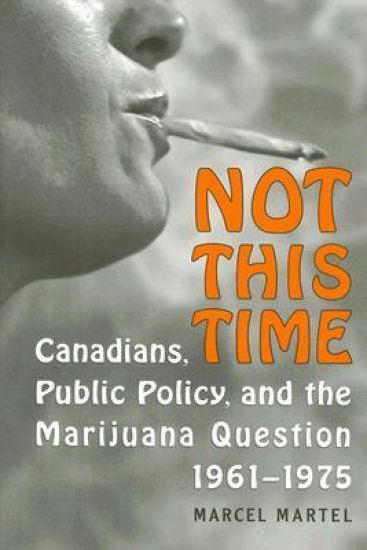
Drugs are part of every society, consumed for ritual or religious purposes, for pleasure, to enhance athletic performance, or as a means to relieve pain. Throughout the twentieth century, however, an arbitrary and shifting distinction was made between legal drugs that were prescribed and administered by the medical profession, and illegal drugs that were subject to state control and suppression. Illegal in Canada since 1923, marijuana is the most controversial of illegal drugs. Because it lacks the same addictive and harmful qualities of other illegal substances, such as heroin and cocaine, marijuana's negative social impact is questionable. In the 1960s interest groups – including university student associations, certain physicians, and others – began demanding changes to the Narcotics Control Act, which governed the legal status of drugs, to decriminalize or legalize the possession of marijuana. In Not This Time, Marcel Martel explores recreational use of marijuana in the 1960s and its emergence as a topic of social debate. He demonstrates how the media, interest groups, state institutions, bureaucrats and politicians influenced the development and implementation of public policy on drugs. Martel illustrates how two loose coalitions both made up of interest groups, addiction research organizations and bureaucrats – one supporting the existing drug legislation, and the other favoring liberalization of the Narcotics Control Act – dominated the debate over the legalization of marijuana, and how those favoring liberalized drug laws, while influential, had difficulty presenting a unified front and problems justifying their cause while the health benefits of marijuana use were still in question. Exploring both sides of the debate, Martel presents the invigorating history of a question that continues to reverberate in the minds of Canadians.