Kirjojen hintavertailu. Mukana 11 717 486 kirjaa ja 12 kauppaa.

Kirjahaku

Etsi kirjoja tekijän nimen, kirjan nimen tai ISBN:n perusteella.

27 kirjaa tekijältä Marcel Mauss

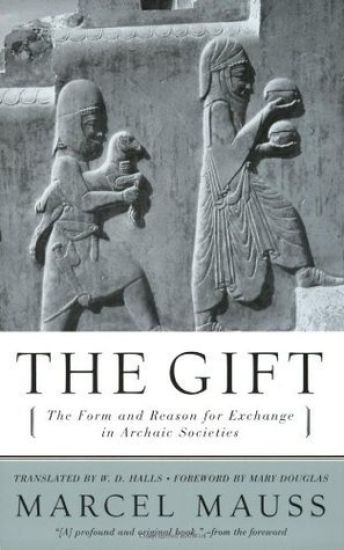
The Gift: The Form and Reason for Exchange in Archaic Societies
A brilliant example of the comparative method, The Gift presents the first systematic study of the custom--widespread in primitive societies from ancient Rome to present-day Melanesia--of exchanging gifts. The gift is a perfect example of what Mauss calls a total social phenomenon, since it involves legal, economic, moral, religious, aesthetic, and other dimensions. He sees the gift exchange as related to individuals and groups as much as to the objects themselves, and his analysis calls into question the social conventions and economic systems that had been taken for granted for so many years. In a modern translation, introduced by distinguished anthropologist Mary Douglas, The Gift is essential reading for students of social anthropology and sociology.
A General Theory of Magic

A General Theory of Magic

Marcel Mauss

Routledge
2001
nidottu
First written by Marcel Mauss and Henri Humbert in 1902, A General Theory of Magic gained a wide new readership when republished by Mauss in 1950. As a study of magic in 'primitive' societies and its survival today in our thoughts and social actions, it represents what Claude Lévi-Strauss called, in an introduction to that edition, the astonishing modernity of the mind of one of the century's greatest thinkers. The book offers a fascinating snapshot of magic throughout various cultures as well as deep sociological and religious insights still very much relevant today. At a period when art, magic and science appear to be crossing paths once again, A General Theory of Magic presents itself as a classic for our times.
A General Theory of Magic

A General Theory of Magic

Marcel Mauss

Routledge
2001
sidottu
First written by Marcel Mauss and Henri Humbert in 1902, A General Theory of Magic gained a wide new readership when republished by Mauss in 1950. As a study of magic in 'primitive' societies and its survival today in our thoughts and social actions, it represents what Claude Lévi-Strauss called, in an introduction to that edition, the astonishing modernity of the mind of one of the century's greatest thinkers. The book offers a fascinating snapshot of magic throughout various cultures as well as deep sociological and religious insights still very much relevant today. At a period when art, magic and science appear to be crossing paths once again, A General Theory of Magic presents itself as a classic for our times.
The Gift

The Gift

Marcel Mauss

Routledge
2001
sidottu
In this, his most famous work, Marcel Mauss presented to the world a book which revolutionized our understanding of some of the basic structures of society. By identifying the complex web of exchange and obligation involved in the act of giving, Mauss called into question many of our social conventions and economic systems. In a world rife with runaway consumption, The Gift continues to excite and challenge.
The Gift

The Gift

Marcel Mauss

Routledge
2001
nidottu
In this, his most famous work, Marcel Mauss presented to the world a book which revolutionized our understanding of some of the basic structures of society. By identifying the complex web of exchange and obligation involved in the act of giving, Mauss called into question many of our social conventions and economic systems. In a world rife with runaway consumption, The Gift continues to excite and challenge.
Seasonal Variations of the Eskimo
Seasonal Variations of the Eskimo is one of the first books in anthropology to adopt a sociological approach to the analysis of a single society. Mauss links elements of anthropology and human geography, arguing that geographical factors should be considered in relation to a social context in all its complexity. The work is an illuminating source on the Eskimo and a proto-type of what an anthropologist should do with ethnographic data and exerted considerable influence on the development of social anthropology. English translation first published in 1979.
Seasonal Variations of the Eskimo
Seasonal Variations of the Eskimo is one of the first books in anthropology to adopt a sociological approach to the analysis of a single society. Mauss links elements of anthropology and human geography, arguing that geographical factors should be considered in relation to a social context in all its complexity. The work is an illuminating source on the Eskimo and a proto-type of what an anthropologist should do with ethnographic data and exerted considerable influence on the development of social anthropology. English translation first published in 1979.
The Gift – Expanded Edition
Scan down a list of essential works in any introduction to anthropology course and you are likely to see to see Marcel Mauss's masterpiece, Essay on the Gift. With this new translation, this crucial essay is returned to its original context, published alongside the profound works that framed its first publication in the 1923-24 issue of L'Annee Sociologique. With a critical foreword by Maurice Godelier, this is certain to become the standard English version of this important anthropological work. Included alongside the "Essay on the Gift" are Mauss's memorial accounts of the work of colleagues lost during World War I, as well as his scholarly reviews of influential contemporaries such as Franz Boas, James George Frazer, Bronislaw Malinowski, Alfred Radcliffe-Brown, and others. Read in the context of these additional pieces, the "Essay on the Gift" is revealed as a complementary whole, a gesture of both personal and political generosity: his honor for his fallen colleagues; his aspiration for modern society's recuperation of the gift as a mode of repair; and his own careful, yet critical, reading of his intellectual milieu. The result sets the scene for a whole new generation of readers to study this essay alongside pieces that exhibit the erudition, political commitment, and generous collegial exchange that first nourished it into life.
The Gift

The Gift

Marcel Mauss

Martino Fine Books
2011
pokkari
2011 Reprint of 1954 American Edition. Full facsimile of the original edition, not reproduced with Optical Recognition Software. This is perhaps the first systematic study of the custom, widespread in primitive societies from ancient Rome to present-day Melanesia, of exchanging gifts. The gift is conceived as a transaction forming part of all human, personal relationships between individuals and groups. These gift exchanges are at the same time moral, economic, juridical, aesthetic, religious, mythological and social phenomena. A classic work.
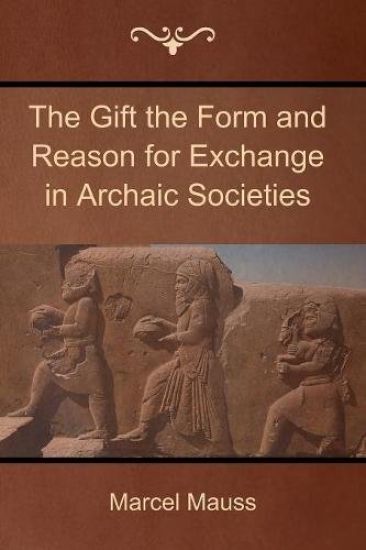
The Gift the Form and Reason for Exchange in Archaic Societies
The Gift is a short book by the French sociologist Marcel Mauss that is the foundation of social theories of reciprocity and gift exchange.Mauss's original piece was entitled Essai sur le don. Forme et raison de l'Echange dans les sociEtEs archaIques ("An essay on the gift: the form and reason of exchange in archaic societies") and was originally published in L'AnnEe Sociologique in 1925. The essay was later republished in French in 1950 and translated into English in 1954 by Ian Cunnison, in 1990 by W. D. Halls, and in 2016 by Jane I. Guyer.Mauss's essay focuses on the way that the exchange of objects between groups builds relationships between humans.It analyzes the economic practices of various so-called archaic societies and finds that they have a common central practice centered on reciprocal exchange. In them, he finds evidence contrary to the presumptions of modern Western societies about the history and nature of exchange. He shows that early exchange systems center around the obligations to give, to receive, and, most importantly, to reciprocate. They occur between groups, not only individuals, and they are a crucial part of "total phenomena" that work to build not just wealth and alliances but social solidarity because "the gift" pervades all aspects of the society. He uses a comparative method, drawing upon published secondary scholarship on peoples from around the world, but especially the Pacific Northwest (especially potlatch).After examining the reciprocal gift-giving practices of each, he finds in them common features, despite some variation. From the disparate evidence, he builds a case for a foundation to human society based on collective (vs. individual) exchange practices. In so doing, he refutes the English tradition of liberal thought, such as utilitarianism, as distortions of human exchange practices. He concludes by speculating that social welfare programs may be recovering some aspects of the morality of the gift within modern market economies. (wikipedia.org)
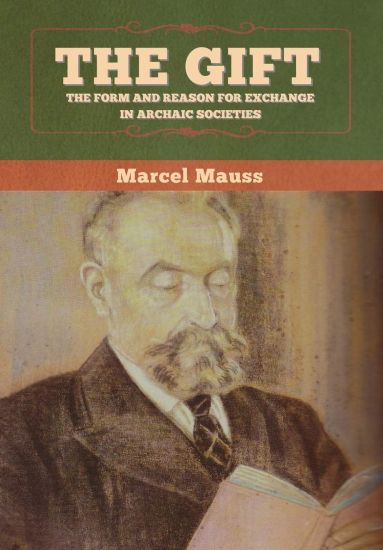
The Gift

The Gift

Marcel Mauss

Bibliotech Press
2020
sidottu
The Gift is a short book by the French sociologist Marcel Mauss that is the foundation of social theories of reciprocity and gift exchange.Mauss's original piece was entitled Essai sur le don. Forme et raison de l' change dans les soci t s archa ques ("An essay on the gift: the form and reason of exchange in archaic societies") and was originally published in L'Ann e Sociologique in 1925. The essay was later republished in French in 1950 and translated into English in 1954 by Ian Cunnison, in 1990 by W. D. Halls, and in 2016 by Jane I. Guyer. Mauss's essay focuses on the way that the exchange of objects between groups builds relationships between humans.It analyzes the economic practices of various so-called archaic societies and finds that they have a common central practice centered on reciprocal exchange. In them, he finds evidence contrary to the presumptions of modern Western societies about the history and nature of exchange. He shows that early exchange systems center around the obligations to give, to receive, and, most importantly, to reciprocate. They occur between groups, not only individuals, and they are a crucial part of "total phenomena" that work to build not just wealth and alliances but social solidarity because "the gift" pervades all aspects of the society. He uses a comparative method, drawing upon published secondary scholarship on peoples from around the world, but especially the Pacific Northwest (especially potlatch).After examining the reciprocal gift-giving practices of each, he finds in them common features, despite some variation. From the disparate evidence, he builds a case for a foundation to human society based on collective (vs. individual) exchange practices. In so doing, he refutes the English tradition of liberal thought, such as utilitarianism, as distortions of human exchange practices. He concludes by speculating that social welfare programs may be recovering some aspects of the morality of the gift within modern market economies. (wikipedia.org)
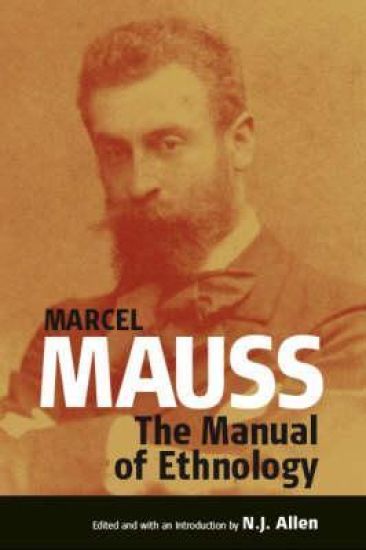
The Manual of Ethnography

The Manual of Ethnography

Marcel Mauss

Berghahn Books
2007
sidottu
Marcel Mauss (1872-1950) was the leading social anthropologist in Paris between the world wars, and his Manuel d’ethnographie, dating from that period, is the longest of all his texts. Despite having had four editions in France, the Manuel has hitherto been unavailable in English. This contrasts with his essays, longer and shorter, many of which have long enjoyed the status of classics within anthropology. We are therefore pleased to present, in the English language for the first time, this extraordinary work that is based on the more than thirty lectures Mauss delivered each year under the title “Instructions in descriptive ethnography, intended for travelers, administrators and missionaries.” Despite his dates, Mauss’s treatment of fundamental questions, such as how to conceptualize and classify the range of social phenomena known to us from history and ethnography, has lost none of its freshness.
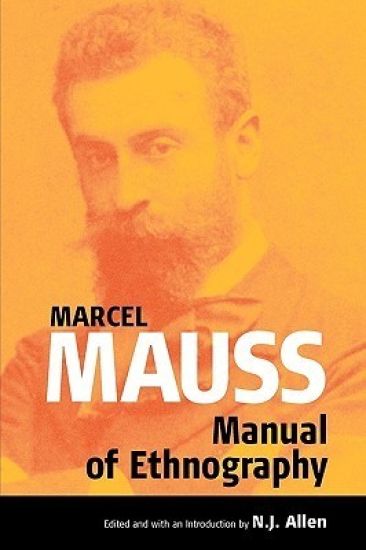
The Manual of Ethnography

The Manual of Ethnography

Marcel Mauss

Berghahn Books
2009
nidottu
Marcel Mauss (1872-1950) was the leading social anthropologist in Paris between the world wars, and his Manuel d’ethnographie, dating from that period, is the longest of all his texts. Despite having had four editions in France, the Manuel has hitherto been unavailable in English. This contrasts with his essays, longer and shorter, many of which have long enjoyed the status of classics within anthropology. We are therefore pleased to present, in the English language for the first time, this extraordinary work that is based on the more than thirty lectures Mauss delivered each year under the title “Instructions in descriptive ethnography, intended for travelers, administrators and missionaries.” Despite his dates, Mauss’s treatment of fundamental questions, such as how to conceptualize and classify the range of social phenomena known to us from history and ethnography, has lost none of its freshness.
Essai sur le don

Essai sur le don

Marcel Mauss

Books on Demand
2021
pokkari
Quelle est la r gle de droit et d'int r t qui, dans les soci t s de type arri r ou archa que, fait que le pr sent re u est obligatoirement rendu ? Quelle force y a-t-il dans la chose qu'on donne qui fait que le donataire la rend ? Consid r comme le p re de l'anthropologie fran aise, Marcel Mauss introduit dans cet essai la notion de "fait social total", les changes et plus particuli rement le don y tant ainsi con us comme un ph nom ne social qui recouvre la fois une dimension conomique, politique, religieuse et culturelle. C'est dans son Essai sur le don -- toujours actuel pr s d'un si cle apr s sa publication -- que sa notion de "fait social total" rev t sa forme la plus labor . Il y traite notamment du concept de mana, c'est- -dire d'une force qui contient le Sacr et qui est pour lui pr sente dans toutes les formes archa ques de don et d' change. Que ce soit dans le processus d'accumulation et de destruction de biens (le potlatch des populations indig nes d'Am rique du Nord) ou dans les changes de dons de l'aire polyn sienne (le kula d crit par Bronislaw Malinowski), il s'agit d'identifier "quelle force pr sente dans l'objet donn pousse le donateur le rendre". Cette force n'est pas une valeur mat rielle ni conomique, elle est en elle-m me la raison d' tre de l' change fondamental qui se fait avec les esprits des morts et des dieux. Outre son apport incontournable aux sciences sociales, l'Essai sur le don influencera nombre d'intellectuels et d' crivains comme entre autres Claude L vi-Strauss, Roger Caillois, Georges Bataille, ...
Un livre double

Un livre double

Marcel Mauss

Memoria Books
2025
pokkari
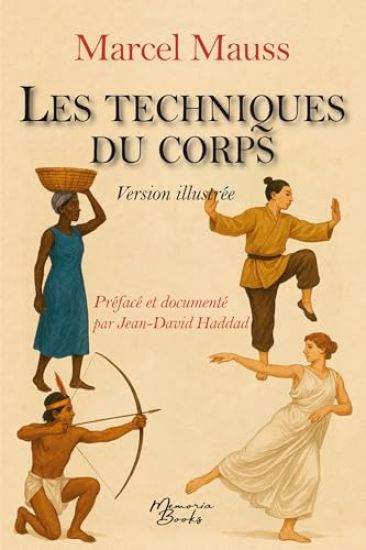
Et si vos gestes n' taient pas les v tres ? Ce que nous appelons "naturel" - marcher, courir, s'asseoir, se battre, dormir - est en r alit le fruit d'un apprentissage culturel. C'est ce que d montre Marcel Mauss dans Les techniques du corps, texte fondateur de l'anthropologie moderne, o le corps devient une archive vivante de normes invisibles: sexe, classe, poque, culture... Tout influence nos mouvements. Mais ce que Mauss n'avait pas encore explor , Jean-David Haddad l'ose dans un dossier documentaire explosif Et si les femmes africaines avaient raison de porter des charges lourdes sur leur t te ? D couvrez une r flexion argument e sur les postures inadapt es de notre civilisation. En prolongeant la r flexion, il montre comment nos techniques corporelles reconduisent des mod les de force calqu s sur l'homme jeune. R sultat: les femmes, les personnes g es, les morphologies "atypiques" sont per ues comme faibles - non parce qu'elles le sont, mais parce que les crit res de puissance ne leur sont pas adapt s. Ce livre propose une r volution silencieuse: repenser les gestes partir des corps r els, non les corps partir de gestes h rit s. Une r flexion radicale sur l'anthropologie du mouvement, la domination des normes, et la lib ration des puissances invisibles.
Essai sur le don

Essai sur le don

Marcel Mauss

Culturea
2022
pokkari
" Quelle est la r gle de droit et d'int r t qui, dans les soci t s de type arri r ou archa que, fait que le pr sent re u est obligatoirement rendu ? Quelle force y a-t-il dans la chose qu'on donne qui fait que le donataire la rend ? Consid r comme le p re de l'anthropologie fran aise, Marcel Mauss introduit dans cet essai la notion de ""fait social total"", les changes et plus particuli rement le don y tant ainsi con us comme un ph nom ne social qui recouvre la fois une dimension conomique, politique, religieuse et culturelle. C'est dans son Essai sur le don -- toujours actuel pr s d'un si cle apr s sa publication -- que sa notion de ""fait social total"" rev t sa forme la plus labor . Il y traite notamment du concept de mana, c'est- -dire d'une force qui contient le Sacr et qui est pour lui pr sente dans toutes les formes archa ques de don et d' change. Que ce soit dans le processus d'accumulation et de destruction de biens (le potlatch des populations indig nes d'Am rique du Nord) ou dans les changes de dons de l'aire polyn sienne (le kula d crit par Bronislaw Malinowski), il s'agit d'identifier ""quelle force pr sente dans l'objet donn pousse le donateur le rendre"". Cette force n'est pas une valeur mat rielle ni conomique, elle est en elle-m me la raison d' tre de l' change fondamental qui se fait avec les esprits des morts et des dieux. Outre son apport incontournable aux sciences sociales, l'Essai sur le don influencera nombre d'intellectuels et d' crivains comme entre autres Claude L vi-Strauss, Roger Caillois, Georges Bataille, ..."