Kirjahaku
Etsi kirjoja tekijän nimen, kirjan nimen tai ISBN:n perusteella.
9 kirjaa tekijältä Marcel de Corte

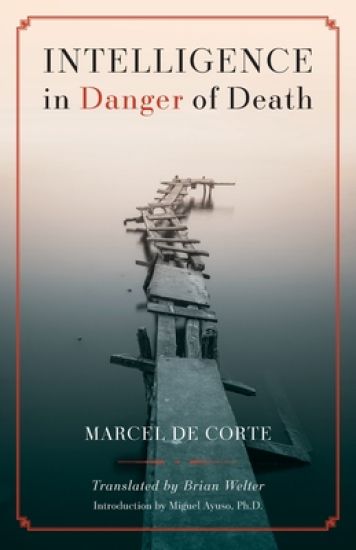
Well-known in the French-speaking world for his devastating critiques of the decadence of thought in the West since Descartes's Cogito ergo sum, Marcel De Corte published Intelligence in Danger of Death as the final stage of his reflections in 1969. To grasp the profound mutation which man and society have undergone, Marcel De Corte offers a merciless analysis that relies on classical philosophy and insight from Christian Revelation. He outlines the genealogy of contemporary evils and indicates the ways to correct these. What Orwell and Huxley turned into novels, Marcel De Corte predicted through reasoning and analysis in the light of Wisdom. His thesis: man's speculative and practical intelligence has been replaced with his working intelligence, that is, the intelligence that produces new things and can only know the world that it has produced. This is how man has ultimately become detached from reality and how his mind has become apt only to grasp a manufactured world as presented to him by those in command of the production of information: scientists, media, governments.
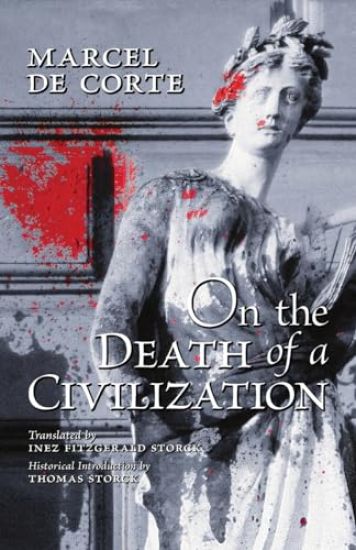
First-ever translation of Essai sur la fin d'une civilisation originally published in 1949. Our contemporary civilization is in distress. Society is unraveling, with rampant individualism, moral dissipation, identity crises, unchecked consumerism, and social isolation. De Corte, writing in the mid-twentieth century, studies these trends and discerns their causes: the prevalence of philosophies rooted in idealism or materialism, the reign of ideologies inspired by these philosophies, objectification of workers in both free-market capitalism and communism as economic progress trumps social well-being, the efforts of some in the Church to compromise the truth in order to adapt to the world, and, most importantly, the rejection of the transcendent. To heal society and build a new civilization emerging from the old, De Corte prescribes restoring a religious, moral, and philosophical compass to society, and the development of small-scale communities with an organic relationship to the environment and fostering close interpersonal connections.
Our contemporary civilization is in distress. Society is unraveling, with rampant individualism, moral dissipation, identity crises, unchecked consumerism, and social isolation. De Corte, writing in the mid-twentieth century, studies these trends and discerns their causes: the prevalence of philosophies rooted in idealism or materialism, the reign of ideologies inspired by these philosophies, objectification of workers in both free-market capitalism and communism as economic progress trumps social well-being, the efforts of some in the Church to compromise the truth in order to adapt to the world, and, most importantly, the rejection of the transcendent. To heal society and build a new civilization emerging from the old, De Corte prescribes restoring a religious, moral, and philosophical compass to society, and the development of small-scale communities with an organic relationship to the environment and fostering close interpersonal connections.