Kirjojen hintavertailu. Mukana 12 083 983 kirjaa ja 12 kauppaa.

Kirjahaku

Etsi kirjoja tekijän nimen, kirjan nimen tai ISBN:n perusteella.

7 kirjaa tekijältä Marcello Giovanelli

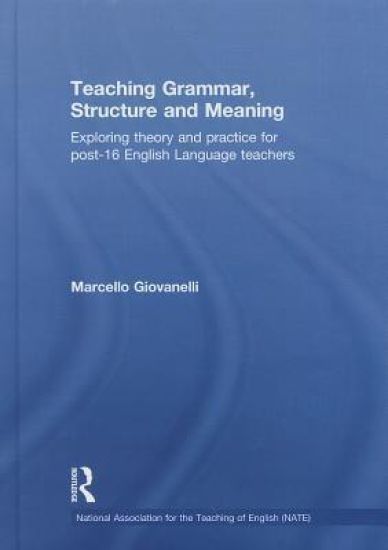
Teaching Grammar, Structure and Meaning

Teaching Grammar, Structure and Meaning

Marcello Giovanelli

Routledge
2014
sidottu
Teaching Grammar, Structure and Meaning introduces teachers to some basic ideas from the increasingly popular field of cognitive linguistics as a way of explaining and teaching key grammatical concepts. Particularly suitable for those teaching post-16 English Language, this book offers a methodology for teaching key aspects of linguistic form and an extensive set of learning activities. Written by an experienced linguist and teacher, this book contains:an evaluation of current approaches to the teaching of grammar and linguistic forma revised pedagogy based on principles from cognitive science and cognitive linguisticsa comprehensive set of activities and resources to support the teaching of key linguistic topics and text typesa detailed set of suggestions for further reading and a guide to available resourcesArguing for the use of drama, role play, gesture, energy dynamics, and visual and spatial representations as ways of enabling students to understand grammatical features, this book explores and analyses language use in a range of text types, genres and contexts. This innovative approach to teaching aspects of grammar is aimed at English teachers, student teachers and teacher trainers.
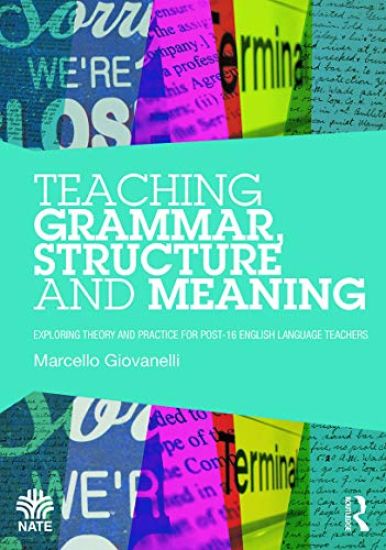
Teaching Grammar, Structure and Meaning

Teaching Grammar, Structure and Meaning

Marcello Giovanelli

Routledge
2014
nidottu
Teaching Grammar, Structure and Meaning introduces teachers to some basic ideas from the increasingly popular field of cognitive linguistics as a way of explaining and teaching key grammatical concepts. Particularly suitable for those teaching post-16 English Language, this book offers a methodology for teaching key aspects of linguistic form and an extensive set of learning activities. Written by an experienced linguist and teacher, this book contains:an evaluation of current approaches to the teaching of grammar and linguistic forma revised pedagogy based on principles from cognitive science and cognitive linguisticsa comprehensive set of activities and resources to support the teaching of key linguistic topics and text typesa detailed set of suggestions for further reading and a guide to available resourcesArguing for the use of drama, role play, gesture, energy dynamics, and visual and spatial representations as ways of enabling students to understand grammatical features, this book explores and analyses language use in a range of text types, genres and contexts. This innovative approach to teaching aspects of grammar is aimed at English teachers, student teachers and teacher trainers.
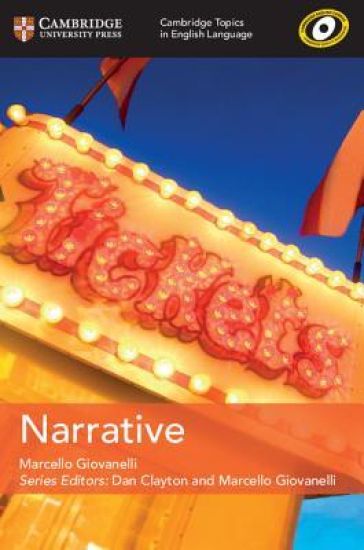
Cambridge Topics in English Language Narrative

Cambridge Topics in English Language Narrative

Marcello Giovanelli

Cambridge University Press
2018
pokkari
Essential study guides for the future linguist. Narrative is an introduction to the ways we use language to tell stories. It is suitable for advanced level students and beyond. Written with input from the Cambridge English Corpus, it explores texts from a range of genres, mediums and periods, written for different audiences and purposes. This includes examples such as hard news stories, narratives from children and examples from Twitter. Using short activities to help explain analysis methods, this book guides students through major modern issues and concepts. It summarises key concerns and modern findings, while providing inspiration for language investigations and non-examined assessments (NEAs) with research suggestions.
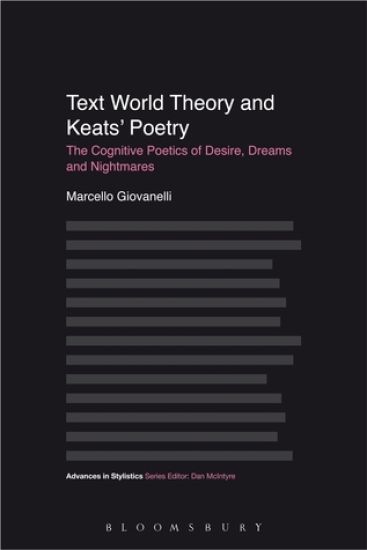
Text World Theory and Keats' Poetry

Text World Theory and Keats' Poetry

Marcello Giovanelli

Bloomsbury Academic
2015
nidottu
Text World Theory and Keats' Poetry applies advances in cognitive poetics and text world theory to four poems by the nineteenth century poet John Keats. It takes the existing text world theory as a starting point and draws on stylistics, literary theory, cognitive linguistics, cognitive psychology and dream theories to explore reading poems in the light of their emphasis on states of desire, dreaming and nightmares. It accounts for the representation of these states and the ways in which they are likely to be processed, monitored and understood. Text World Theory and Keats' Poetry advances both the current field of cognitive stylistics but also analyses Keats in a way that offers new insights into his poetry. It is of interest to stylisticians and those in literary studies.
Text World Theory and Keats' Poetry

Text World Theory and Keats' Poetry

Marcello Giovanelli

Bloomsbury Academic USA
2013
sidottu
Text World Theory and Keats' Poetry applies advances in cognitive poetics and text world theory to four poems by the nineteenth century poet John Keats. It takes the existing text world theory as a starting point and draws on stylistics, literary theory, cognitive linguistics, cognitive psychology and dream theories to explore reading poems in the light of their emphasis on states of desire, dreaming and nightmares. It accounts for the representation of these states and the ways in which they are likely to be processed, monitored and understood. Text World Theory and Keats' Poetry advances both the current field of cognitive stylistics but also analyses Keats in a way that offers new insights into his poetry. It is of interest to stylisticians and those in literary studies.
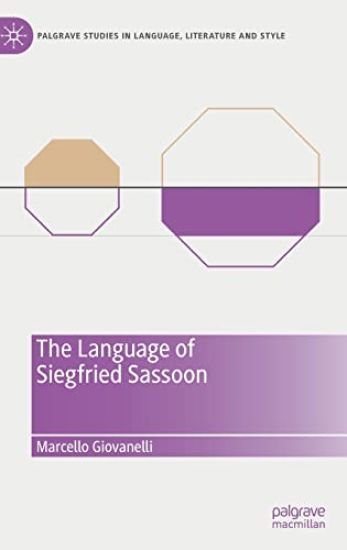
The Language of Siegfried Sassoon

The Language of Siegfried Sassoon

Marcello Giovanelli

Springer Nature Switzerland AG
2022
sidottu
This book presents a cognitive stylistic analysis of the writing of Siegfried Sassoon, a First World War poet who has typically been perceived as a poet of protest and irony, but whose work is in fact multi-faceted and complex in theme and shifted in style considerably throughout his lifetime. The author starts from the premise that a more systematic account of Sassoon’s style is possible using the methodology of contemporary stylistics, in particular Cognitive Grammar. Using this as a starting point, he revisits common ideas from Sassoon scholarship and reconfigures them through the lens of cognitive stylistics to provide a fresh perspective on Sassoon's style. This book will be of interest to students and scholars of stylistics, war poetry, twentieth-century literature, and cognitive linguistics.
The Language of Siegfried Sassoon

The Language of Siegfried Sassoon

Marcello Giovanelli

Springer Nature Switzerland AG
2023
nidottu
This book presents a cognitive stylistic analysis of the writing of Siegfried Sassoon, a First World War poet who has typically been perceived as a poet of protest and irony, but whose work is in fact multi-faceted and complex in theme and shifted in style considerably throughout his lifetime. The author starts from the premise that a more systematic account of Sassoon’s style is possible using the methodology of contemporary stylistics, in particular Cognitive Grammar. Using this as a starting point, he revisits common ideas from Sassoon scholarship and reconfigures them through the lens of cognitive stylistics to provide a fresh perspective on Sassoon's style. This book will be of interest to students and scholars of stylistics, war poetry, twentieth-century literature, and cognitive linguistics.