Kirjojen hintavertailu. Mukana 11 548 854 kirjaa ja 12 kauppaa.

Kirjahaku

Etsi kirjoja tekijän nimen, kirjan nimen tai ISBN:n perusteella.

9 kirjaa tekijältä Marcia L. Colish

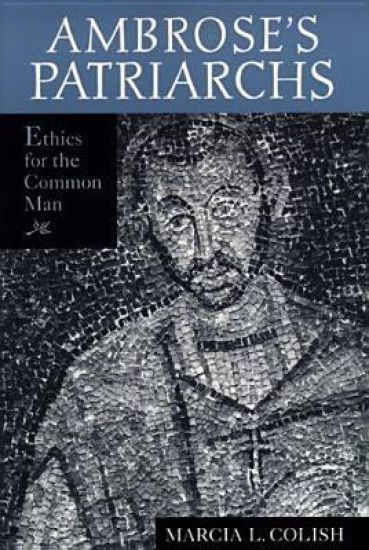
Ambrose's Patriarchs

Ambrose's Patriarchs

Marcia L. Colish

University of Notre Dame Press
2018
sidottu
In this welcome new book Marcia L. Colish offers the only monograph-length study of the patriarch treatises of Ambrose of Milan (c. 340-397), in which he develops, for the first time in the patristic period, an ethics for the laity. Ambrose the ethicist has been viewed primarily as the author of advice to those with special callings in the church, such as priests, widows, and consecrated virgins. His views have been characterized as advocating asceticism and promoting a Platonic view of human nature, in which the body is a moral problem. Ambrose's patriarch treatises, argues Colish, are instead aimed at lay people who did not have special callings in the church, but who led active lives in the world as spouses, parents, heads of households, professionals, and citizens. These treatises reveal a different side of Ambrose and show that he developed an ethics of moderation based on an Aristotelian and Stoic anthropology, which he modified in the light of biblical ethics and St. Paul's view of human nature. Colish's analysis sharply revises previous estimates of Ambrose the ethicist through a careful consideration of the patriarch treatises in their historical context, as Lenten sermons delivered by Ambrose to the catechumens in his Milanese church whom he was preparing during Lent for their coming Easter baptism. The pastoral context and intended audience of these treatises have largely been ignored in previous scholarship. Colish contends that when the treatises are read as Ambrose intended for them to be received, as a corpus of works aimed at the conversion of pagan Roman adults to Christianity, Ambrose's vision of a Christian ethics for the common man emerges.
Ambrose's Patriarchs

Ambrose's Patriarchs

Marcia L. Colish

University of Notre Dame Press
2005
nidottu
In this welcome new book Marcia L. Colish offers the only monograph-length study of the patriarch treatises of Ambrose of Milan (c. 340-397), in which he develops, for the first time in the patristic period, an ethics for the laity. Ambrose the ethicist has been viewed primarily as the author of advice to those with special callings in the church, such as priests, widows, and consecrated virgins. His views have been characterized as advocating asceticism and promoting a Platonic view of human nature, in which the body is a moral problem. Ambrose's patriarch treatises, argues Colish, are instead aimed at lay people who did not have special callings in the church, but who led active lives in the world as spouses, parents, heads of households, professionals, and citizens. These treatises reveal a different side of Ambrose and show that he developed an ethics of moderation based on an Aristotelian and Stoic anthropology, which he modified in the light of biblical ethics and St. Paul's view of human nature. Colish's analysis sharply revises previous estimates of Ambrose the ethicist through a careful consideration of the patriarch treatises in their historical context, as Lenten sermons delivered by Ambrose to the catechumens in his Milanese church whom he was preparing during Lent for their coming Easter baptism. The pastoral context and intended audience of these treatises have largely been ignored in previous scholarship. Colish contends that when the treatises are read as Ambrose intended for them to be received, as a corpus of works aimed at the conversion of pagan Roman adults to Christianity, Ambrose's vision of a Christian ethics for the common man emerges.
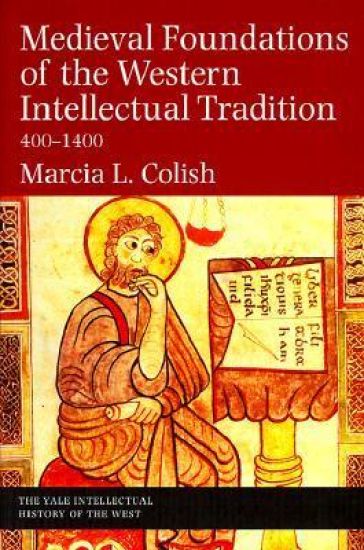
Medieval Foundations of the Western Intellectual Tradition
This magisterial book is an analysis of the course of Western intellectual history between A.D. 400 and 1400. The book is arranged in two parts: the first surveys the comparative modes of thought and varying success of Byzantine, Latin-Christian, and Muslim cultures, and the second takes the reader from the eleventh-century revival of learning to the high Middle Ages and beyond, the period in which the vibrancy of Western intellectual culture enabled it to stamp its imprint well beyond the frontiers of Christendom.Marcia Colish argues that the foundations of the Western intellectual tradition were laid in the Middle Ages and not, as is commonly held, in the Judeo-Christian or classical periods. She contends that Western medieval thinkers produced a set of tolerances, tastes, concerns, and sensibilities that made the Middle Ages unlike other chapters of the Western intellectual experience. She provides astute descriptions of the vernacular and oral culture of each country of Europe; explores the nature of medieval culture and its transmission; profiles seminal thinkers (Augustine, Anselm, Gregory the Great, Aquinas, Ockham); studies heresy from Manichaeism to Huss and Wycliffe; and investigates the influence of Arab and Jewish writing on scholasticism and the resurrection of Greek studies. Colish concludes with an assessment of the modes of medieval thought that ended with the period and those that remained as bases for later ages of European intellectual history.
The Fathers and Beyond

The Fathers and Beyond

Marcia L. Colish

Ashgate Publishing Limited
2008
sidottu
The papers in this second selection of articles by Professor Colish focus on thinkers of the patristic age, and relate to her three monographic studies in this area published over the last two decades. At the same time these papers look beyond the patristic period, both backward to these authors' appropriation of the classical and Christian traditions, and forward to their function as authorities in later medieval intellectual history, from the Carolingian Renaissance to Anselm of Canterbury, the scholastics, and Dante. Themes which these papers address include the transmission and use of Platonism and Stoicism, logic and linguistic theory, and the ethics of lying, moral indifference, and the salvation of the virtuous pagan.
The Mirror of Language

The Mirror of Language

Marcia L. Colish

University of Nebraska Press
1983
pokkari
Early Christianity faced the problem of the human word versus Christ the Word. Could language accurately describe spiritual reality? The Mirror of Language brilliantly traces the development of one prominent theory of signs from Augustine through Anselm of Canterbury, Thomas Aquinas, and Dante. Their shared epistemology validated human language as an authentic but limited index of preexistent reality, both material and spiritual. This sign theory could thereby account for the ways men receive, know, and transmit religious knowledge, always mediated through faith.Marcia L. Colish demonstrates how the three theologians used different branches of the medieval trivium to express a common sign theory: Augustine stressed rhetoric, Anselm shifted to grammar (including grammatical proofs of God's existence), and Thomas Aquinas stressed dialectic. Dante, the one poet included in this study, used the Augustinian sign theory to develop a Christian poetics that culminates in the Divine Comedy. The author points out not only the commonality but also the sharp contrasts between these writers and shows the relation between their sign theories and the intellectual ferment of the times.When first published in 1968, The Mirror of Language was recognized as a pathfinding study. This completely revised edition incorporates the scholarship of the intervening years and reflects the refinements of the author's thought. Greater prominence is given to the role of Stoicism, and sharper attention is paid to some of the thinkers and movements surrounding the major thinkers treated. Concerns of semiotics, philosophy, and literary criticism are elucidated further. The original thesis, still controversial, is now even wider ranging and more salient to current intellectual debate.
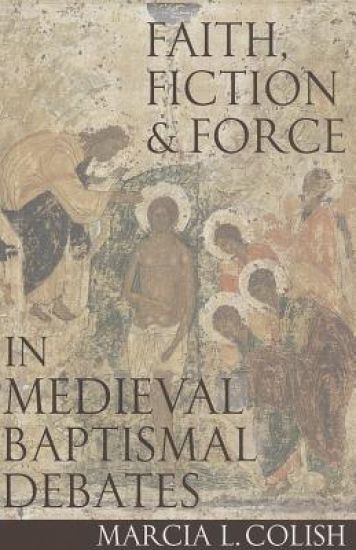
Faith, Fiction and Force in Medieval Baptismal Debates

Faith, Fiction and Force in Medieval Baptismal Debates

Marcia L. Colish

The Catholic University of America Press
2014
sidottu
What validated or invalidated baptism in the eyes of medieval Christians?The answer to this question is neither simple nor straightforward. As this fascinating contribution to medieval intellectual history shows, medieval ideas on baptism, though seen as necessary for salvation, were far from unanimous. Marcia Colish demonstrates persuasively that, from the patristic period through the early fourteenth century, there was vigorous debate surrounding baptism by desire, fictive baptism, and forced baptism.Drawing on a wide and interdisciplinary range of sources that goes well beyond the writings of theologians and canonists to include liturgical texts and practices, the rulings of popes and church councils, saints' lives, chronicles, imaginative literature, and poetry, Faith, Fiction and Force in Medieval Baptismal Debates illuminates the emergence and fortunes of these three controversies and the historical contexts that situate their development. Each debate has its own story line, its own turning points, and its own seminal figures whose positions informed its course. The thinkers involved in each case were, and regarded one another as being, members of the orthodox western Christian communion. Thus, another finding of this book is that Christian orthodoxy in the Middle Ages was able to encompass and accept disagreements both wide and deep on a sacrament seen as fundamental to Christian identity, faith and practice.
Studies in Scholasticism

Studies in Scholasticism

Marcia L. Colish

Ashgate Publishing Limited
2006
sidottu
Spanning thirty years, the papers brought together in this volume reflect three of Professor Colish's interests as a historian of medieval scholastic thought. The first group of studies represent investigations that flowed into, and out of, the research on Peter Lombard (d. 1161) and his contemporaries that culminated in her book Peter Lombard (1994). Following the publication of that work, she next sought to discover how Peter's theology became mainstream Paris theology in the period between Lombard's death and the early 13th century, resulting in the second group of papers in this collection. Finally, the last two papers offer reflections on broader interpretive issues, considering ways in which medievalists ought to reconsider their general understanding of the story lines of high medieval intellectual history.
The Fathers and Beyond

The Fathers and Beyond

Marcia L. Colish

Routledge
2019
nidottu
The papers in this second selection of articles by Professor Colish focus on thinkers of the patristic age, and relate to her three monographic studies in this area published over the last two decades. At the same time these papers look beyond the patristic period, both backward to these authors' appropriation of the classical and Christian traditions, and forward to their function as authorities in later medieval intellectual history, from the Carolingian Renaissance to Anselm of Canterbury, the scholastics, and Dante. Themes which these papers address include the transmission and use of Platonism and Stoicism, logic and linguistic theory, and the ethics of lying, moral indifference, and the salvation of the virtuous pagan.
Peter Lombard

Peter Lombard

Marcia L. Colish

Brill
1994
sidottu
The first general study of Peter Lombard (c. 1100-1160) in a century, this book places Peter's thought in the context of the intellectual debates of his time in the effort to understand the substance of Lombardian theology and the reasons why his principal work, the Sentences, immediately became a classic of early scholastic theology with a durable influence, doing more to shape the education of university theologians and philosophers than any other work of systematic theology for the next four centuries. Attention is paid to the sentence collection as a genre of theological literature, the problem of theological language with which Peter and his contemporaries wrestled, and his contribution to early scholastic biblical exegesis as well as to the development of his systematic theology in the Sentences.