Kirjahaku
Etsi kirjoja tekijän nimen, kirjan nimen tai ISBN:n perusteella.
11 kirjaa tekijältä Marcus Manilius

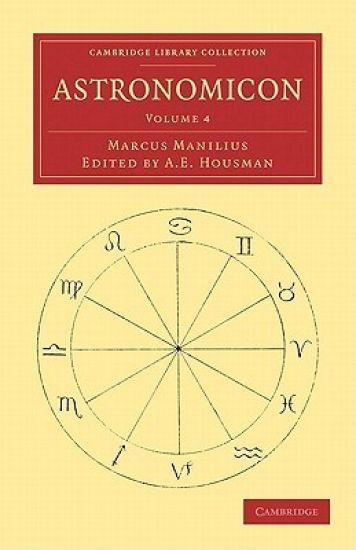
Both the author and the date of this five-volume poem, the first Western document to link the houses of the zodiac with the course of human affairs, are uncertain. The author's name may be Marcus Manilius, or Manlius, or Mallius, and the latest datable event mentioned in the books themselves is the disastrous defeat of Varus' Roman legions by the German tribes in 9 CE. The writing shows knowledge of the work of Lucretius, but the work is not referred to by any subsequent writer, suggesting that it was never widely disseminated. A manuscript was rediscovered by Poggio Bracciolini in 1416 or 1417, and editions were produced by Scaliger and Bentley, but this immensely erudite edition of 1903–1930 by the scholar and poet A. E. Housman (1859–1936) is regarded as authoritative. Volume 4 describes the influence of the zodiacal signs on the people born under them.
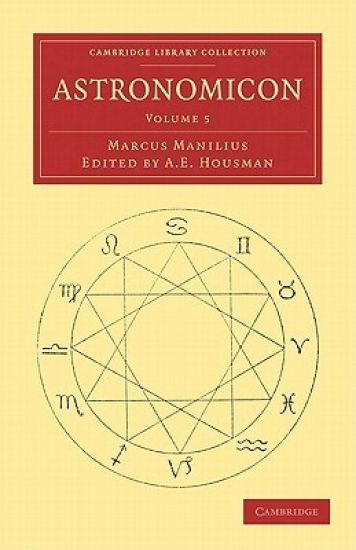
Both the author and the date of this five-volume poem, the first Western document to link the houses of the zodiac with the course of human affairs, are uncertain. The author's name may be Marcus Manilius, or Manlius, or Mallius, and the latest datable event mentioned in the books themselves is the disastrous defeat of Varus' Roman legions by the German tribes in 9 CE. The writing shows knowledge of the work of Lucretius, but the work is not referred to by any subsequent writer, suggesting that it was never widely disseminated. A manuscript was rediscovered by Poggio Bracciolini in 1416 or 1417, and editions were produced by Scaliger and Bentley, but this immensely erudite edition of 1903–1930 by the scholar and poet A. E. Housman (1859–1936) is regarded as authoritative. Volume 5 (which is unfinished) describes the non-zodiacal signs and their influence.
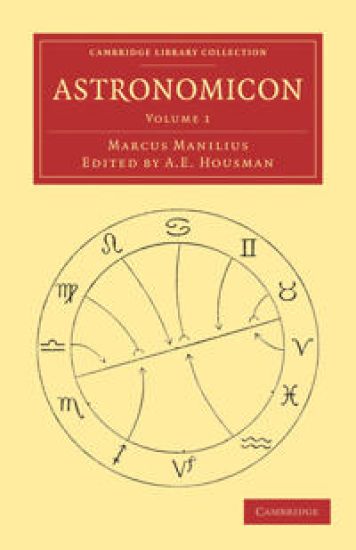
Both the author and the date of this five-volume poem, the first Western document to link the houses of the zodiac with the course of human affairs, are uncertain. The author's name may be Marcus Manilius, or Manlius, or Mallius, and the latest datable event mentioned in the books themselves is the disastrous defeat of Varus' Roman legions by the German tribes in 9 CE. The writing shows knowledge of the work of Lucretius, but the work is not referred to by any subsequent writer, suggesting that it was never widely disseminated. A manuscript was rediscovered by Poggio Bracciolini in 1416 or 1417, and editions were produced by Scaliger and Bentley, but this immensely erudite edition of 1903–1930 by the scholar and poet A. E. Housman (1859–1936) is regarded as authoritative. Volume 1 covers the creation and arrangement of the heavens and their division into spheres.
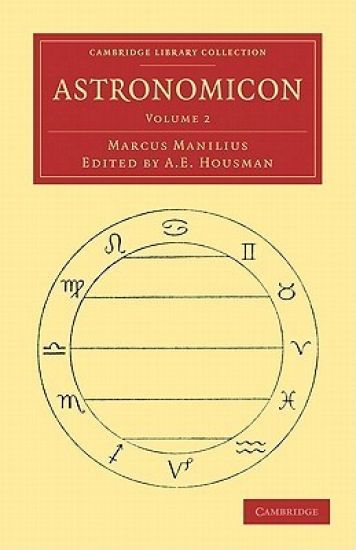
Both the author and the date of this five-volume poem, the first Western document to link the houses of the zodiac with the course of human affairs, are uncertain. The author's name may be Marcus Manilius, or Manlius, or Mallius, and the latest datable event mentioned in the books themselves is the disastrous defeat of Varus' Roman legions by the German tribes in 9 CE. The writing shows knowledge of the work of Lucretius, but the work is not referred to by any subsequent writer, suggesting that it was never widely disseminated. A manuscript was rediscovered by Poggio Bracciolini in 1416 or 1417, and editions were produced by Scaliger and Bentley, but this immensely erudite edition of 1903–1930 by the scholar and poet A. E. Housman (1859–1936) is regarded as authoritative. Volume 2 describes the signs of the zodiac, their characteristics and their subdivisions.
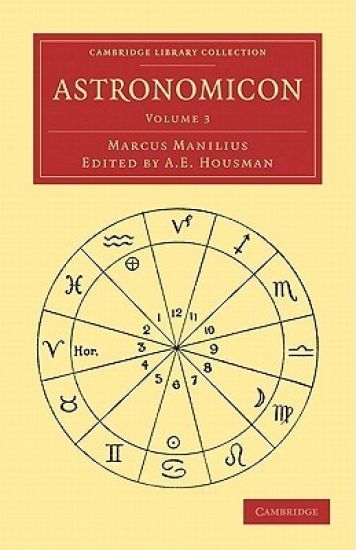
Both the author and the date of this five-volume poem, the first Western document to link the houses of the zodiac with the course of human affairs, are uncertain. The author's name may be Marcus Manilius, or Manlius, or Mallius, and the latest datable event mentioned in the books themselves is the disastrous defeat of Varus' Roman legions by the German tribes in 9 CE. The writing shows knowledge of the work of Lucretius, but the work is not referred to by any subsequent writer, suggesting that it was never widely disseminated. A manuscript was rediscovered by Poggio Bracciolini in 1416 or 1417, and editions were produced by Scaliger and Bentley, but this immensely erudite edition of 1903–1930 by the scholar and poet A. E. Housman (1859–1936) is regarded as authoritative. Volume 3 describes the working out of horoscopes.

M. Manilii Astronomicon Ex Recensione Et Cum Notis Richardi Bentleii.
Marcus Manilius
Gale Ecco, Print Editions
2010
pokkari

M. Manilii Astronomicon ex recensione et cum notis Richardi Bentleii.
Marcus Manilius
Gale Ecco, Print Editions
2018
sidottu
The 18th century was a wealth of knowledge, exploration and rapidly growing technology and expanding record-keeping made possible by advances in the printing press. In its determination to preserve the century of revolution, Gale initiated a revolution of its own: digitization of epic proportions to preserve these invaluable works in the largest archive of its kind. Now for the first time these high-quality digital copies of original 18th century manuscripts are available in print, making them highly accessible to libraries, undergraduate students, and independent scholars.Medical theory and practice of the 1700s developed rapidly, as is evidenced by the extensive collection, which includes descriptions of diseases, their conditions, and treatments. Books on science and technology, agriculture, military technology, natural philosophy, even cookbooks, are all contained here.++++The below data was compiled from various identification fields in the bibliographic record of this title. This data is provided as an additional tool in helping to insure edition identification: ++++British LibraryT165913Londini: typis Henrici Woodfall, sumptibus Pauli et Isaaci Vaillant, 1739. xvi,307, 5]p., plates: port.; 4