Kirjojen hintavertailu. Mukana 11 717 486 kirjaa ja 12 kauppaa.

Kirjahaku

Etsi kirjoja tekijän nimen, kirjan nimen tai ISBN:n perusteella.

10 kirjaa tekijältä Margalit Fox

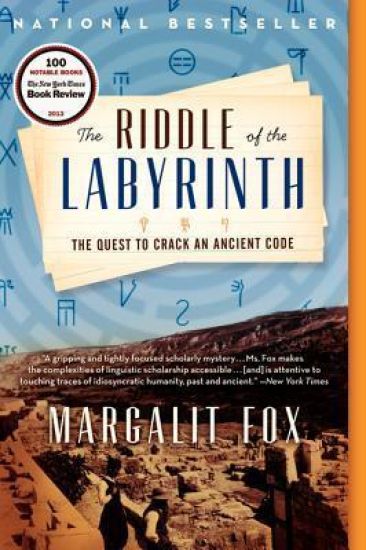
The Riddle of the Labyrinth: The Quest to Crack an Ancient Code
In the tradition of Simon Winchester and Dava Sobel, The Riddle of the Labyrinth: The Quest to Crack an Ancient Code tells one of the most intriguing stories in the history of language, masterfully blending history, linguistics, and cryptology with an elegantly wrought narrative. When famed archaeologist Arthur Evans unearthed the ruins of a sophisticated Bronze Age civilization that flowered on Crete 1,000 years before Greece's Classical Age, he discovered a cache of ancient tablets, Europe's earliest written records. For half a century, the meaning of the inscriptions, and even the language in which they were written, would remain a mystery. Award-winning New York Times journalist Margalit Fox's riveting real-life intellectual detective story travels from the Bronze Age Aegean--the era of Odysseus, Agamemnon, and Helen--to the turn of the 20th century and the work of charismatic English archeologist Arthur Evans, to the colorful personal stories of the decipherers. These include Michael Ventris, the brilliant amateur who deciphered the script but met with a sudden, mysterious death that may have been a direct consequence of the deipherment; and Alice Kober, the unsung heroine of the story whose painstaking work allowed Ventris to crack the code.
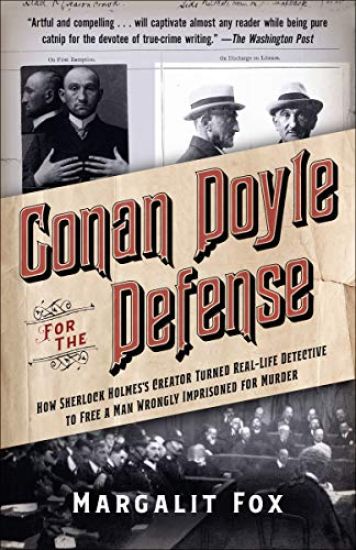
Conan Doyle for the Defense: How Sherlock Holmes's Creator Turned Real-Life Detective and Freed a Man Wrongly Imprisoned for Murder
"A wonderfully vivid portrait of the man behind Sherlock Holmes . . . Like all the best historical true crime books, it's about so much more than crime."--Tana French, author of In the Woods A sensational Edwardian murder. A scandalous wrongful conviction. Sir Arthur Conan Doyle to the rescue--a true story. After a wealthy woman was brutally murdered in her Glasgow home in 1908, the police found a convenient suspect in Oscar Slater, an immigrant Jewish cardsharp. Though he was known to be innocent, Slater was tried, convicted, and consigned to life at hard labor. Outraged by this injustice, Arthur Conan Doyle, already world famous as the creator of Sherlock Holmes, used the methods of his most famous character to reinvestigate the case, ultimately winning Slater's freedom. With "an eye for the telling detail, a forensic sense of evidence and a relish for research" (The Wall Street Journal), Margalit Fox immerses readers in the science of Edwardian crime detection and illuminates a watershed moment in its history, when reflexive prejudice began to be replaced by reason and the scientific method. Praise for Conan Doyle for the Defense "Artful and compelling . . . Fox's] narrative momentum never flags. . . . Conan Doyle for the Defense will captivate almost any reader while being pure catnip for the devotee of true-crime writing."--The Washington Post "Developed with brio . . . Fox] is excellent in linking the 19th-century creation of policing and detection with the development of both detective fiction and the science of forensics--ballistics, fingerprints, toxicology and serology--as well as the quasi science of 'criminal anthropology.'"--The New York Times Book Review " Fox] has an eye for the telling detail, a forensic sense of evidence and a relish for research."--The Wall Street Journal"Gripping . . . The book works on two levels, much like a good Holmes case. First, it is a fluid story of a crime. . . . Second, and more pertinently, it is a deeper story of how prejudice against a class of people, the covering up of sloppy police work and a poisonous political atmosphere can doom an innocent. We should all heed Holmes's salutary lesson: rationally follow the facts to find the truth."--Time "There have been biographies of Arthur Conan Doyle before, but none quite like Margalit Fox's Conan Doyle for the Defense. Looking at the true story about one specific incident in Doyle's life in this book, Sherlock Holmes himself could be proud."--Virginia McGee Butler
The Talented Mrs. Mandelbaum: The Rise and Fall of an American Organized-Crime Boss
America's first great organized-crime lord was a lady--a nice Jewish mother named Mrs. Mandelbaum. "A tour de force . . . With a pickpocket's finesse, Margalit Fox lures us into the criminal underworld of Gilded Age New York."--Liza Mundy, author of The SisterhoodA PARADE BEST BOOK OF THE YEAR In 1850, an impoverished twenty-five-year-old named Fredericka Mandelbaum came to New York in steerage and worked as a peddler on the streets of Lower Manhattan. By the 1870s she was a fixture of high society and an admired philanthropist. How was she able to ascend from tenement poverty to vast wealth? In the intervening years, "Marm" Mandelbaum had become the country's most notorious "fence"--a receiver of stolen goods--and a criminal mastermind. By the mid-1880s as much as $10 million worth of purloined luxury goods (nearly $300 million today) had passed through her Lower East Side shop. Called "the nucleus and center of the whole organization of crime," she planned robberies of cash, gold and diamonds throughout the country. But Mrs. Mandelbaum wasn't just a successful crook: She was a business visionary--one of the first entrepreneurs in America to systemize the scattershot enterprise of property crime. Handpicking a cadre of the finest bank robbers, housebreakers and shoplifters, she handled logistics and organized supply chains--turning theft into a viable, scalable business. The Talented Mrs. Mandelbaum paints a vivid portrait of Gilded Age New York--a city teeming with nefarious rogues, capitalist power brokers and Tammany Hall bigwigs, all straddling the line between underworld enterprise and "legitimate" commerce. Combining deep historical research with the narrative flair for which she is celebrated, Margalit Fox tells the unforgettable true story of a once-famous heroine whose life exemplifies America's cherished rags-to-riches narrative while simultaneously upending it entirely.
The Talented Mrs. Mandelbaum: The Rise and Fall of an American Organized-Crime Boss
America's first great organized-crime lord was a lady--a nice Jewish mother named Mrs. Mandelbaum. "A tour de force . . . With a pickpocket's finesse, Margalit Fox lures us into the criminal underworld of Gilded Age New York."--Liza Mundy, author of The SisterhoodA PARADE BEST BOOK OF THE YEAR In 1850, an impoverished twenty-five-year-old named Fredericka Mandelbaum came to New York in steerage and worked as a peddler on the streets of Lower Manhattan. By the 1870s she was a fixture of high society and an admired philanthropist. How was she able to ascend from tenement poverty to vast wealth? In the intervening years, "Marm" Mandelbaum had become the country's most notorious "fence"--a receiver of stolen goods--and a criminal mastermind. By the mid-1880s as much as $10 million worth of purloined luxury goods (nearly $300 million today) had passed through her Lower East Side shop. Called "the nucleus and center of the whole organization of crime," she planned robberies of cash, gold and diamonds throughout the country. But Mrs. Mandelbaum wasn't just a successful crook: She was a business visionary--one of the first entrepreneurs in America to systemize the scattershot enterprise of property crime. Handpicking a cadre of the finest bank robbers, housebreakers and shoplifters, she handled logistics and organized supply chains--turning theft into a viable, scalable business. The Talented Mrs. Mandelbaum paints a vivid portrait of Gilded Age New York--a city teeming with nefarious rogues, capitalist power brokers and Tammany Hall bigwigs, all straddling the line between underworld enterprise and "legitimate" commerce. Combining deep historical research with the narrative flair for which she is celebrated, Margalit Fox tells the unforgettable true story of a once-famous heroine whose life exemplifies America's cherished rags-to-riches narrative while simultaneously upending it entirely.
Talking Hands

Talking Hands

Margalit Fox

Simon Schuster
2008
pokkari
Imagine a village where everyone "speaks" sign language. Just such a village -- an isolated Bedouin community in Israel with an unusually high rate of deafness -- is at the heart of "Talking Hands: What Sign Language Reveals About the Mind." There, an indigenous sign language has sprung up, used by deaf and hearing villagers alike. It is a language no outsider has been able to decode, until now. A "New York Times" reporter trained as a linguist, Margalit Fox is the only Western journalist to have set foot in this remarkable village. In "Talking Hands, " she follows an international team of scientists that is unraveling this mysterious language. Because the sign language of the village has arisen completely on its own, outside the influence of any other language, it is a living demonstration of the "language instinct," man's inborn capacity to create language. If the researchers can decode this language, they will have helped isolate ingredients essential to all human language, signed and spoken. But as "Talking Hands" grippingly shows, their work in the village is also a race against time, because the unique language of the village may already be endangered. "Talking Hands" offers a fascinating introduction to the signed languages of the world -- languages as beautiful, vital and emphatically human as any other -- explaining why they are now furnishing cognitive scientists with long-sought keys to understanding how language works in the mind. Written in lyrical, accessible prose, "Talking Hands" will captivate anyone interested in language, the human mind and journeys to exotic places.
Riddle of the Labyrinth

Riddle of the Labyrinth

Margalit Fox

Profile Books Ltd
2014
pokkari
The decoding of Linear B is one of the world's greatest stories: from the discovery of a cache of ancient tablets recording a lost prehistoric language to the dramatic solution of the riddle nearly seventy years later, it exerts a mesmerising pull on the imagination. But this captivating story is missing a crucial piece. Two men have dominated Linear B in popular history: Arthur Evans, the intrepid Victorian archaeologist who unearthed Linear B at Knossos and Michael Ventris, the dashing young amateur who produced a solution. But there was a third figure: Alice Kober, without whose painstaking work, recorded on pieces of paper clipped from hymn-sheets and magazines and stored in cigarette boxes in her Brooklyn loft, Linear B might still remain a mystery. Drawing on Kober's own papers - only made available recently - Margalit Fox provides the final piece of the enigma, and along the way reveals how you decipher a language when you know neither its grammar nor its alphabet as well as the stories behind other ancient languages, like the dancing-man Rongorongo of Easter Island.
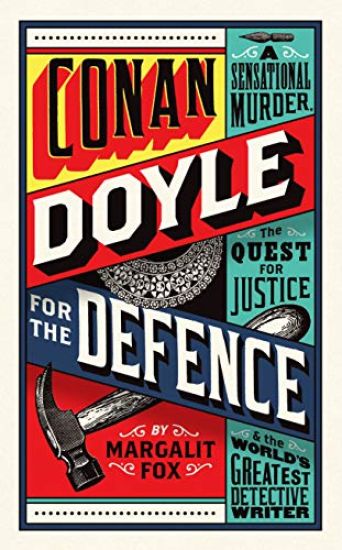
Conan Doyle for the Defence

Conan Doyle for the Defence

Margalit Fox

Profile Books Ltd
2019
pokkari
Just before Christmas 1908, Marion Gilchrist, a wealthy 82-year-old spinster, was found bludgeoned to death in her Glasgow home. A valuable diamond brooch was missing, and police soon fastened on a suspect - Oscar Slater, a Jewish immigrant who was rumoured to have a disreputable character. Slater had an alibi, but was nonetheless convicted and sentenced to death, later commuted to life imprisonment in the notorious Peterhead Prison. Seventeen years later, a convict called William Gordon was released from Peterhead. Concealed in a false tooth was a message, addressed to the only man Slater thought could help him - Arthur Conan Doyle. Always a champion of the downtrodden, Conan Doyle turned his formidable talents to freeing Slater, deploying a forensic mind worthy of Sherlock Holmes. Drawing from original sources including Oscar Slater's prison letters, this is Margalit Fox's vivid and compelling account of one of the greatest miscarriages of justice in Scottish history.
The Confidence Men: How Two Prisoners of War Engineered the Most Remarkable Escape in History
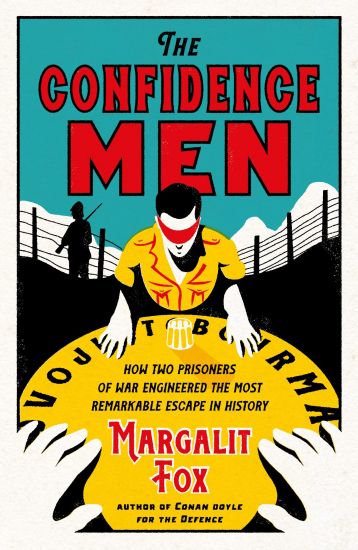
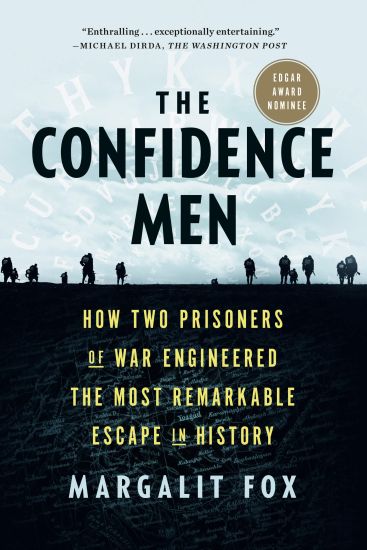
NATIONAL BESTSELLER - The Great Escape for the Great War: the astonishing true story of two World War I prisoners who pulled off one of the most ingenious escapes of all time.FINALIST FOR THE EDGAR(R) AWARD - ONE OF THE BEST BOOKS OF THE YEAR: The Washington Post, NPR - "Fox unspools Jones and Hill's delightfully elaborate scheme in nail-biting episodes that advance like a narrative Rube Goldberg machine."--The New York Times Book Review Imprisoned in a remote Turkish POW camp during World War I, having survived a two-month forced march and a terrifying shootout in the desert, two British officers, Harry Jones and Cedric Hill, join forces to bamboozle their iron-fisted captors. To stave off despair and boredom, Jones takes a handmade Ouija board and fakes elaborate s ances for his fellow prisoners. Word gets around, and one day an Ottoman official approaches Jones with a query: Could Jones contact the spirit world to find a vast treasure rumored to be buried nearby? Jones, a trained lawyer, and Hill, a brilliant magician, use the Ouija board--and their keen understanding of the psychology of deception--to build a trap for their captors that will ultimately lead them to freedom. A gripping nonfiction thriller, The Confidence Men is the story of one of the only known con games played for a good cause--and of a profound but unlikely friendship. Had it not been for "the Great War," Jones, the Oxford-educated son of a British lord, and Hill, a mechanic on an Australian sheep ranch, would never have met. But in pain, loneliness, hunger, and isolation, they formed a powerful emotional and intellectual alliance that saved both of their lives. Margalit Fox brings her "nose for interesting facts, the ability to construct a taut narrative arc, and a Dickens-level gift for concisely conveying personality" (Kathryn Schulz, New York) to this tale of psychological strategy that is rife with cunning, danger, and moments of high farce that rival anything in Catch-22.