Kirjojen hintavertailu. Mukana 12 390 323 kirjaa ja 12 kauppaa.

Kirjahaku

Etsi kirjoja tekijän nimen, kirjan nimen tai ISBN:n perusteella.

50 kirjaa tekijältä Margaret Randall

The Price You Pay

The Price You Pay

Margaret Randall

Routledge
1996
nidottu
In The Price We Pay, Margaret Randall interviews women from a wide range of economic, racial, and cultural backgrounds to reveal the role money plays in their lives. These women speak of their changing expectations and attitudes regarding money. Daughters of immigrants remember what money meant in the transition between worlds. They disclose the feelings that they have of stigma or shame at not having enough, guilt at having too much, and the lies, secrets and silences caused by these feelings. These personal stories are woven into a history of women's economics and chapters on family, work, the media, power and control, and lesbian economics.
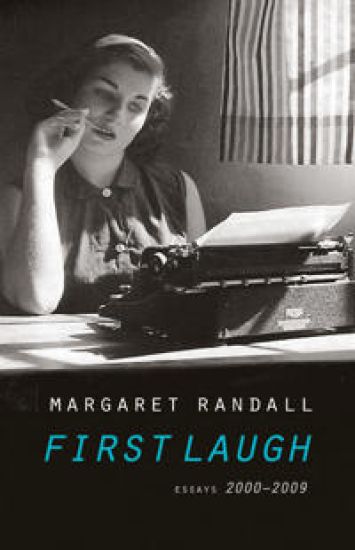
First Laugh

First Laugh

Margaret Randall

Bison Books
2011
pokkari
Concerns about power, its use and abuse, have been at the center of Margaret Randall's work for more than fifty years. And over time Randall has acquired a power all her own, as her unique ability to observe, consider, and distill experience has drawn readers into new experiences and insights. Tempered by time and reflecting a life fully lived and richly examined, her thoughts on race, gender, poetry, landscape, cellular memory, and personal loss speak with eloquence and urgency. First Laugh invites readers to ponder the role of race and racism in the 2008 presidential election; the nature of repressed memory in understanding oneself; the place of poetry in social change; the efforts of Pueblo Indians to earn historical recompense for Spanish colonialist atrocity and subsequent abuse; and the bonds of intimacy and shared political conviction that sustain family and friendship. Over the course of her life, Margaret Randall has found herself with the abstract expressionists of the 1950s, the activists of the 1968 Mexican student movement, the Cuban revolutionaries of the 1970s, the North Vietnamese during the last years of the U.S. war, and the Sandinistas. It is our privilege to have her among us now, documenting moments at once personal and universal and showing us new ways to see.
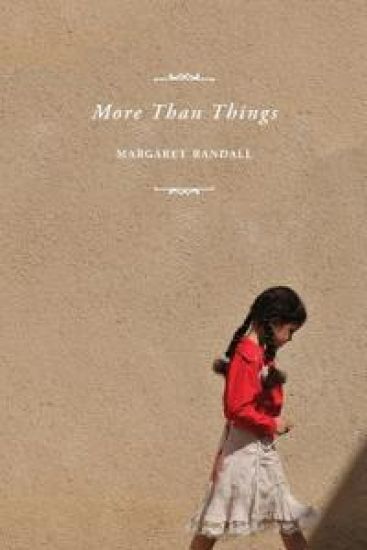
More Than Things

More Than Things

Margaret Randall

University of Nebraska Press
2013
pokkari
More Than Things is a collection of essays on a variety of political, cultural, and literary issues, all linked by Margaret Randall's attention to power: its use, misuse, and impact on how we live our lives. There are texts on sex, fashion, food, LGBT rights, automobiles, forgiving, women's self-image, writing, books, and more. Two of the essays provide glimpses into present-day Cuba and Tunisia. She reflects on her family; her romantic partners; and the revolutionaries, writers, artists, and activists she has known personally and admired: Roque Dalton, Meridel LeSueur, and Haydée Santamaría. Randall's writings move in unexpected directions, evoked by the "things" and ideas in her life: objects picked up around the world, her children's names, family heirlooms, artistic practices, dreams, poems, and memories. Elegantly weaving together the personal and the political, More Than Things is a tour de force by one of America's most formidable and elegiac writers and political activists.
Sandino's Daughters Revisited

Sandino's Daughters Revisited

Margaret Randall

Rutgers University Press
1994
nidottu
"A completely new and different book from her earlier Sandino's Daughters. The core is a dozen lengthy interviews with feminist women (all but one), hence not randomly drawn from Nicaraguan society. Randall opens the volume with a useful, wide-ranging interpretative survey of history, politics, and the social situation of women. One observation that sticks: women who most resembled men in their conduct rose highest under Sandinista rule"--Handbook of Latin American Studies, v. 57.http://www.loc.gov/hlas/
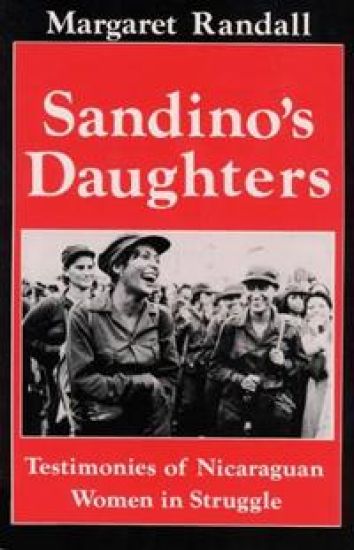
Sandino's Daughters

Sandino's Daughters

Margaret Randall

Rutgers University Press
1995
nidottu
"A collection of varied and amazing lives, all bent on shaping history. Together, these experienced, undeterred Nicaraguan women offer powerful clues about a truly revolutionary and democratizing feminism."––Adrienne Rich"If it were not for writers like Margaret, how would women around the world find each other when there is such an institutional effort to keep us apart and silent? Here Margaret brings us the voice of Sandino's daughters, honoring his hat and wearing their own, wiser now, having been part of political and personal revolution."––Holly Near"Powerful, moving, and challenging. Everyone interested in decency and justice will want to read Sandino's Daughters Revisited."––Blanche Wiesen CookSandino's Daughters, Margaret Randall's conversations with Nicaraguan women in their struggle against the dictator Somoza in 1979, brought the lives of a group of extraordinary female revolutionaries to the American and world public. The book remains a landmark. Now, a decade later, Randall returns to interview many of the same women and others. In Sandino's Daughters Revisited, they speak of their lives during and since the Sandinista administration, the ways in which the revolution made them strong––and also held them back. Ironically, the 1990 defeat of the Sandinistas at the ballot box has given Sandinista women greater freedom to express their feelings and ideas. Randall interviewed these outspoken women from all walks of life: working-class Diana Espinoza, head bookkeeper of a employee-owned factory; Daisy Zamora, a vice minister of culture under the Sandinistas; and Vidaluz Meneses, daughter of a Somozan official, who ties her revolutionary ideals to her Catholicism. The voices of these women, along with nine others, lead us to recognize both the failed promises and continuing attraction of the Sandinista movement for women. This is a moving account of the relationship between feminism and revolution as it is expressed in the daily lives of Nicaraguan women.
When I Look into the Mirror and See You

When I Look into the Mirror and See You

Margaret Randall

Rutgers University Press
2002
nidottu
In the early 1980s, in the midst of Central America’s decades of dirty wars, Nora Miselem of Honduras and Maria Suárez Toro of Costa Rica were kidnapped and subjected to rape and other tortures. Of the nearly two hundred disappeared persons in Honduras in those years, they are, remarkably, two of only five survivors. Fourteen years after their ordeal, Suárez and Miselem’s chance meeting at a conference on human rights was witnessed by and is now retold in Margaret Randall’s When I Look into the Mirror andSee You.Through direct testimony, vivid prose, and evocative photographs, Randall recounts the terror, resistance, and survival of Suárez and Miselem. The book details the abuses suffered by them, the ruses they used to foil their captors, the support that they gave each other while imprisoned, the means they used to escape, and their attempts to reconstruct their lives. For the first time, Suárez and Miselem explore the pain and trauma of their past and Randall has done the service of adding these remarkable voices to the global campaign to bring the world’s attention to women’s human rights.
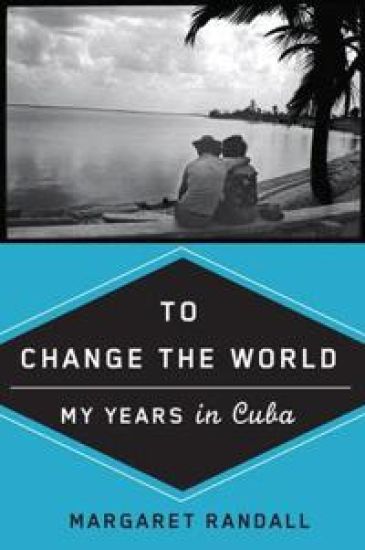
To Change the World

To Change the World

Margaret Randall

Rutgers University Press
2009
nidottu
In To Change the World, the legendary writer and poet Margaret Randall chronicles her decade in Cuba from 1969 to 1980. Both a highly personal memoir and an examination of the revolution's great achievements and painful mistakes, the book paints a portrait of the island during a difficult, dramatic, and exciting time.Randall gives readers an inside look at her children's education, the process through which new law was enacted, the ins and outs of healthcare, employment, internationalism, culture, and ordinary people's lives. She explores issues of censorship and repression, describing how Cuban writers and artists faced them. She recounts one of the country's last beauty pageants, shows us a night of People's Court, and takes us with her when she shops for her family's food rations. Key figures of the revolution appear throughout, and Randall reveals aspects of their lives never before seen.More than fifty black and white photographs, most by the author, add depth and richness to this astute and illuminating memoir. Written with a poet's ear, depicted with a photographer's eye, and filled with a feminist vision, To Change the Worldùneither an apology nor gratuitous attackùadds immensely to the existing literature on revolutionary Cuba.
Stones Witness

Stones Witness

Margaret Randall

University of Arizona Press
2007
nidottu
Nine miles down a primitive trail, over hills of sand and rock, across ankle-deep streams, and around mires of quickmud lies Kiet Seel, a thirteenth-century ancestral Puebloan ruin. This is the place, ancient and enduring, from which Margaret Randall begins her meditations in Stones Witness. Randall explores her connections to land and landscape, history and culture, language and memory, drawing from the events of her own rich history to create a universal link between place, time, and identity. A fluid and provocative collection of poetry, prose, and photographs, Stones Witness is in part an account of an extraordinary woman's radically committed and inventive life. Widely known as an author, activist, oral historian, photographer, translator, and teacher, Randall has dedicated her efforts globally to achieving social and environmental change. Yet with a life so varied and so prolific, Randall maintains permanence through her relationship to the earth and its sacred places. And as she situates her own political involvement within a larger cultural context, again and again she returns her focus to the land, the spaces in which people have birthed and buried ...made art? for centuries. Randall's tone is lyrical and elegiac, urgent yet gentle, a collage of words and images that is at once gratifying and morally intense. With an artist's sensibility, Randall explores landscapes of the soul and of the past, histories of conquest and assimilation, nuances of gender and womanhood, love and difference, power and its abuses. While Randall's words probe timeless and intimate questions on the nature of being, she grounds these reflections in place. Her words and photographs take us from the paintings surviving on the walls of Kiet Seel to the paintings preserved on the walls of the Metropolitan Museum of Art. With her we visit red rock canyons, touch ancient stones, and feel the ebb and flow of the natural world. In a text, testimony that is always in motion, Margaret Randall transcends the boundaries between politics and ethics, culture and environment. Stones Witness sutures the edges of time, the gaps of language, the connections between person and place that are essential for the earth's survival, nd for ours.
Che on My Mind

Che on My Mind

Margaret Randall

Duke University Press
2013
sidottu
Che on My Mind is an impressionistic look at the life, death, and legacy of Che Guevara by the renowned feminist poet and activist Margaret Randall. Recalling an era and this figure, she writes, "I am old enough to remember the world in which [Che] lived. I was part of that world, and it remains a part of me." Randall participated in the Mexican student movement of 1968 and eventually was forced to leave the country. She arrived in Cuba in 1969, less than two years after Che's death, and lived there until 1980. She became friends with several of Che's family members, friends, and compatriots. In Che on My Mind she reflects on his relationships with his family and fellow insurgents, including Fidel Castro. She is deeply admiring of Che's integrity and charisma and frank about what she sees as his strategic errors. Randall concludes by reflecting on the inspiration and lessons that Che's struggles might offer early twenty-first-century social justice activists and freedom fighters.
Che on My Mind

Che on My Mind

Margaret Randall

Duke University Press
2013
pokkari
Che on My Mind is an impressionistic look at the life, death, and legacy of Che Guevara by the renowned feminist poet and activist Margaret Randall. Recalling an era and this figure, she writes, "I am old enough to remember the world in which [Che] lived. I was part of that world, and it remains a part of me." Randall participated in the Mexican student movement of 1968 and eventually was forced to leave the country. She arrived in Cuba in 1969, less than two years after Che's death, and lived there until 1980. She became friends with several of Che's family members, friends, and compatriots. In Che on My Mind she reflects on his relationships with his family and fellow insurgents, including Fidel Castro. She is deeply admiring of Che's integrity and charisma and frank about what she sees as his strategic errors. Randall concludes by reflecting on the inspiration and lessons that Che's struggles might offer early twenty-first-century social justice activists and freedom fighters.
Haydée Santamaría, Cuban Revolutionary

Haydée Santamaría, Cuban Revolutionary

Margaret Randall

Duke University Press
2015
sidottu
Taking part in the Cuban Revolution's first armed action in 1953, enduring the torture and killings of her brother and fiancé, assuming a leadership role in the underground movement, and smuggling weapons into Cuba, Haydée Santamaría was the only woman to participate in every phase of the Revolution. Virtually unknown outside of Cuba, Santamaría was a trusted member of Fidel Castro's inner circle and friend of Che Guevara. Following the Revolution's victory Santamaría founded and ran the cultural and arts institution Casa de las Americas, which attracted cutting-edge artists, exposed Cubans to some of the world's greatest creative minds, and protected queer, black, and feminist artists from state repression. Santamaría's suicide in 1980 caused confusion and discomfort throughout Cuba; despite her commitment to the Revolution, communist orthodoxy's disapproval of suicide prevented the Cuban leadership from mourning and celebrating her in the Plaza of the Revolution. In this impressionistic portrait of her friend Haydée Santamaría, Margaret Randall shows how one woman can help change the course of history.
Haydée Santamaría, Cuban Revolutionary

Haydée Santamaría, Cuban Revolutionary

Margaret Randall

Duke University Press
2015
pokkari
Taking part in the Cuban Revolution's first armed action in 1953, enduring the torture and killings of her brother and fiancé, assuming a leadership role in the underground movement, and smuggling weapons into Cuba, Haydée Santamaría was the only woman to participate in every phase of the Revolution. Virtually unknown outside of Cuba, Santamaría was a trusted member of Fidel Castro's inner circle and friend of Che Guevara. Following the Revolution's victory Santamaría founded and ran the cultural and arts institution Casa de las Americas, which attracted cutting-edge artists, exposed Cubans to some of the world's greatest creative minds, and protected queer, black, and feminist artists from state repression. Santamaría's suicide in 1980 caused confusion and discomfort throughout Cuba; despite her commitment to the Revolution, communist orthodoxy's disapproval of suicide prevented the Cuban leadership from mourning and celebrating her in the Plaza of the Revolution. In this impressionistic portrait of her friend Haydée Santamaría, Margaret Randall shows how one woman can help change the course of history.
Exporting Revolution

Exporting Revolution

Margaret Randall

Duke University Press
2017
sidottu
In her new book, Exporting Revolution, Margaret Randall explores the Cuban Revolution's impact on the outside world, tracing Cuba's international outreach in health care, disaster relief, education, literature, art, liberation struggles, and sports. Randall combines personal observations and interviews with literary analysis and examinations of political trends in order to understand what compels a small, poor, and underdeveloped country to offer its resources and expertise. Why has the Cuban health care system trained thousands of foreign doctors, offered free services, and responded to health crises around the globe? What drives Cuba's international adult literacy programs? Why has Cuban poetry had an outsized influence in the Spanish-speaking world? This multifaceted internationalism, Randall finds, is not only one of the Revolution's most central features; it helped define Cuban society long before the Revolution.
Exporting Revolution

Exporting Revolution

Margaret Randall

Duke University Press
2017
pokkari
In her new book, Exporting Revolution, Margaret Randall explores the Cuban Revolution's impact on the outside world, tracing Cuba's international outreach in health care, disaster relief, education, literature, art, liberation struggles, and sports. Randall combines personal observations and interviews with literary analysis and examinations of political trends in order to understand what compels a small, poor, and underdeveloped country to offer its resources and expertise. Why has the Cuban health care system trained thousands of foreign doctors, offered free services, and responded to health crises around the globe? What drives Cuba's international adult literacy programs? Why has Cuban poetry had an outsized influence in the Spanish-speaking world? This multifaceted internationalism, Randall finds, is not only one of the Revolution's most central features; it helped define Cuban society long before the Revolution.
Ruins

Ruins

Margaret Randall

University of New Mexico Press
2011
nidottu
In this poetry collection, Margaret Randall uses the metaphor of ruins to meditate on time's movement--through memory, through cities, through the leavings of history, and through the bodies of people who have experienced time's transformations and traumas. Randall's ruins include not only Chaco Canyon, Hovenweep, Teotihuacan, Machu Picchu, Kiet Siel, Petra, and sites in ancient Greece and Egypt, but also Auschwitz-Birkenau and lives shattered by torture and oppression.""Always there is that moment of arrival, as another reality rises before me, superimposed upon the one I live today. Sometimes the membrane is torn, and I find myself moving in and out. Boundaries dissolve. A mysterious space, between then and now, warns as it invites: promising revelation and maybe also fresh trauma if I am willing to risk its secrets.""--Margaret Randall, in the Introduction
Gathering Rage

Gathering Rage

Margaret Randall

Monthly Review Press,U.S.
1999
nidottu
Combining anecdotes with analysis, Margaret Randall describes how, in 20th century revolutionary societies, women's issues were gradually pushed aside. Randall shows how distorted visions of liberation and shortcomings in practice left a legacy that not only shortchanged women but undermined the revolutionary project itself. Finally, she grapples with the ways in which women themselves often retreated into more traditional roles and the rage that this engenders.
Into Another Time

Into Another Time

Margaret Randall

West End Press
2004
nidottu
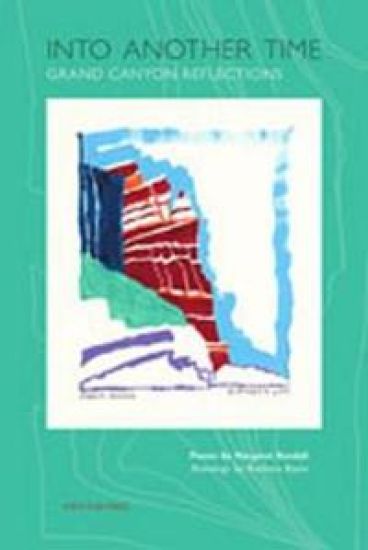
Margaret Randall describes her long love affair with the Grand Canyon as dating to the summer of 1947 when, lying about her age, her father took her down its trails by mule. Since then, she has returned more than a hundred times to explore its rims, hiking trails, river and side canyons. The poems that make up 'Into Another Time' draw on these experiences as well as on additional research and countless conversations with other canyon lovers. The book's main section emerged from a river trip in 1997. The cover painting and interior line drawings, by Albuquerque painter and public school teacher Barbara Byers, were made on site on the same trip. Margaret and Barbara have been partners for seventeen years.
I Never Left Home

I Never Left Home

Margaret Randall

Duke University Press
2020
sidottu
In 1969, poet and revolutionary Margaret Randall was forced underground when the Mexican government cracked down on all those who took part in the 1968 student movement. Needing to leave the country, she sent her four young children alone to Cuba while she scrambled to find safe passage out of Mexico. In I Never Left Home, Randall recounts her harrowing escape and the other extraordinary stories from her life and career. From living among New York's abstract expressionists in the mid-1950s as a young woman to working in the Nicaraguan Ministry of Culture to instill revolutionary values in the media during the Sandinista movement, the story of Randall's life reads like a Hollywood production. Along the way, she edited a bilingual literary journal in Mexico City, befriended Cuban revolutionaries, raised a family, came out as a lesbian, taught college, and wrote over 150 books. Throughout it all, Randall never wavered from her devotion to social justice. When she returned to the United States in 1984 after living in Latin America for twenty-three years, the U.S. Immigration and Naturalization Service ordered her to be deported for her “subversive writing.” Over the next five years, and with the support of writers, entertainers, and ordinary people across the country, Randall fought to regain her citizenship, which she won in court in 1989. As much as I Never Left Home is Randall's story, it is also the story of the communities of artists, writers, and radicals she belonged to. Randall brings to life scores of creative and courageous people on the front lines of creating a more just world. She also weaves political and social analyses and poetry into the narrative of her life. Moving, captivating, and astonishing, I Never Left Home is a remarkable story of a remarkable woman.
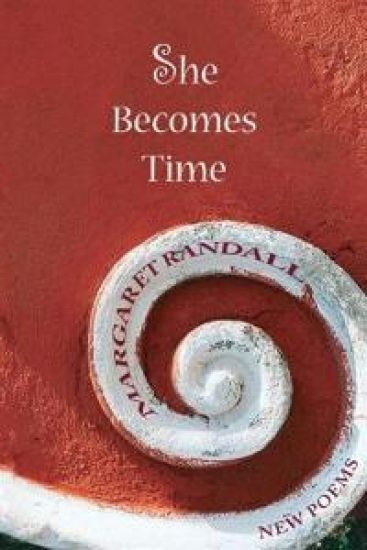
She Becomes Time

She Becomes Time

Margaret Randall

Wings Press
2016
nidottu
Margaret Randall's new collection, She Becomes Time, continues her legacy of poetry that combines the intimate with the global, history with feeling, memory with the world we touch and see, showing--always in surprising ways--how these impact and intersect each other. The book begins with a group of poems about her childhood, in which the poet reveals secrets and asks unexpected questions. It ends with breathtaking series about Mexico and Cuba, countries the poet knows well and which she takes on without any idealization.