Kirjojen hintavertailu. Mukana 11 244 527 kirjaa ja 12 kauppaa.

Kirjahaku

Etsi kirjoja tekijän nimen, kirjan nimen tai ISBN:n perusteella.

4 kirjaa tekijältä Margit Fauser

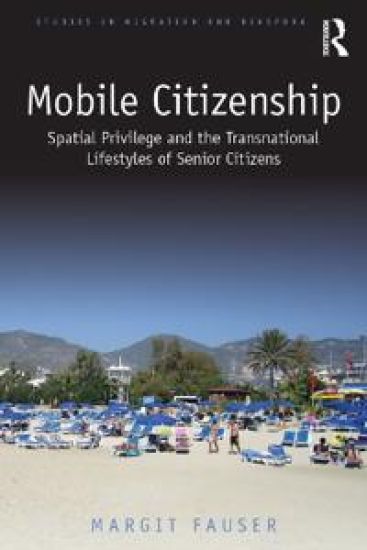
Mobile Citizenship

Mobile Citizenship

Margit Fauser

TAYLOR FRANCIS LTD
2022
nidottu
Mobile Citizenship addresses the crucial question of how mobility reconfigures citizenship. Engaging with debates on transnationalism, citizenship, and lifestyle migration, the book draws on ethnographic research and interview material collected among retired lifestyle migrants moving south from Germany to Turkey to explore the practices and narratives of these privileged migrants. Revealing the ways in which these migrants relate to their old homes and to their new places, the author examines the social, political, and spatial dimensions of citizenship and belonging and argues that citizenship is key to understanding the privileges of transnational lifestyles. By taking up discussions emanating from studies on other privileged lifestyle migrations—around social welfare and well-being, social participation, and affective belonging, as well as class and racialized privileges—the book exposes particular comparative value and showcases similarities and differences across this emerging type of migration. Mobile Citizenship thus shows how citizenship allows for mobility, resources, and privilege yet is also replete with limitations and ambivalences. The book brings together perspectives on citizenship, space, and privilege and will appeal to social scientists with interests in lifestyle migration and citizenship and their interconnections with global and social inequalities.
Migrants and Cities

Migrants and Cities

Margit Fauser

Routledge
2016
nidottu
Migrants have organized at all times and in all cities and places. The processes of their accommodation, however, differ, with local authorities and other state institutions playing an important role in these processes. Offering comprehensive empirical insights both from recent sites of immigration in Southern Europe, as well as from places of more established immigration in the north, this book examines the accommodation of migrant organizations in different cities and the factors that affect this process. It thus sheds light on the manner in which the interplay of immigration regime, national integration policy and local responses shape the differing patterns and trajectories observed in the formation and action of migrant organizations across Europe.
Mobile Citizenship

Mobile Citizenship

Margit Fauser

Routledge
2020
sidottu
Mobile Citizenship addresses the crucial question of how mobility reconfigures citizenship. Engaging with debates on transnationalism, citizenship, and lifestyle migration, the book draws on ethnographic research and interview material collected among retired lifestyle migrants moving south from Germany to Turkey to explore the practices and narratives of these privileged migrants. Revealing the ways in which these migrants relate to their old homes and to their new places, the author examines the social, political, and spatial dimensions of citizenship and belonging and argues that citizenship is key to understanding the privileges of transnational lifestyles. By taking up discussions emanating from studies on other privileged lifestyle migrations—around social welfare and well-being, social participation, and affective belonging, as well as class and racialized privileges—the book exposes particular comparative value and showcases similarities and differences across this emerging type of migration. Mobile Citizenship thus shows how citizenship allows for mobility, resources, and privilege yet is also replete with limitations and ambivalences. The book brings together perspectives on citizenship, space, and privilege and will appeal to social scientists with interests in lifestyle migration and citizenship and their interconnections with global and social inequalities.
Migrants and Cities

Migrants and Cities

Margit Fauser

Ashgate Publishing Limited
2011
sidottu
Migrants have organized at all times and in all cities and places. The processes of their accommodation, however, differ, with local authorities and other state institutions playing an important role in these processes. Offering comprehensive empirical insights both from recent sites of immigration in Southern Europe, as well as from places of more established immigration in the north, this book examines the accommodation of migrant organizations in different cities and the factors that affect this process. It thus sheds light on the manner in which the interplay of immigration regime, national integration policy and local responses shape the differing patterns and trajectories observed in the formation and action of migrant organizations across Europe.