Kirjojen hintavertailu. Mukana 11 342 296 kirjaa ja 12 kauppaa.

Kirjahaku

Etsi kirjoja tekijän nimen, kirjan nimen tai ISBN:n perusteella.

19 kirjaa tekijältä Mari Ruti

The Summons of Love

The Summons of Love

Mari Ruti

Columbia University Press
2011
sidottu
We are conditioned to think that love heals wounds, makes us happy, and gives our lives meaning. When the opposite occurs and love causes fracturing, disenchantment, and existential turmoil, we suffer deeply, especially if we feel that love has failed us or that we have failed to experience what others seem so effortlessly to enjoy. In this eloquently argued, psychologically informed book, Mari Ruti portrays love as a much more complex, multifaceted phenomenon than we tend to appreciate-an experience that helps us encounter the depths of human existence. Love's ruptures are as important as its triumphs, and sometimes love succeeds because it fails. At the heart of Ruti's argument is a meditation on interpersonal ethics that acknowledges the inherent opacity of human interiority and the difficulty of taking responsibility for what we cannot fully understand. Yet the fact that humans are often irrational in love does not absolve us of ethical accountability. In Ruti's view, we must work harder to map the unconscious patterns motivating our romantic behavior. As opposed to popular spiritual approaches urging us to live fully in the now, Ruti treats the past as a living component of the present. Only when we catch ourselves at those moments when the past speaks in the present can we keep ourselves from hurting the ones we love. Equally important, Ruti emphasizes transcending our individual histories of pain, an act that allows us to face the unconscious demons that dictate our relational choices. Written with substance and compassion, The Summons of Love restores the enlivening and transformative possibilities of romance.

The Call of Character

The Call of Character

Mari Ruti

Columbia University Press
2013
sidottu
Should we feel inadequate when we fail to be healthy, balanced, and well-adjusted? Is it realistic or even desirable to strive for such an existential equilibrium? Condemning our current cultural obsession with cheerfulness and "positive thinking," Mari Ruti calls for a resurrection of character that honors our more eccentric frequencies and argues that sometimes a tormented and anxiety-ridden life can also be rewarding. Ruti critiques the search for personal meaning and pragmatic attempts to normalize human beings' unruly and idiosyncratic natures. Exposing the tragic banality of a happy life commonly lived, she instead emphasizes the advantages of a lopsided life rich in passion and fortitude. She also shows what matters is not our ability to evade existential uncertainty but our courage to meet adversity in such a way that we do not become irrevocably broken. We are in danger of losing the capacity to cope with complexity, ambiguity, melancholia, disorientation, and disappointment, Ruti warns, leaving us feeling less "real" and less connected and unable to process a full range of emotions. Heeding the call of our character means acknowledging the marginalized, chaotic aspects of our being, and it is precisely these creative qualities that make us inimitable and irreplaceable.
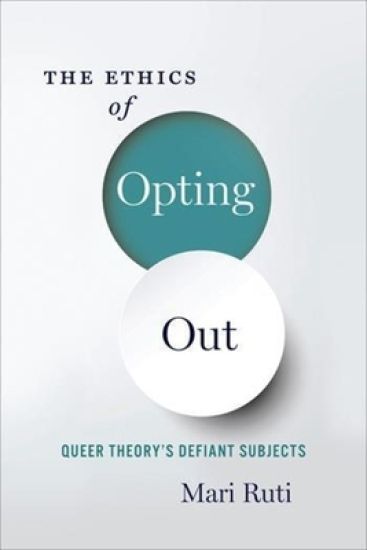
The Ethics of Opting Out

The Ethics of Opting Out

Mari Ruti

Columbia University Press
2017
sidottu
In The Ethics of Opting Out, Mari Ruti provides an accessible yet theoretically rigorous account of the ideological divisions that have animated queer theory during the last decade, paying particular attention to the field's rejection of dominant neoliberal narratives of success, cheerfulness, and self-actualization. More specifically, she focuses on queer negativity in the work of Lee Edelman, Jack Halberstam, and Lynne Huffer, and on the rhetoric of bad feelings found in the work of Sara Ahmed, Lauren Berlant, David Eng, Heather Love, and Jose Munoz. Ruti highlights the ways in which queer theory's desire to opt out of normative society rewrites ethical theory and practice in genuinely innovative ways at the same time as she resists turning antinormativity into a new norm. This wide-ranging and thoughtful book maps the parameters of contemporary queer theory in order to rethink the foundational assumptions of the field.
The Ethics of Opting Out

The Ethics of Opting Out

Mari Ruti

Columbia University Press
2017
pokkari
In The Ethics of Opting Out, Mari Ruti provides an accessible yet theoretically rigorous account of the ideological divisions that have animated queer theory during the last decade, paying particular attention to the field's rejection of dominant neoliberal narratives of success, cheerfulness, and self-actualization. More specifically, she focuses on queer negativity in the work of Lee Edelman, Jack Halberstam, and Lynne Huffer, and on the rhetoric of bad feelings found in the work of Sara Ahmed, Lauren Berlant, David Eng, Heather Love, and Jose Munoz. Ruti highlights the ways in which queer theory's desire to opt out of normative society rewrites ethical theory and practice in genuinely innovative ways at the same time as she resists turning antinormativity into a new norm. This wide-ranging and thoughtful book maps the parameters of contemporary queer theory in order to rethink the foundational assumptions of the field.
Penis Envy and Other Bad Feelings

Penis Envy and Other Bad Feelings

Mari Ruti

Columbia University Press
2018
sidottu
Mari Ruti combines theoretical reflection, cultural critique, feminist politics, and personal experience to analyze the prevalence of bad feelings in contemporary everyday life. Proceeding from a playful engagement with Freud’s idea of penis envy, Ruti’s autotheoretical commentary fans out to a broader consideration of neoliberal pragmatism. She focuses on the emphasis on good performance, high productivity, constant self-improvement, and relentless cheerfulness that characterizes present-day Western society. Revealing the treacherousness of our fantasies of the good life, particularly the idea that our efforts will eventually be rewarded—that things will eventually get better—Ruti demystifies the false hope that often causes us to tolerate an unbearable present.Theoretically rigorous and lucidly written, Penis Envy and Other Bad Feelings is a trenchant critique of contemporary gender relations. Refuting the idea that we live in a postfeminist world where gender inequalities have been transcended, Ruti describes how neoliberal heteropatriarchy has transformed itself in subtle and stealthy, and therefore all the more insidious, ways. Mobilizing Michel Foucault’s concept of biopolitics, Jacques Lacan’s account of desire, and Lauren Berlant’s notion of cruel optimism, she analyzes the rationalization of intimacy, the persistence of gender stereotypes, and the pornification of heterosexual culture. Ruti shines a spotlight on the depression, anxiety, frustration, and disenchantment that frequently lie beneath our society’s sugarcoated mythologies of self-fulfillment, romantic satisfaction, and professional success, speaking to all who are concerned about the emotional costs of the pressure-cooker ethos of our age.
Penis Envy and Other Bad Feelings

Penis Envy and Other Bad Feelings

Mari Ruti

Columbia University Press
2021
pokkari
Mari Ruti combines theoretical reflection, cultural critique, feminist politics, and personal experience to analyze the prevalence of bad feelings in contemporary everyday life. Proceeding from a playful engagement with Freud’s idea of penis envy, Ruti’s autotheoretical commentary fans out to a broader consideration of neoliberal pragmatism. She focuses on the emphasis on good performance, high productivity, constant self-improvement, and relentless cheerfulness that characterizes present-day Western society. Revealing the treacherousness of our fantasies of the good life, particularly the idea that our efforts will eventually be rewarded—that things will eventually get better—Ruti demystifies the false hope that often causes us to tolerate an unbearable present.Theoretically rigorous and lucidly written, Penis Envy and Other Bad Feelings is a trenchant critique of contemporary gender relations. Refuting the idea that we live in a postfeminist world where gender inequalities have been transcended, Ruti describes how neoliberal heteropatriarchy has transformed itself in subtle and stealthy, and therefore all the more insidious, ways. Mobilizing Michel Foucault’s concept of biopolitics, Jacques Lacan’s account of desire, and Lauren Berlant’s notion of cruel optimism, she analyzes the rationalization of intimacy, the persistence of gender stereotypes, and the pornification of heterosexual culture. Ruti shines a spotlight on the depression, anxiety, frustration, and disenchantment that frequently lie beneath our society’s sugarcoated mythologies of self-fulfillment, romantic satisfaction, and professional success, speaking to all who are concerned about the emotional costs of the pressure-cooker ethos of our age.
The Singularity of Being

The Singularity of Being

Mari Ruti

Fordham University Press
2012
sidottu
The Singularity of Being presents a Lacanian vision of what makes each of us an inimitable and irreplaceable creature. It argues that, unlike the "subject" (who comes into existence as a result of symbolic prohibition) or the "person" (who is aligned with the narcissistic conceits of the imaginary), the singular self emerges in response to a galvanizing directive arising from the real. This directive carries the force of an obligation that cannot be resisted and that summons the individual to a "character" beyond his or her social investments. Consequently, singularity expresses something about the individual's non-negotiable distinctiveness, eccentricity, or idiosyncrasy at the same time it prevents both symbolic and imaginary closure. It opens to layers of rebelliousness, indicating that there are components of human life exceeding the realm of normative sociality. Written with an unusual blend of rigor and clarity, The Singularity of Being combines incisive readings of Lacan with the best insights of recent Lacanian theory to reach beyond the dogmas of the field. Moving from what, thanks in part to Slavoj Žižek, has come to be known as the "ethics of the act" to a nuanced interpretation of Lacan's "ethics of sublimation," the book offers a sweeping overview of Lacan's thought while making an original contribution to contemporary theory and ethics. Aimed at specialists and nonspecialists alike, the book manages to educate at the same time as it intervenes in current debates about subjectivity, agency, resistance, creativity, the self–other relationship, and effective political and ethical action. By focusing on the Lacanian real, Ruti honors the uniqueness of subjective experience without losing sight of the social and intersubjective components of human life.
The Singularity of Being

The Singularity of Being

Mari Ruti

Fordham University Press
2012
pokkari
The Singularity of Being presents a Lacanian vision of what makes each of us an inimitable and irreplaceable creature. It argues that, unlike the "subject" (who comes into existence as a result of symbolic prohibition) or the "person" (who is aligned with the narcissistic conceits of the imaginary), the singular self emerges in response to a galvanizing directive arising from the real. This directive carries the force of an obligation that cannot be resisted and that summons the individual to a "character" beyond his or her social investments. Consequently, singularity expresses something about the individual's non-negotiable distinctiveness, eccentricity, or idiosyncrasy at the same time it prevents both symbolic and imaginary closure. It opens to layers of rebelliousness, indicating that there are components of human life exceeding the realm of normative sociality. Written with an unusual blend of rigor and clarity, The Singularity of Being combines incisive readings of Lacan with the best insights of recent Lacanian theory to reach beyond the dogmas of the field. Moving from what, thanks in part to Slavoj Žižek, has come to be known as the "ethics of the act" to a nuanced interpretation of Lacan's "ethics of sublimation," the book offers a sweeping overview of Lacan's thought while making an original contribution to contemporary theory and ethics. Aimed at specialists and nonspecialists alike, the book manages to educate at the same time as it intervenes in current debates about subjectivity, agency, resistance, creativity, the self–other relationship, and effective political and ethical action. By focusing on the Lacanian real, Ruti honors the uniqueness of subjective experience without losing sight of the social and intersubjective components of human life.
A World of Fragile Things

A World of Fragile Things

Mari Ruti

State University of New York Press
2009
sidottu
Psychoanalytic perspective on what Western philosophers from Socrates to Foucault have called "the art of living."How are our lives meaningful? What is the relationship of loss to creativity? How can we best engage and overcome our suffering? From Socrates to Foucault, Western philosophers have sought to define "the art of living"-the complex craft of human existence that elicits our thoughtful participation, and the idea that even though death escapes our control, life is not something that simply happens to us in a passive manner but is instead a process that invites our active and lively engagement. A World of Fragile Things offers a distinctly psychoanalytic perspective on "the art of living," one that focuses on ongoing and ever-evolving processes of self-fashioning rather than defining a fixed and unitary sense of self. With a compelling blend of philosophical insight and psychoanalytic acumen, Mari Ruti asks experts and readers alike to probe the complexities of human existence, offering a contemporary outlook on some of the most enduring questions of Western thought.
A World of Fragile Things

A World of Fragile Things

Mari Ruti

State University of New York Press
2009
pokkari
Psychoanalytic perspective on what Western philosophers from Socrates to Foucault have called "the art of living."How are our lives meaningful? What is the relationship of loss to creativity? How can we best engage and overcome our suffering? From Socrates to Foucault, Western philosophers have sought to define "the art of living"-the complex craft of human existence that elicits our thoughtful participation, and the idea that even though death escapes our control, life is not something that simply happens to us in a passive manner but is instead a process that invites our active and lively engagement. A World of Fragile Things offers a distinctly psychoanalytic perspective on "the art of living," one that focuses on ongoing and ever-evolving processes of self-fashioning rather than defining a fixed and unitary sense of self. With a compelling blend of philosophical insight and psychoanalytic acumen, Mari Ruti asks experts and readers alike to probe the complexities of human existence, offering a contemporary outlook on some of the most enduring questions of Western thought.
Feminist Film Theory and Pretty Woman

Feminist Film Theory and Pretty Woman

Mari Ruti

Bloomsbury Academic USA
2016
sidottu
In Feminist Film Theory and Pretty Woman, Mari Ruti traces the development of feminist film theory from its foundational concepts such as the male gaze, female spectatorship, and the masquerade of femininity to 21st-century analyses of neoliberal capitalism, consumerism, postfeminism, and the revival of “girly” femininity as a cultural ideal. By interpreting Pretty Woman as a movie that defies easy categorization as either feminist or antifeminist, the book counters the all-too-common critical dismissal of romantic comedies as mindless drivel preoccupied with trivial “feminine” concerns such as love and shopping. The book’s lucid presentation of the key concerns of feminist film theory, along with its balanced reading of Pretty Woman, shed light on a Hollywood genre often overlooked by film critics: the romantic comedy.
Feminist Film Theory and Pretty Woman

Feminist Film Theory and Pretty Woman

Mari Ruti

Bloomsbury Academic USA
2016
nidottu
In Feminist Film Theory and Pretty Woman, Mari Ruti traces the development of feminist film theory from its foundational concepts such as the male gaze, female spectatorship, and the masquerade of femininity to 21st-century analyses of neoliberal capitalism, consumerism, postfeminism, and the revival of “girly” femininity as a cultural ideal. By interpreting Pretty Woman as a movie that defies easy categorization as either feminist or antifeminist, the book counters the all-too-common critical dismissal of romantic comedies as mindless drivel preoccupied with trivial “feminine” concerns such as love and shopping. The book’s lucid presentation of the key concerns of feminist film theory, along with its balanced reading of Pretty Woman, shed light on a Hollywood genre often overlooked by film critics: the romantic comedy.
Distillations

Distillations

Mari Ruti

Bloomsbury Academic USA
2018
nidottu
Distilling into concise and focused formulations many of the main ideas that Mari Ruti has sought to articulate throughout her writing career, this book reflects on the general state of contemporary theory as it relates to posthumanist ethics, political resistance, subjectivity, agency, desire, and bad feelings such as anxiety. It offers a critique of progressive theory’s tendency to advance extreme models of revolt that have little real-life applicability. The chapters move fluidly between several theoretical registers, the most obvious of these being continental philosophy, psychoanalytic theory, Butlerian ethics, affect theory, and queer theory. One of the central aims of Distillations is to explore the largely uncharted territory between psychoanalysis and affect theory, which are frequently pitted against each other as hopelessly incompatible, but which Ruti shows can be brought into a productive dialogue.
Distillations

Distillations

Mari Ruti

Bloomsbury Academic USA
2018
sidottu
Distilling into concise and focused formulations many of the main ideas that Mari Ruti has sought to articulate throughout her writing career, this book reflects on the general state of contemporary theory as it relates to posthumanist ethics, political resistance, subjectivity, agency, desire, and bad feelings such as anxiety. It offers a critique of progressive theory’s tendency to advance extreme models of revolt that have little real-life applicability. The chapters move fluidly between several theoretical registers, the most obvious of these being continental philosophy, psychoanalytic theory, Butlerian ethics, affect theory, and queer theory. One of the central aims of Distillations is to explore the largely uncharted territory between psychoanalysis and affect theory, which are frequently pitted against each other as hopelessly incompatible, but which Ruti shows can be brought into a productive dialogue.
The Age of Scientific Sexism

The Age of Scientific Sexism

Mari Ruti

Bloomsbury Academic USA
2015
nidottu
We trust our sciences to operate on a plane of objectivity and fact in a world of subjectivity and cultural ideologies, but should we? In The Age of Scientific Sexism, philosopher Mari Ruti offers a sharp critique of the gender profiling tendencies of evolutionary psychology, untangling the insidious threads of various gender mythologies that have infiltrated—or perhaps even define—this faux-science. Selling stereotypes as scientific facts, evolutionary psychology continually brings retrograde models of sexuality into mainstream culture: it insists that men and women live in two completely different psychological, emotional, and sexual universes, and that they will consequently always be locked in a vicious battle of the sexes. Among these regressive arguments is the assumption that men’s sexuality is urgent and indiscriminate, whereas women are “naturally” reluctant, reticent, and choosy—a concept constructed to justify masculine behavior, such as cheating, that women have historically found painful. On its most basic level, The Age of Scientific Sexism explores our impulse to “explain” romantic behavior through science: in the increasingly egalitarian gender landscape of our society, why are we so eager to embrace the rampant gender profiling that evolutionary psychology promotes? Perhaps these simplistic gender caricatures owe their popularity, at least in part, to our overly pragmatic society pragmatic society, which encourages us to search for easy answers to complex questions.
The Age of Scientific Sexism

The Age of Scientific Sexism

Mari Ruti

Bloomsbury Academic USA
2015
sidottu
We trust our sciences to operate on a plane of objectivity and fact in a world of subjectivity and cultural ideologies, but should we? In The Age of Scientific Sexism, philosopher Mari Ruti offers a sharp critique of the gender profiling tendencies of evolutionary psychology, untangling the insidious threads of various gender mythologies that have infiltrated—or perhaps even define—this faux-science. Selling stereotypes as scientific facts, evolutionary psychology continually brings retrograde models of sexuality into mainstream culture: it insists that men and women live in two completely different psychological, emotional, and sexual universes, and that they will consequently always be locked in a vicious battle of the sexes. Among these regressive arguments is the assumption that men’s sexuality is urgent and indiscriminate, whereas women are “naturally” reluctant, reticent, and choosy—a concept constructed to justify masculine behavior, such as cheating, that women have historically found painful. On its most basic level, The Age of Scientific Sexism explores our impulse to “explain” romantic behavior through science: in the increasingly egalitarian gender landscape of our society, why are we so eager to embrace the rampant gender profiling that evolutionary psychology promotes? Perhaps these simplistic gender caricatures owe their popularity, at least in part, to our overly pragmatic society pragmatic society, which encourages us to search for easy answers to complex questions.
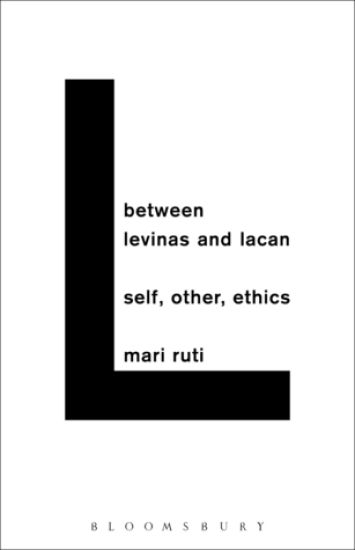
Between Levinas and Lacan

Between Levinas and Lacan

Mari Ruti

Bloomsbury Academic USA
2015
nidottu
Levinas and Lacan, two giants of contemporary theory, represent schools of thought that seem poles apart. In this major new work, Mari Ruti charts the ethical terrain between them. At first glance, Levinansian and Lacanian approaches may seem more or less incompatible, and in many ways they are, particularly in their understanding of the self-other relationship. For both Levinas and Lacan, the subject’s relationship to the other is primary in the sense that the subject, literally, does not exist without the other, but they see the challenge of ethics quite differently: while Levinas laments our failure to adequately meet the ethical demand arising from the other, Lacan laments the consequences of our failure to adequately escape the forms this demand frequently takes. Although this book outlines the major differences between Levinas and Judith Butler on the one hand and Lacan, Slavoj Žižek, and Alain Badiou on the other, Ruti proposes that underneath these differences one can discern a shared concern with the thorny relationship between the singularity of experience and the universality of ethics. Between Levinas and Lacan is an important new book for anyone interested in contemporary theory, ethics, psychoanalysis, and feminist and queer theory.
Between Levinas and Lacan

Between Levinas and Lacan

Mari Ruti

Bloomsbury Academic USA
2015
sidottu
Levinas and Lacan, two giants of contemporary theory, represent schools of thought that seem poles apart. In this major new work, Mari Ruti charts the ethical terrain between them. At first glance, Levinansian and Lacanian approaches may seem more or less incompatible, and in many ways they are, particularly in their understanding of the self-other relationship. For both Levinas and Lacan, the subject’s relationship to the other is primary in the sense that the subject, literally, does not exist without the other, but they see the challenge of ethics quite differently: while Levinas laments our failure to adequately meet the ethical demand arising from the other, Lacan laments the consequences of our failure to adequately escape the forms this demand frequently takes. Although this book outlines the major differences between Levinas and Judith Butler on the one hand and Lacan, Slavoj Žižek, and Alain Badiou on the other, Ruti proposes that underneath these differences one can discern a shared concern with the thorny relationship between the singularity of experience and the universality of ethics. Between Levinas and Lacan is an important new book for anyone interested in contemporary theory, ethics, psychoanalysis, and feminist and queer theory.