Kirjojen hintavertailu. Mukana 11 244 527 kirjaa ja 12 kauppaa.

Kirjahaku

Etsi kirjoja tekijän nimen, kirjan nimen tai ISBN:n perusteella.

5 kirjaa tekijältä Maria C. Scott

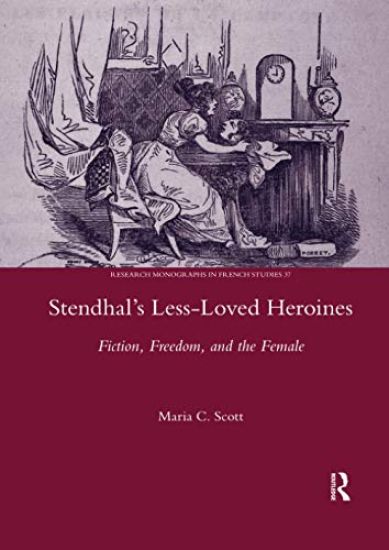
Stendhal's Less-Loved Heroines

Stendhal's Less-Loved Heroines

Maria C. Scott

Routledge
2020
nidottu
In this book, the author challenges the notion that French Realist fiction is peculiarly and intrinsically hostile to female freedom, arguing that it is criticism itself that has marginalized Stendhal's noncompliant heroines and condemned them as self-centred.
Baudelaire's Le Spleen de Paris

Baudelaire's Le Spleen de Paris

Maria C. Scott

Ashgate Publishing Limited
2005
sidottu
Maria Scott's study of the operation of irony in Baudelaire's Le Spleen de Paris contends that the principal target of the collection's spleen is its own readership. Baudelaire, as one of the most perceptive cultural commentators of the nineteenth century, was naturally very keenly aware of the growing dominance of the bourgeoisie in France, not least as a market for art and literature. Despite being dependent on this market for his own writing, the poet was highly critical of bourgeois values and attitudes. Scott builds on existing criticism of the collection to argue that these are indirectly mocked in Le Spleen de Paris, often in the person of the poet's supposed textual alter ego. The contention is that the prose poems betray the trust of readers by way of an apparent transparency of meaning that functions to blind us to their embedded irony. Though focused on Le Spleen de Paris, Scott's study engages with the full range of Baudelaire's writings, including his art and literary criticism. Her book will be of interest not only to Baudelaire scholars but also to those engaged more generally with nineteenth-century French culture.
Baudelaire's Le Spleen de Paris

Baudelaire's Le Spleen de Paris

Maria C. Scott

Routledge
2019
nidottu
Maria Scott's study of the operation of irony in Baudelaire's Le Spleen de Paris contends that the principal target of the collection's spleen is its own readership. Baudelaire, as one of the most perceptive cultural commentators of the nineteenth century, was naturally very keenly aware of the growing dominance of the bourgeoisie in France, not least as a market for art and literature. Despite being dependent on this market for his own writing, the poet was highly critical of bourgeois values and attitudes. Scott builds on existing criticism of the collection to argue that these are indirectly mocked in Le Spleen de Paris, often in the person of the poet's supposed textual alter ego. The contention is that the prose poems betray the trust of readers by way of an apparent transparency of meaning that functions to blind us to their embedded irony. Though focused on Le Spleen de Paris, Scott's study engages with the full range of Baudelaire's writings, including his art and literary criticism. Her book will be of interest not only to Baudelaire scholars but also to those engaged more generally with nineteenth-century French culture.
Empathy and the Strangeness of Fiction

Empathy and the Strangeness of Fiction

Maria C. Scott

EDINBURGH UNIVERSITY PRESS
2022
nidottu
This book takes its point of departure in recent psychological findings which suggest that reading fiction cultivates empathy, including Theory of Mind. Scott draws on literary theory and close readings to argue that engagement with fictional stories also teaches us to resist uncritical forms of empathy and reminds us of the limitations of our ability to understand other people. The book treats figures of the stranger in Balzac's La Fille aux yeux d'or, Stendhal's Le Rouge et le Noir and Sand's Indiana as emblematic of the strangeness of narrative fiction, which both draws us in and keeps us at a distance.
Stendhal's Less-Loved Heroines

Stendhal's Less-Loved Heroines

Maria C. Scott

Maney Publishing
2013
sidottu
In this book, the author challenges the notion that French Realist fiction is peculiarly and intrinsically hostile to female freedom, arguing that it is criticism itself that has marginalized Stendhal's noncompliant heroines and condemned them as self-centred.