Kirjojen hintavertailu. Mukana 11 699 587 kirjaa ja 12 kauppaa.

Kirjahaku

Etsi kirjoja tekijän nimen, kirjan nimen tai ISBN:n perusteella.

6 kirjaa tekijältä Maria Cristina Fumagalli

Caribbean Perspectives on Modernity

Caribbean Perspectives on Modernity

Maria Cristina Fumagalli

University of Virginia Press
2009
sidottu
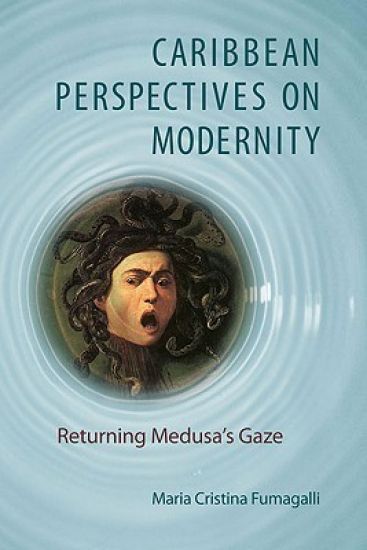
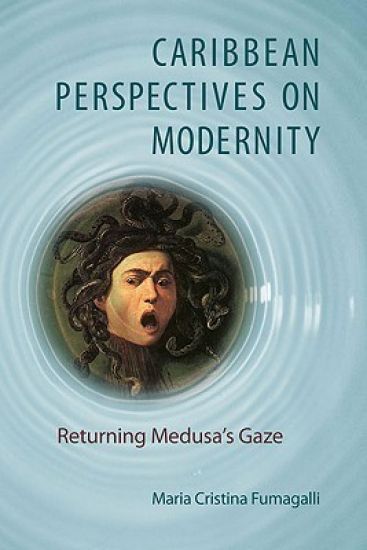
Taking up the challenge of redefining modernity from a Caribbean perspective instead of assuming that the North Atlantic view of modernity is universal, Maria Cristina Fumagalli shows how the Caribbean's contributions to the modern world not only provide a more accurate account of the past but also have the potential to change the way in which we imagine the future. Fumagalli uses the myth of Medusa's gaze turning people into stone to describe the way North Atlantic modernity freezes its 'others' into a state of perpetual backwardness that produces an ethnocentric narrative based on homogenization, vilification, and dis empowerment that actively ignores what fails to conform to the story it wants to tell about itself. In analyzing narratives of modernity that originate in the Caribbean, the author explores the region's refusal to succumb to Medusa's spell and highlights its strategies to outstare the Gorgon. Reflecting a diversity of texts, genres, and media, the chapters focus on sixteenth-century engravings and paintings from the Netherlands and Italy, a scientific romance produced at the turn of the twentieth century by the king of the Caribbean island Redonda, contemporary collections of poetry from the anglophone Caribbean, a historical novel by the Guadeloupean writer Maryse Conde, a Latin epic, a Homeric hymn, ancient Egyptian rites, fairy tales, romances from England and Jamaica, a long narrative poem by the Nobel Prize winner Derek Walcott, and paintings by artists from Europe and the Americas spanning the seventeenth century to the present. ""Caribbean Perspectives on Modernity"" offers an original and creative contribution to what it means to be modern.
Caribbean Perspectives on Modernity

Caribbean Perspectives on Modernity

Maria Cristina Fumagalli

University of Virginia Press
2009
nidottu
Taking up the challenge of redefining modernity from a Caribbean perspective instead of assuming that the North Atlantic view of modernity is universal, Maria Cristina Fumagalli shows how the Caribbean's contributions to the modern world not only provide a more accurate account of the past but also have the potential to change the way in which we imagine the future. Fumagalli uses the myth of Medusa's gaze turning people into stone to describe the way North Atlantic modernity freezes its 'others' into a state of perpetual backwardness that produces an ethnocentric narrative based on homogenization, vilification, and dis empowerment that actively ignores what fails to conform to the story it wants to tell about itself. In analyzing narratives of modernity that originate in the Caribbean, the author explores the region's refusal to succumb to Medusa's spell and highlights its strategies to outstare the Gorgon. Reflecting a diversity of texts, genres, and media, the chapters focus on sixteenth-century engravings and paintings from the Netherlands and Italy, a scientific romance produced at the turn of the twentieth century by the king of the Caribbean island Redonda, contemporary collections of poetry from the anglophone Caribbean, a historical novel by the Guadeloupean writer Maryse Conde, a Latin epic, a Homeric hymn, ancient Egyptian rites, fairy tales, romances from England and Jamaica, a long narrative poem by the Nobel Prize winner Derek Walcott, and paintings by artists from Europe and the Americas spanning the seventeenth century to the present. ""Caribbean Perspectives on Modernity"" offers an original and creative contribution to what it means to be modern.
Derek Walcott's Painters

Derek Walcott's Painters

Maria Cristina Fumagalli

EDINBURGH UNIVERSITY PRESS
2023
sidottu
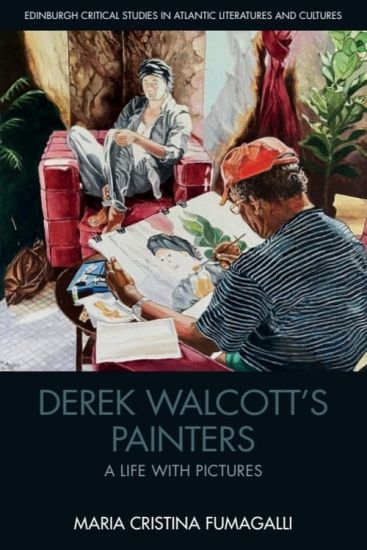
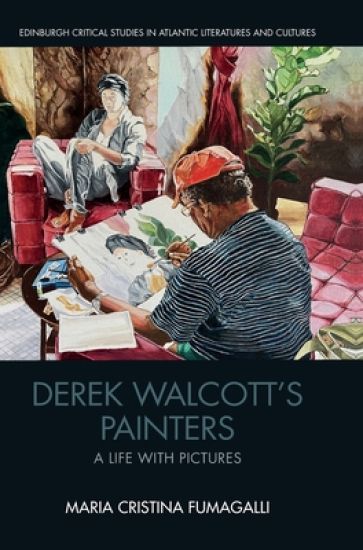
First book devoted to Derek Walcott's lifelong engagement with the Atlantic visual arts Bringing together local, Atlantic and global dimensions and putting in dialogue and contextualising Walcott's work with the works of specific artists, it retraces Walcott's unique, empowering, but utterly neglected 'art history' Brings to the fore the importance and reverberations of interdisciplinary dialogues in the Atlantic world and in decolonising discourses and processes Sheds new light on the ways in which Walcott conjugated his engagement with the European, North/South American and African American traditions, envisaged their relationship with Caribbean culture and redefined the role he believed the latter should and could play on an Atlantic and global scale Is mindful of Walcott's attention to painting techniques but, most importantly, foregrounds his keen interest in the multiple narratives" that the visual works he was confronting not only explicitly revealed but also implicitly suggested Highlights the attention Walcott paid to the circumstances and 'locations' of his encounters with the works in question (i.e. local settings, metropolitan museums and artbooks). Walcott's lifelong concern with painting and painters deeply inflected his aesthetics and politics. Walcott's interventions on the relationship between Caribbean and colonial history have been thoroughly scrutinised, but, arguably, Walcott was also keen to address and (re)write an art history of which, paraphrasing a line from Omeros, the Caribbean too was/is capable. Contextualising and putting in conversation Walcott's published and unpublished writings (poems, plays, essays, journalism) and his drawings or paintings (privately owned and publicly disseminated) with specific artists from the Caribbean, Europe, South and North America, Derek Walcott's Painters recalibrates and sharpens our understanding of Walcott's articulation of his own politics and poetics and of the Caribbean's contributions to Atlantic and global culture. "
Derek Walcott's Painters

Derek Walcott's Painters

Maria Cristina Fumagalli

EDINBURGH UNIVERSITY PRESS
2025
nidottu
Walcott's lifelong concern with painting and painters deeply inflected his aesthetics and politics. Walcott's interventions on the relationship between Caribbean and colonial history have been thoroughly scrutinised, but, arguably, Walcott was also keen to address and (re)write an art history "of which," paraphrasing a line from Omeros, the Caribbean "too" was/is "capable". Contextualising and putting in conversation Walcott's published and unpublished writings (poems, plays, essays, journalism) and his drawings or paintings (privately owned and publicly disseminated) with specific artists from the Caribbean, Europe, South and North America, Derek Walcott's Painters recalibrates and sharpens our understanding of Walcott's articulation of his own politics and poetics and of the Caribbean's contributions to Atlantic and global culture.
On the Edge: Writing the Border between Haiti and the Dominican Republic

On the Edge: Writing the Border between Haiti and the Dominican Republic

Maria Cristina Fumagalli

Liverpool University Press
2015
sidottu
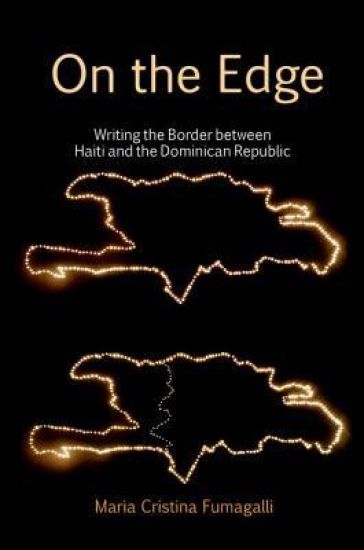
On the Edge: Writing the Border between Haiti and the Dominican Republic is a literary and cultural history which brings to the fore a compelling but, so far, largely neglected body of work which has the politics of borderline-crossing as well as the poetics of borderland-dwelling on Hispaniola at its core. Over thirty fictional and non-fictional literary texts (novels, biographical narratives, memoirs, plays, poems, and travel writing), are given detailed attention alongside journalism, geo-political-historical accounts of the status quo on the island, and striking visual interventions (films, sculptures, paintings, photographs, videos and artistic performances), many of which are sustained and complemented by different forms of writing (newspaper cuttings, graffiti, captions, song lyrics, screenplay, tattoos). Dominican, Dominican-American, Haitian and Haitian-American writers and artists are put in dialogue with authors who were born in Europe, the rest of the Americas, Algeria, New Zealand, and Japan in order to illuminate some of the processes and histories that have woven and continue to weave the texture of the borderland and the complex web of border relations on the island. Particular attention is paid to the causes, unfolding, and immediate aftermath of the 1791 slave revolt, the 1937 massacre of Haitians and Haitian-Dominicans in the Dominican Northern borderland as well as to recent events and topical issues such as the 2010 earthquake, migration, and environmental degradation. On the Edge is an invaluable multicultural archive for those who want to engage fully with the past and present of Hispaniola and refuse to comply with the idea that an acceptable future is unattainable.
On the Edge: Writing the Border between Haiti and the Dominican Republic

On the Edge: Writing the Border between Haiti and the Dominican Republic

Maria Cristina Fumagalli

Liverpool University Press
2018
nidottu
On the Edge: Writing the Border between Haiti and the Dominican Republic is a literary and cultural history which brings to the fore a compelling but, so far, largely neglected body of work which has the politics of borderline-crossing as well as the poetics of borderland-dwelling on Hispaniola at its core. Over thirty fictional and non-fictional literary texts (novels, biographical narratives, memoirs, plays, poems, and travel writing), are given detailed attention alongside journalism, geo-political-historical accounts of the status quo on the island, and striking visual interventions (films, sculptures, paintings, photographs, videos and artistic performances), many of which are sustained and complemented by different forms of writing (newspaper cuttings, graffiti, captions, song lyrics, screenplay, tattoos). Dominican, Dominican-American, Haitian and Haitian-American writers and artists are put in dialogue with authors who were born in Europe, the rest of the Americas, Algeria, New Zealand, and Japan in order to illuminate some of the processes and histories that have woven and continue to weave the texture of the borderland and the complex web of border relations on the island. Particular attention is paid to the causes, unfolding, and immediate aftermath of the 1791 slave revolt, the 1937 massacre of Haitians and Haitian-Dominicans in the Dominican Northern borderland as well as to recent events and topical issues such as the 2010 earthquake, migration, and environmental degradation. On the Edge is an invaluable multicultural archive for those who want to engage fully with the past and present of Hispaniola and refuse to comply with the idea that an acceptable future is unattainable.