Kirjojen hintavertailu. Mukana 11 244 527 kirjaa ja 12 kauppaa.

Kirjahaku

Etsi kirjoja tekijän nimen, kirjan nimen tai ISBN:n perusteella.

5 kirjaa tekijältä Maria M. Delgado

Federico García Lorca

Federico García Lorca

Maria M. Delgado

Routledge
2008
sidottu
Immortalized in death by The Clash, Pablo Neruda, Salvador Dalí, Dmitri Shostakovich and Lindsay Kemp, Federico García Lorca's spectre haunts both contemporary Spain and the cultural landscape beyond. This study offers a fresh examination of one of the Spanish language’s most resonant voices; exploring how the very factors which led to his emergence as a cultural icon also shaped his dramatic output.The works themselves are also awarded the space that they deserve, combining performance histories with incisive textual analysis to restate Lorca’s presence as a playwright of extraordinary vision, in works such as:Blood WeddingThe PublicThe House of Bernarda AlbaYerma.Federico García Lorca is an invaluable new resource for those seeking to understand this complex and multifaceted figure: artist, playwright, director, poet, martyr and in the eyes of many, Spain’s ‘national dramatist’.
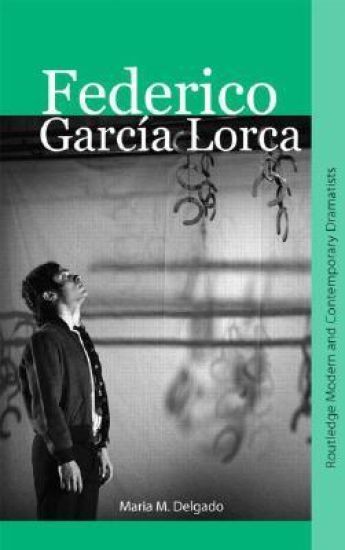
Federico García Lorca

Federico García Lorca

Maria M. Delgado

Routledge
2008
nidottu
Immortalized in death by The Clash, Pablo Neruda, Salvador Dalí, Dmitri Shostakovich and Lindsay Kemp, Federico García Lorca's spectre haunts both contemporary Spain and the cultural landscape beyond. This study offers a fresh examination of one of the Spanish language’s most resonant voices; exploring how the very factors which led to his emergence as a cultural icon also shaped his dramatic output.The works themselves are also awarded the space that they deserve, combining performance histories with incisive textual analysis to restate Lorca’s presence as a playwright of extraordinary vision, in works such as:Blood WeddingThe PublicThe House of Bernarda AlbaYerma.Federico García Lorca is an invaluable new resource for those seeking to understand this complex and multifaceted figure: artist, playwright, director, poet, martyr and in the eyes of many, Spain’s ‘national dramatist’.
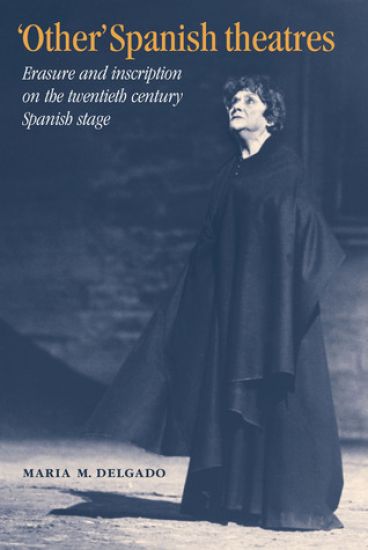
'Other' Spanish Theatres

'Other' Spanish Theatres

Maria M. Delgado

Manchester University Press
2003
nidottu
‘Other’ Spanish theatres challenges established opinions on modern Iberian theatre by considering the roles of contrasting figures and companies who have impacted upon both the practice and the perception of Spanish and European stages.In questioning the primacy of the dramatist, this pioneering study offers a new interpretation of a nation’s theatrical culture that has been viewed primarily through the prisms of a select number of playwrights. Accordingly many of the conclusions reached are new ones, and the case, for acknowledging the wide influence of Spanish practitioners on theatre in Europe and the Americas is made in persuasive terms. Through a bold documentation and interrogation of key productions and their reception both at home and abroad, ‘Other’ Spanish theatres focuses on the doing of performance, asking provocative questions around how performances are tested against the texts that remain. In a broad and detailed study Delgado selects six case studies which map out alternative readings of a nation’s theatrical innovation through the twentieth century: muse and mentor to Federico Garcia Lorca, Margarita Xirgu; theatrical innovator and influence on Orson Welles, Enrique Rambal; tragedienne Maria Casares feted by George Craig Camus, Genet and Cocteau; actress, producer and director Nuria Espert; international director Lluis Pasqual and Catalan performance company La Cubana.
Spanish Theatre 1920-1995

Spanish Theatre 1920-1995

Maria M. Delgado

Routledge
2017
sidottu
Beginning with a reassessment of the 1920s and 30s, this text looks beyond a consideration of just the most successful Spanish playwrights of the time, and discusses also the work of directors, theorists, actors and designers.
Spanish Theatre 1920-1995

Spanish Theatre 1920-1995

Maria M. Delgado

Routledge
1998
nidottu
Beginning with a reassessment of the 1920s and 30s, this text looks beyond a consideration of just the most successful Spanish playwrights of the time, and discusses also the work of directors, theorists, actors and designers.