Kirjojen hintavertailu. Mukana 11 244 527 kirjaa ja 12 kauppaa.

Kirjahaku

Etsi kirjoja tekijän nimen, kirjan nimen tai ISBN:n perusteella.

6 kirjaa tekijältä Maria M. Tatar

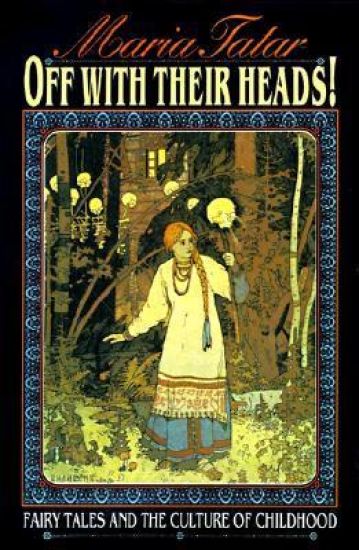
Off with Their Heads!

Off with Their Heads!

Maria M. Tatar

Princeton University Press
1993
pokkari
When Hansel and Gretel try to eat the witch's gingerbread house in the woods, are they indulging their "uncontrolled cravings" and "destructive desires" or are they simply responding normally to the hunger pangs they feel after being abandoned by their parents? Challenging Bruno Bettelheim and other critics who read fairy tales as enactments of children's untamed urges, Maria Tatar argues that it is time to stop casting the children as villians. In this provocative book she explores how adults mistreat children, focusing on adults not only as hostile characters in fairy tales themselves but also as real people who use frightening stories to discipline young listeners.
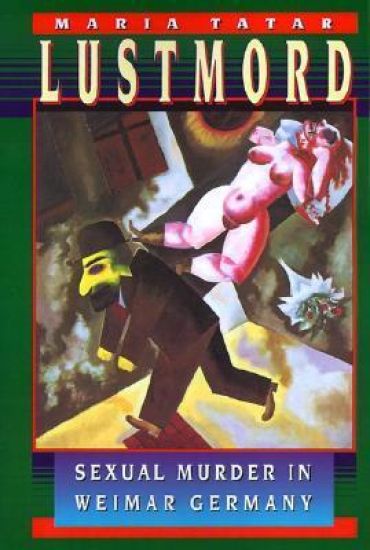
Lustmord

Lustmord

Maria M. Tatar

Princeton University Press
1997
pokkari
In a book that confronts our society's obsession with sexual violence, Maria Tatar seeks the meaning behind one of the most disturbing images of twentieth-century Western culture: the violated female corpse. This image is so prevalent in painting, literature, film, and, most recently, in mass media, that we rarely question what is at stake in its representation. Tatar, however, challenges us to consider what is taking place--both artistically and socially--in the construction and circulation of scenes depicting sexual murder. In examining images of sexual murder (Lustmord), she produces a riveting study of how art and murder have intersected in the sexual politics of culture from Weimar Germany to the present. Tatar focuses attention on the politically turbulent Weimar Republic, often viewed as the birthplace of a transgressive avant-garde modernism, where representations of female sexual mutilation abound. Here a revealing episode in the gender politics of cultural production unfolds as male artists and writers, working in a society consumed by fear of outside threats, envision women as enemies that can be contained and mastered through transcendent artistic expression. Not only does Tatar show that male artists openly identified with real-life sexual murderers--George Grosz posed as Jack the Ripper in a photograph where his model and future wife was the target of his knife--but she also reveals the ways in which victims were disavowed and erased. Tatar first analyzes actual cases of sexual murder that aroused wide public interest in Weimar Germany. She then considers how the representation of murdered women in visual and literary works functions as a strategy for managing social and sexual anxieties, and shows how violence against women can be linked to the war trauma, to urban pathologies, and to the politics of cultural production and biological reproduction. In exploring the complex relationship between victim and agent in cases of sexual murder, Tatar explains how the roles came to be destabilized and reversed, turning the perpetrator of criminal deeds into a defenseless victim of seductive evil. Throughout the West today, the creation of similar ideological constructions still occurs in societies that have only recently begun to validate the voices of its victims. Maria Tatar's book opens up an important discussion for readers seeking to understand the forces behind sexual violence and its portrayal in the cultural media throughout this century.
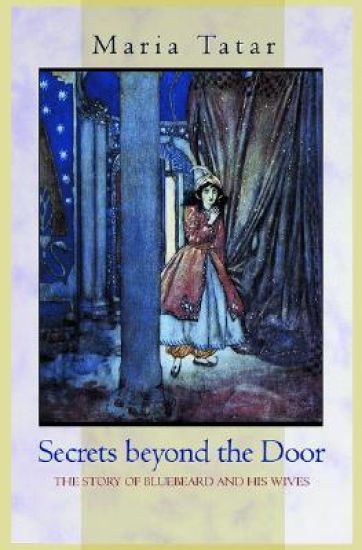
Secrets beyond the Door

Secrets beyond the Door

Maria M. Tatar

Princeton University Press
2006
pokkari
The tale of Bluebeard's Wife--the story of a young woman who discovers that her mysterious blue-bearded husband has murdered his former spouses--no longer squares with what most parents consider good bedtime reading for their children. But the story has remained alive for adults, allowing it to lead a rich subterranean existence in novels ranging from Jane Eyre to Lolita and in films as diverse as Hitchcock's Notorious and Jane Campion's The Piano. In this fascinating work, Maria Tatar analyzes the many forms the tale of Bluebeard's Wife has taken over time, particularly in Anglo-European popular culture. It documents the fortunes of Bluebeard, his wife, and their marriage in folklore, fiction, film, and opera, showing how others took the Bluebeard theme and revived it with their own signature twists. In some tales the wife is a deceiver; in others she is a clever investigator. Earlier ages denounced Bluebeard's wife for her "reckless curiosity" and for her "uncontrolled appetite"; our own times have turned her into something of a heroine, a woman who rescues herself--and often her marriage--through her detective work and psychological finesse. And as for Bluebeard? Once considered a one-dimensional brute, he has found renewed cultural energy both as a master criminal who kills in order to create a higher moral order and as an artist figure who must shield himself against intimacy to foster his creative powers. A brilliant account of how one classic fairy tale has been continually reincarnated, Secrets beyond the Door will appeal to both literary scholars and general readers.
The Hard Facts of the Grimms' Fairy Tales

The Hard Facts of the Grimms' Fairy Tales

Maria M. Tatar

Princeton University Press
2019
pokkari
Murder, mutilation, cannibalism, infanticide, and incest: the darker side of classic fairy tales is the subject of this groundbreaking and intriguing study of Jacob and Wilhelm Grimm’s Nursery and Household Tales. This expanded edition includes a new preface and an appendix featuring translations of six tales with commentary by Maria Tatar. Throughout the book, Tatar draws on the disciplinary tools of psychoanalysis and folklore while also providing historical context to explore the harsher aspects of these stories, presenting new interpretations of tales that engage in a kind of cultural repetition compulsion. No other book so thoroughly challenges us to rethink the happily-ever-after of these classic stories.
Spellbound

Spellbound

Maria M. Tatar

Princeton University Press
2015
pokkari
Franz Anton Mesmer's concept of animal magnetism exercised a profound influence on key European and American thinkers. Mesmer, who saw in his discovery the secret of health, had hoped to recover the harmony between man and nature by harnessing the power of magnetic fluids. In calling attention to the existence of a second self that surfaces in the hypnotic trance, Mesmer made his real contribution and took the first, decisive steps on the road leading to the unconscious. While most critical studies of mesmerism originate in the history of science or medicine, Maria Tatar's book takes a fresh approach by tracing the impact of mesmerism on literature. The author launches her account with a portrait of Mesmer and places his views in the context of eighteenth-century thought. She then explores the significance of Mesmer's ideas and studies their influence on nineteenth-century German, French, and American writers. In conclusion, she examines the ways in which modern authors absorbed and reshaped the mesmerist legacy bequeathed to them by earlier generations. Whether discussing the electrical energy vibrating through Kleist's dramas, the electrical heat radiating from Hoffmann's figures, the streams of magnetic fluid coursing through Balzac's novels, or the magnetic chain of humanity linking Hawthorne's characters, Professor Tatar recaptures the meaning of ideas, motifs, and metaphors often overlooked by literary critics. Her study illuminates, in a remarkable way, the subtle connections between science, psychology, and literature. Originally published in 1978. The Princeton Legacy Library uses the latest print-on-demand technology to again make available previously out-of-print books from the distinguished backlist of Princeton University Press. These editions preserve the original texts of these important books while presenting them in durable paperback and hardcover editions. The goal of the Princeton Legacy Library is to vastly increase access to the rich scholarly heritage found in the thousands of books published by Princeton University Press since its founding in 1905.
Spellbound

Spellbound

Maria M. Tatar

Princeton University Press
2016
sidottu
Franz Anton Mesmer's concept of animal magnetism exercised a profound influence on key European and American thinkers. Mesmer, who saw in his discovery the secret of health, had hoped to recover the harmony between man and nature by harnessing the power of magnetic fluids. In calling attention to the existence of a second self that surfaces in the hypnotic trance, Mesmer made his real contribution and took the first, decisive steps on the road leading to the unconscious. While most critical studies of mesmerism originate in the history of science or medicine, Maria Tatar's book takes a fresh approach by tracing the impact of mesmerism on literature. The author launches her account with a portrait of Mesmer and places his views in the context of eighteenth-century thought. She then explores the significance of Mesmer's ideas and studies their influence on nineteenth-century German, French, and American writers. In conclusion, she examines the ways in which modern authors absorbed and reshaped the mesmerist legacy bequeathed to them by earlier generations. Whether discussing the electrical energy vibrating through Kleist's dramas, the electrical heat radiating from Hoffmann's figures, the streams of magnetic fluid coursing through Balzac's novels, or the magnetic chain of humanity linking Hawthorne's characters, Professor Tatar recaptures the meaning of ideas, motifs, and metaphors often overlooked by literary critics. Her study illuminates, in a remarkable way, the subtle connections between science, psychology, and literature. Originally published in 1978. The Princeton Legacy Library uses the latest print-on-demand technology to again make available previously out-of-print books from the distinguished backlist of Princeton University Press. These editions preserve the original texts of these important books while presenting them in durable paperback and hardcover editions. The goal of the Princeton Legacy Library is to vastly increase access to the rich scholarly heritage found in the thousands of books published by Princeton University Press since its founding in 1905.