Kirjojen hintavertailu. Mukana 11 699 587 kirjaa ja 12 kauppaa.

Kirjahaku

Etsi kirjoja tekijän nimen, kirjan nimen tai ISBN:n perusteella.

137 kirjaa tekijältä Maria Montessori

Maria Montessori's Pedagogical Anthropology
This insightful volume is a collection of Dr. Maria Montessori's lectures given at the University of Rome and explores the Italian physician's views on methods of education and childhood development. First published in 1913, Maria Montessori's Pedagogical Anthropology is an early insight into the profound physician's alternative ideas regarding early childhood education. Across ten chapters, Montessori explores the history of anthropological study and pedagogy, analysing biological and psychological aspects of childhood. Featuring 163 illustrations and diagrams, this volume is an interesting read for those familiar with the Montessori method of education. This volume features the following chapters: - Certain Principles of General Biology - Craniology - The Thorax - The Pelvis - The Limbs - The Skin and Pigments - Technical Part - Statistical Methodology - The Biographic History of the Pupil and His Antecedents - The Application of Biometry to Anthropology for the Purpose of Determining the Medial Man
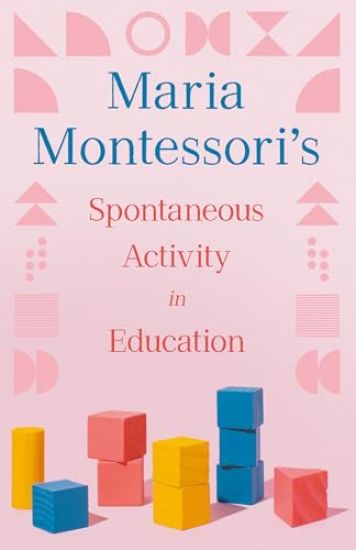
Maria Montessori's Spontaneous Activity in Education
This volume is Dr. Maria Montessori's study of education, with explanations of her philosophy of teaching and experimental scientific approach. Dr. Maria Montessori's alternative method to early-years education is based on the natural development of children and encourages hands-on learning with access to the natural world. She shares her views on children's imagination, intelligence, and behaviour while recommending the ideal learning environment and teaching exercises for the Montessori method. The chapters featured in this volume include: - A Survey of the Child's Life - A Survey of Modern Education - My Contribution to Experimental Science - The Preparation of the Teacher - Environment - Attention - Will - Intelligence - Imagination
Maria Montessori's Spontaneous Activity in Education
This volume is Dr. Maria Montessori's study of education, with explanations of her philosophy of teaching and experimental scientific approach. Dr. Maria Montessori's alternative method to early-years education is based on the natural development of children and encourages hands-on learning with access to the natural world. She shares her views on children's imagination, intelligence, and behaviour while recommending the ideal learning environment and teaching exercises for the Montessori method. The chapters featured in this volume include: - A Survey of the Child's Life - A Survey of Modern Education - My Contribution to Experimental Science - The Preparation of the Teacher - Environment - Attention - Will - Intelligence - Imagination
Montessori Method

Montessori Method

Maria Montessori

Dover Publications Inc.
2002
nidottu
"Dr. Montessori was par excellence the great interpreter of the child; and though she herself has passed on from the scene of her labours her work will still go on."--"Westminster Cathedral Chronicle One of the landmark books in the history of education--and one of the least expensive editions now available--this volume describes a new system for educating youngsters. Based on a radical concept of liberty for the pupil and highly formal training of separate sensory, motor, and mental capacities, the system enabled youngsters to master reading, writing, and arithmetic rapidly and substantially. Included are discussions of scientific pedagogy; discipline; the importance of proper diet, gymnastics, and manual labor; and many other topics. Unabridged reprint of the classic 1912 edition.
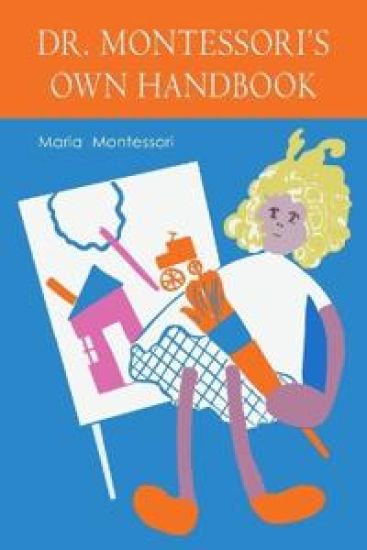
Dr. Montessori's Own Handbook

Dr. Montessori's Own Handbook

Maria Montessori

Random House Inc
1988
pokkari
This is the book that Maria Montesorri wrote in response to requests from thousands of American parents and teachers. A short, illustrated guide to the use of the Montessori classroom materials, it shows how to set up a "children's house"--an environment for learning where children can be their own masters, free to learn at their own pace. Frames for lacing and buttoning, geometrical wooden inserts, sound cylinders, sandpapers letters, colored numerical rods: these are familiar features of any Montesorri classroom, whether in the pioneering days or today. Dr. Montesorri explains how to use these materials with preschool children to stimulate their powers of observation, recognition, judgment, and classification. These self-correcting learning tools are the original "teaching machines" for young children. Inherently logical and aesthetically pleasing, they were designed to hone the child's visual, auditory, and tactile perceptions. Dr. Montesorri stresses that each child approaches the apparatus differently. The role of the adult, whether teacher or parent, is to let the child experiment, perceive his own mistakes, and run his own risks in learning. (With black-and white illustrations throughout.)
Montessori Method

Montessori Method

Maria Montessori

Schocken Books
1988
pokkari
This book is Montessori's own exposition of the theory behind her innovative educational techniques. She shows parents, teachers and administrators how to "free a child to learn through his own efforts".
The Montessori Method

The Montessori Method

Maria Montessori

Bentley Publishers
1965
sidottu
Hardcover edition of The Montessori Method by Maria Montessori. Scientific pedagogy as applied to child education in "The Children's Houses" with additions and revisions by the author. Translated from the Italian by Anne E. George and with an introduction by Martin Mayer, author of "The Schools." Educators will appreciate having this hardcover classic in their collection.
Dr. Montessori's Own Handbook

Dr. Montessori's Own Handbook

Maria Montessori

Bentley Publishers
1964
sidottu
Hardcover edition of Dr. Montessori's Own Handbook by Maria Montessori. Scientific pedagogy as applied to child eduction in "the Children's Houses" including chapters on methods in motor, sensory, language, and writing education. Educators will appreciate having this classic hardcover in their collection.
Dr. Montessori's Own Handbook

Dr. Montessori's Own Handbook

Maria Montessori

Digireads.com
2021
pokkari
First published in 1914, "Dr. Montessori's Own Handbook" by Maria Montessori is the practical and accessible guide book to the author's famous educational approach. Montessori, born in 1870 in Chiaravalle, Italy to an educated and well-off family, became a famed Italian physician, author, and educator who applied rigorous scientific principles to the study of the schooling of young children. The result was a revolutionary approach that emphasized the importance of self-directed activity for children and that the learning environment must be adapted to the developmental level of the particular child. Montessori placed great importance on the role that physical activities have in helping children master both practical skills and abstract ideas. Montessori's methods were a radical departure from the standard educational practices in both Europe and America in the early twentieth-century and have become widely influential in how modern educators teach young children in an interactive, engaging, and vibrant environment. In "Dr. Montessori's Own Handbook," she distills her extensive knowledge and research down to its basics and explains how to apply her methods to the education of grade school children. This detailed and approachable guide is indispensable for all educators and parents practicing the Montessori method. This edition is printed on premium acid-free paper.
The Montessori Method

The Montessori Method

Maria Montessori

Digireads.com
2021
nidottu
First published in 1912, "The Montessori Method" is the English edition of Maria Montessori's groundbreaking 1909 work on early childhood education. Maria Montessori, born in 1870 in Chiaravalle, Italy to an educated and well-off family, became a famed Italian physician, author, and educator who applied rigorous scientific principles to the study of the schooling of young children. The result was a revolutionary approach that emphasized the importance of self-directed activity for children and that the learning environment must be adapted to the developmental level of the particular child. Montessori placed great importance on the role that physical activities have in helping children master both practical skills and abstract ideas. Montessori's methods were a radical departure from the standard educational practices in both Europe and America in the early twentieth-century and have become widely influential in how modern educators teach young children in an interactive, engaging, and vibrant environment. Over a hundred years later, "The Montessori Method" continues to provide invaluable insight and guidance to both teachers and parents so that they may develop the most effective and supportive learning environment for their students and children. This edition is printed on premium acid-free paper.