Kirjojen hintavertailu. Mukana 11 244 527 kirjaa ja 12 kauppaa.

Kirjahaku

Etsi kirjoja tekijän nimen, kirjan nimen tai ISBN:n perusteella.

18 kirjaa tekijältä Maria Tsaneva

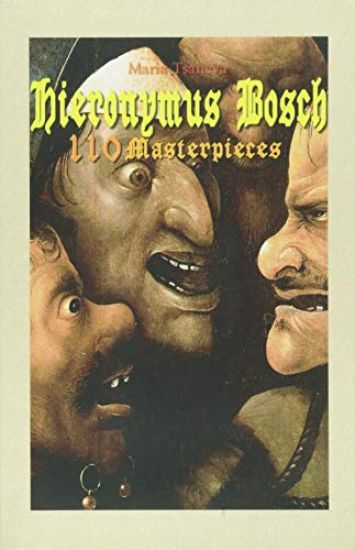
Hieronymus Bosch: 110 Masterpieces

Hieronymus Bosch: 110 Masterpieces

Maria Tsaneva

Createspace Independent Publishing Platform
2014
nidottu
This Art Book with Foreword and annotated reproductions by Maria Tsaneva contains 110 selected paintings and drawings of Hieronymus Bosch. In the primary identified description of Bosch's artworks, in 1560 Felipe de Guevara wrote that Bosch was regarded simply as "the originator of monsters and chimeras". In the beginning 17-th century, the Dutch Karel van Mander explained Bosch's art as "marvelous and extraordinary fantasies"; nevertheless, he finished that the paintings are "frequently less enjoyable than frightening to look at." In the 20-th century, researchers have come to sight Bosch's vision as fewer unbelievable, and acknowledged that his art reflects the conventional religious faith systems of his time. His images of sinning people, his view of Heaven and Hell are now perceived as consistent with those of late medieval didactic literature and habits. Nerveless, some critics notice Bosch as example of medieval surrealist, and parallels are repeatedly made with the modern Spanish artist Salvador Dali. Other scholars try to interpret his images using the words of Freudian psychology.
Fragonard: 100 Paintings and Drawings

Fragonard: 100 Paintings and Drawings

Maria Tsaneva

Createspace Independent Publishing Platform
2015
nidottu
Jean-Honor Fragonard was a French Rococo painter and print-maker whose style was remarkable by cheerfulness and hedonism. His most popular artworks are genre paintings conveying an atmosphere of intimacy and veiled eroticism. Fragonard has been ranked with Watteau as one of the two great lyrical painters of the 18th century in France. An extraordinary active artist, he produced more than 550 paintings, several thousand drawings, and 35 etchings. His style, based primarily on that of Rubens, was express, forceful, and effortless, never tensed or fussy like that of so many of his contemporaries. Although the greater part of his active life was passed during the neoclassical period, he continued to paint in a Rococo manner until shortly before the French Revolution.
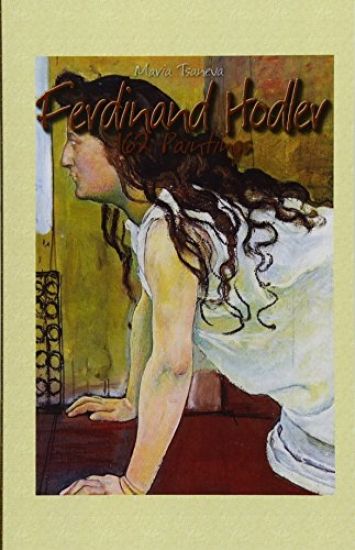
Ferdinand Hodler: 162 Paintings

Ferdinand Hodler: 162 Paintings

Maria Tsaneva

Createspace Independent Publishing Platform
2015
nidottu
Ferdinand Hodler was one of the famous Swiss painters of the 19th century. His early maturity paintings were landscapes, figure compositions, and portraits, treated with a strong realism. He made a voyage to Basel in 1875, where he studied the paintings of Hans Holbein. In the last decade of the 19th century his work progressed to combine influences from several genres including symbolism and art nouveau. He developed a style which he called "Parallelism", characterized by groupings of figures symmetrically arranged in poses suggesting ritual or dance. Hodler's work in his final phase took on an expressionist aspect with strongly colored and geometrical figures. Landscapes were pared down to essentials, sometimes consisting of a jagged wedge of land between water and sky. These mystical, non-realistic paintings depicting an escape from the bourgeois cares of modern life gained Hodler first notoriety and then popularity.
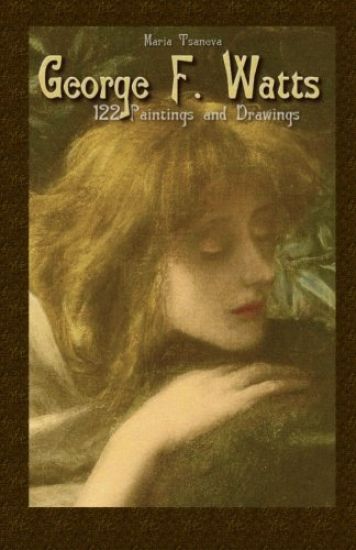
George F. Watts: 122 Paintings and Drawings

George F. Watts: 122 Paintings and Drawings

Maria Tsaneva

Createspace Independent Publishing Platform
2015
nidottu
George Frederic Watts was a admired English Victorian artist related with the Symbolist movement. He became famous his allegorical works "Love and Life" and "Hope". These paintings were in which the emotions and aspirations of life would all be represented in a universal symbolic language. Watts was a hard-working artist who twice refused a baronetcy and other honors, including an offer to become president of the Royal Academy. His declared aims were clear: to paint pictures that appealed 'to the intellect and refined emotions rather than the senses': "I paint ideas, not things. I paint primarily because I have something to say, and since the gift of eloquent language has been denied to me, I use painting; my intention is not so much to paint pictures which shall please the eye, as to suggest great thoughts which shall speak to the imagination and to the heart and arouse all that is best and noblest in humanity."
Felix Vallotton: 168 Paintings and Drawings

Felix Vallotton: 168 Paintings and Drawings

Maria Tsaneva

Createspace Independent Publishing Platform
2015
nidottu
F lix Vallotton was a Swiss painter and printmaker associated with group Les Nabis. By the end of his life he had completed over 1700 paintings and about 200 prints, in addition to hundreds of drawings and several sculptures. His earliest paintings, chiefly portraits, are firmly rooted in the academic tradition. He was influenced by post-Impressionism, Symbolism, and especially by the Japanese woodcut. During the 1890s, when Vallotton was closely allied with the avant-garde, his paintings reflected the style of his woodcuts, with flat areas of color, hard edges, and simplification of detail. His subjects included genre scenes, portraits and nudes. Vallotton's paintings of the post-Nabi period found admirers, and were generally respected for their truthfulness and their technical qualities, but the severity of his style was frequently criticized, and has a further parallel in the work of Edward Hopper.
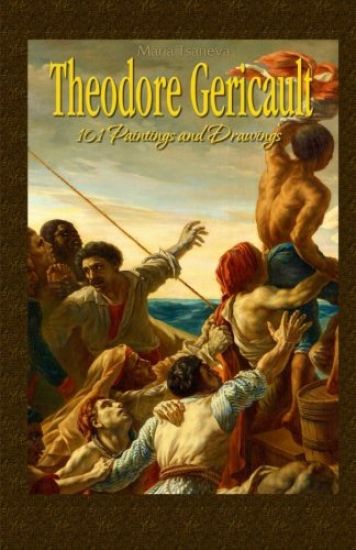
Theodore Gericault: 101 Paintings and Drawings

Theodore Gericault: 101 Paintings and Drawings

Maria Tsaneva

Createspace Independent Publishing Platform
2015
nidottu
Jean-Louis Andr Th odore G ricault was an influential French painter and lithographer, known for "The Raft of the Medusa" and other paintings. Although he died young, he was one of the pioneers of the Romantic Movement. His stormy career lasted little more than a decade and in that time he displayed a meteoric and many-sided genius. His love of thrilling action, his sense of swirling movement, his energetic conduct of paint, and his taste for the horrid were all to become features of Romanticism. G ricault was, at the same time avant-garde in his realism: he made studies from corpses and severed limbs for The Raft of the Medusa and painted an extraordinary series of portraits of mental patients in the clinic of his friend Dr Georget. His work had enormous influence, most notably on Delacroix.