Kirjojen hintavertailu. Mukana 11 699 587 kirjaa ja 12 kauppaa.

Kirjahaku

Etsi kirjoja tekijän nimen, kirjan nimen tai ISBN:n perusteella.

3 kirjaa tekijältä Marian Mesrobian MacCurdy

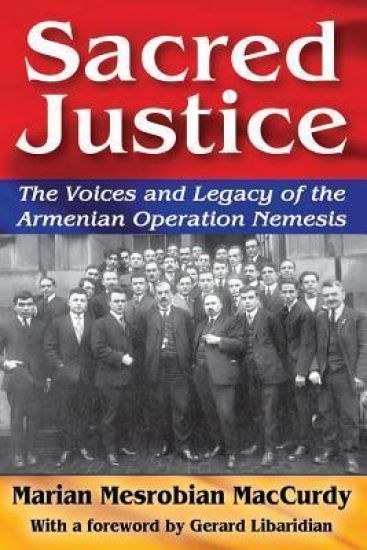
Sacred Justice

Sacred Justice

Marian Mesrobian MacCurdy

AldineTransaction
2015
sidottu
Sacred Justice is a cross-genre book that uses narrative, memoir, unpublished letters, and other primary and secondary sources to tell the story of a group of Armenian men who organized Operation Nemesis, a covert operation created to assassinate the Turkish architects of the Armenian Genocide. The leaders of Operation Nemesis took it upon themselves to seek justice for their murdered families, friends, and compatriots.Sacred Justice includes a large collection of previously unpublished letters, found in the upstairs study of the author's grandfather, Aaron Sachaklian, one of the leaders of Nemesis, that show the strategies, personalities, plans, and dedication of Soghomon Tehlirian, who killed Talaat Pasha, a genocide leader; Shahan Natalie, the agent on the ground in Europe; Armen Garo, the center of Operation Nemesis; Aaron Sachaklian, the logistics and finance officer; and others involved with Nemesis.Marian Mesrobian MacCurdy tells a story that has been either hidden by the necessity of silence or ignored in spite of victims' narratives—the story of those who attempted to seek justice for the victims of genocide and the effect this effort had on them and on their families. Ultimately, this volume reveals how the narratives of resistance and trauma can play out in the next generation and how this resistance can promote resilience.
Sacred Justice

Sacred Justice

Marian Mesrobian MacCurdy

AldineTransaction
2016
nidottu
Sacred Justice is a cross-genre book that uses narrative, memoir, unpublished letters, and other primary and secondary sources to tell the story of a group of Armenian men who organized Operation Nemesis, a covert operation created to assassinate the Turkish architects of the Armenian Genocide. The leaders of Operation Nemesis took it upon themselves to seek justice for their murdered families, friends, and compatriots.Sacred Justice includes a large collection of previously unpublished letters, found in the upstairs study of the author's grandfather, Aaron Sachaklian, one of the leaders of Nemesis, that show the strategies, personalities, plans, and dedication of Soghomon Tehlirian, who killed Talaat Pasha, a genocide leader; Shahan Natalie, the agent on the ground in Europe; Armen Garo, the centre of Operation Nemesis; Aaron Sachaklian, the logistics and finance officer; and others involved with Nemesis.Marian Mesrobian MacCurdy tells a story that has been either hidden by the necessity of silence or ignored in spite of victims' narratives—the story of those who attempted to seek justice for the victims of genocide and the effect this effort had on them and on their families. Ultimately, this volume reveals how the narratives of resistance and trauma can play out in the next generation and how this resistance can promote resilience.
The Mind's Eye

The Mind's Eye

Marian Mesrobian MacCurdy

University of Massachusetts Press
2007
nidottu
In the post - September 11 world, therapeutic writing has become a topic of heightened interest in both academic circles and the popular press, reflecting a growing awareness that writing can have a beneficial effect on the emotional and cognitive lives of survivors of traumatic experiences. Yet teachers and others who encounter such writing often are unsure how to deal with it. In ""The Mind's Eye: Image and Memory in Writing about Trauma"", Marian Mesrobian MacCurdy investigates the relationship between writing and trauma, examines how we process difficult experiences and how writing can help us to integrate them, and provides a pedagogy to deal with the difficult life stories that often surface in the classroom. MacCurdy begins by discussing what trauma is, how traumatic memories are stored and accessed, and how writing affects them. She then focuses on the processes involved in translating traumatic images into narrative form, showing how the same patterns and problems emerge whether the writers are students or professionals. Using examples drawn from the classroom, MacCurdy investigates the beneficial effects of the study of trauma on communities as well as individuals, witnesses as well as writers, and explores the implications of these relationships for the world at large, particularly as they pertain to issues of justice, retribution, and forgiveness. Throughout the volume, the author draws on her own experience as teacher, writer, survivor, and descendant of survivors to explain how one can engage student work on difficult subjects without appropriating the texts or getting lost in the emotions generated by them. She further shows how appropriate safe-guards can be put in place to protect both teacher and student writer. The end result of such a pedagogy, MacCurdy demonstrates, is not simply better writers but more integrated people, capable of converting their own losses and griefs into compassion for others.