Kirjojen hintavertailu. Mukana 11 244 527 kirjaa ja 12 kauppaa.

Kirjahaku

Etsi kirjoja tekijän nimen, kirjan nimen tai ISBN:n perusteella.

16 kirjaa tekijältä Mariana Valverde

Everyday Law on the Street

Everyday Law on the Street

Mariana Valverde

University of Chicago Press
2012
nidottu
Toronto prides itself on being "the world's most diverse city," and its officials seek to support this diversity through programs and policies designed to promote social inclusion. Yet this progressive vision of law often falls short in practice, limited by problems inherent in the political culture itself. In "Everyday Law on the Street", Mariana Valverde brings to light the often unexpected ways that the development and implementation of policies shape everyday urban life. Drawing on four years spent participating in council hearings and civic association meetings, and shadowing housing inspectors and law enforcement officials as they went about their day-to-day work, Valverde reveals a telling transformation between law on the books and law on the streets. She finds, for example, that some of the democratic governing mechanisms generally applauded - public meetings, for instance - actually create disadvantages for marginalized groups, whose members are less likely to attend or articulate their concerns. As a result, both officials and citizens fail to see problems outside the point of view of their own needs and neighborhood. Taking issue with Jane Jacobs and many others, Valverde ultimately argues that Toronto and other diverse cities must reevaluate their allegiance to strictly local solutions. If urban diversity is to be truly inclusive - of tenants as well as homeowners, and recent immigrants as well as longtime residents - cities must move beyond microlocal planning and embrace a more expansive, citywide approach to planning and regulation.
Michel Foucault

Michel Foucault

Mariana Valverde

Routledge
2019
nidottu
This book explores the theoretical contribution of Michel Foucault to the fields of criminology, law, justice and penology. It surveys both the ways in which the work of Foucault has been applied in criminology, but also how his work can be used to understand and explain contemporary issues and policies. Moreover, this book seeks to dispel some of the common misconceptions about the relevance of Foucault’s work to criminology and law. Mariana Valverde clearly explains the insights that Foucault’s rich body of work provides about different practices found in the fields of law, security, justice, and punishment; and how these insights have been used or could be used to understand and explain issues and policies that Foucault himself did not write about, including those that had not yet emerged during his lifetime.Drawing on key texts by Foucault such as Discipline and Punish, and also lectures he gave at the College de France and Louvain Criminology Institute which offer a more nuanced account of the development of criminal justice, Mariana Valverde offers the essential text on Foucault and his contribution and continued relevance to criminology. This book will be important reading for students and scholars of criminology, law, sociolegal studies, security studies, political theory and sociological theory.
Chronotopes of Law

Chronotopes of Law

Mariana Valverde

Routledge
2015
sidottu
This book develops a new framework for analyzing the spatio-temporal workings of law and other forms of governance. Chronotopes of Law argues that studies of law and governance can be reinvigorated by drawing on a bundle of quite heterogenous analytical tools that do not have a single provenance or a single political or normative aim but that work well in combination. Analyses of legal temporality carried out by anthropologists and studies of law and space undertaken by geographers and legal scholars have proliferated in recent years, but these research traditions have remained largely separate. By adapting notions such as intertextuality, dialogism, and the ‘chronotope’ from Mikhail Bakhtin, notions designed specifically to synthesize considerations of space and time in a framework that is open-ended, interactive and dynamic, Mariana Valverde develops an anti-metaphysical theory and method for legal studies. This approach will be useful both to theorists and to researchers seeking to illuminate the actual workings of law and other forms of governance. Indeed, a key aim of the book is to break down the institutional and disciplinary barriers that prevent theorists from learning from empirical studies and viceversa.Written by one of the foremost sociolegal scholars writing today, this theoretically innovative work constitutes a major contribution to contemporary studies in law and society.
Diseases of the Will

Diseases of the Will

Mariana Valverde

Cambridge University Press
1998
sidottu
While associated with comfort and pleasure, alcohol has been and is a 'problem' substance, both for medical and political authorities and for many drinkers. In this broad-ranging and innovative historical-sociological investigation, Valverde explores the ways in which both authorities and individual consumers have defined and managed the pleasures and dangers of alcoholic beverages. The author explores the question of free will versus determinism and how it has been challenged by ideas about addiction, morality and psychology during the last 150 years. The book draws on sources from the US, UK, Canada and elsewhere, and covers topics including nineteenth century 'dipsomania', the history of inebriate homes, Alcoholics Anonymous, fetal alcohol education and liquor control. It will appeal to readers in legal studies, criminology, sociology, psychology, social theory and the history of medicine.
Diseases of the Will

Diseases of the Will

Mariana Valverde

Cambridge University Press
1998
pokkari
While associated with comfort and pleasure, alcohol has been and is a ‘problem’ substance, both for medical and political authorities and for many drinkers. In this broad-ranging and innovative historical-sociological investigation, Valverde explores the ways in which both authorities and individual consumers have defined and managed the pleasures and dangers of alcoholic beverages. The author explores the question of free will versus determinism and how it has been challenged by ideas about addiction, morality and psychology during the last 150 years. The book draws on sources from the US, UK, Canada and elsewhere, and covers topics including nineteenth century ‘dipsomania’, the history of inebriate homes, Alcoholics Anonymous, fetal alcohol education and liquor control. It will appeal to readers in legal studies, criminology, sociology, psychology, social theory and the history of medicine.
Law's Dream of a Common Knowledge

Law's Dream of a Common Knowledge

Mariana Valverde

Princeton University Press
2003
sidottu
If knowledge is power, then the power of law can be studied through the lens of knowledge. This book opens up a substantive new area of legal research--knowledge production--and presents a series of case studies showing that the hybridity and eclecticism of legal knowledge processes make it unfruitful to ask questions such as, "Is law becoming more dominated by science?" Mariana Valverde argues that legal decision making cannot be understood if one counterposes science and technology, on the one hand, to common knowledge and common sense on the other. The case studies of law's flexible collage of knowledges range from determinations of drunkenness made by liquor licensing inspectors and by police, through police testimony in "indecency" cases, to how judges define the "truth" of sexuality and the harm that obscenity poses to communities. Valverde emphasizes that the types of knowledge that circulate in such legal arenas consist of "facts," values, and codes from numerous incompatible sources that combine to produce interesting hybrids with wide-ranging legal and social effects. Drawing on Foucaultian and other analytical tools, she cogently demonstrates that different modes of knowledge, and hence various forms of power, coexist happily. Law's Dream of a Common Knowledge underlines the importance of analyzing dynamically how knowledge formation works. And it helps us to better understand the workings of power and resistance in a variety of contemporary contexts. It will interest scholars and students from disciplines including law, sociology, anthropology, history, and science-and-technology studies as well as those concerned with the particular issues raised by the case studies.
The Age of Light, Soap, and Water

The Age of Light, Soap, and Water

Mariana Valverde

University of Toronto Press
2008
pokkari
BACK IN PRINT WITH A NEW INTRODUCTION The turn of the last century saw a great wave of moral fervour among Protestant social reformers in English Canada. Their targets for moral reform were various: sex hygiene, immigration policy, slum clearance, prostitution, and “white slavery.” Mariana Valverde's groundbreaking The Age of Light, Soap, and Waterexamines the work and the ideas of moralist clergy, social workers, politicians, and bureaucrats who sought to maintain - or create - a white Protestant Canada. The morality idealized by evangelical, feminist, and medical activists was not, as is often assumed, completely repressive and puritanical. On the contrary, the self-defined social purity movement at the centre of this book talked endlessly about sex in order to create a healthy sexuality among both native-born and immigrant Canadians. Sexual health was linked to racial purity, and both of these were in turn linked to efforts to abolish urban slums by means of symbolic as well as physical "light, soap, and water." This study uncovers a little known dimension of Canadian social history and shows that moral reform was not the project of a marginal puritanical group but was central to the race, class, and gender organization of modern English Canada.
Law and Order

Law and Order

Mariana Valverde

Rutgers University Press
2006
nidottu
In living rooms across the country, Americans have fallen in love with law-related television programming. From primetime legal dramas such as Law and Order, The Guardian, CSI, JAG, and Judging Amy to a host of daytime courtroom spectacles including Judge Judy, People's Court, and Divorce Courtviewers are endlessly entertained by the practices of the criminal justice system. But with television courtrooms appearing more like the studio of The Jerry Springer Show than institutions of justice, and with weekly dramas seamlessly blending cutting-edge forensic science with exaggerated fictions, it calls to question: just what is it about these shows that has the public so captivated? And, what effects do the images of crime and order presented through the media have on society's view of the actual legal and criminal justice systems? In Law and Order: Images, Meanings, Myths, Mariana Valverde draws on examples from film, television, and newspapers to examine these questions and to demonstrate how popular culture is creating an unrealistic view of crime and crime control. Valverde argues that understanding the impact of media representations of courtrooms, police departments, prisons, and the people who populate them is essential to comprehending the reality of criminal justice. Introducing a wealth of resources in social and cultural studies along with suggestions for classroom discussions and assignments, this book pushes the field of criminology in new and exciting theoretical directions. It is essential reading for students and scholars of criminal justice and law.
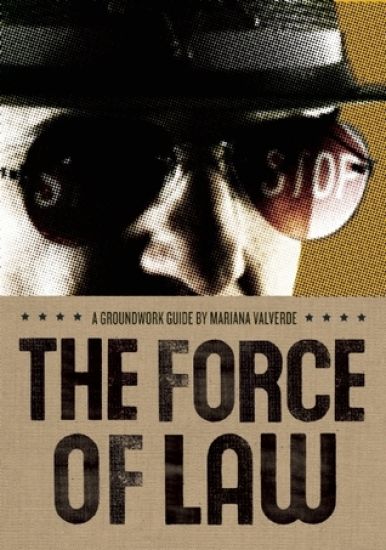
The Force of Law

The Force of Law

Mariana Valverde

Groundwood Books Ltd ,Canada
2010
pokkari
This book examines the meaning of law from a global perspective and the many connections between law and law enforcement. An excellent introduction to the subject for young adults. Most of us in liberal democratic countries think that we live under the rule of law. Governments make the rules, we live by them and the police enforce them if we try to break them. The Force of Law critically examines these assumptions. Award-winning criminologist Mariana Valverde makes clear that while the law is usually regarded as the civilized, non-violent way to deal with harms and conflicts, violence is integral to law. After all, police are authorized to handcuff, manhandle, taser, and even kill people, and courts of law confine people to prison and, in some countries, order that they be put to death. Valverde shows that "proper" law is not always distinguishable from the rules imposed by various bodies of armed men. Worldwide, private security guards often act like police, but they serve their private clients, not the public at large. And publicly paid police officers spend much of their time managing information for other bureaucracies, instead of actually fighting crime or arresting criminals. "[The Groundwork Guides] are excellent books, mandatory for school libraries and the increasing body of young people prepared to take ownership of the situations and problems previous generations have left them." — Globe and Mail Correlates to the Common Core State Standards in English Language Arts: CCSS.ELA-LITERACY.RI.6.1 Cite textual evidence to support analysis of what the text says explicitly as well as inferences drawn from the text. CCSS.ELA-LITERACY.RI.6.2 Determine a central idea of a text and how it is conveyed through particular details; provide a summary of the text distinct from personal opinions or judgments. CCSS.ELA-LITERACY.RI.6.3 Analyze in detail how a key individual, event, or idea is introduced, illustrated, and elaborated in a text (e.g., through examples or anecdotes). CCSS.ELA-LITERACY.RI.6.6 Determine an author's point of view or purpose in a text and explain how it is conveyed in the text.
Infrastructure

Infrastructure

Mariana Valverde

TAYLOR FRANCIS LTD
2022
sidottu
This book provides an overview and assessment of infrastructure’s legal and governance underpinnings. Infrastructure is often thought of as a term referring only to the physical entities – pipes, cables, utility poles, highways, airports – that facilitate the transmission of water, gas, telecommunications and electricity, as well as enabling both private and public transportation, and serving to house more or less public services such as health care and schools. However, infrastructure planning and implementation are not reducible to bricks and mortar. The complex process requires drawing from and sometimes re-inventing or recycling legal tools, from construction contracts to financing ‘deals’, which are often taken for granted by both practitioners and urban studies scholars. These are as important today as they were when the first railway lines were built, and to a large extent they remain just as invisible: the avalanche of drawings and photographs of planned or in-process fancy buildings tends to hide from view the behind- the-scenes negotiations and decision-making that had to happen before construction could start, and which in some cases continue afterwards. This book does not ignore the material and nonhuman aspects of infrastructure. But, focusing on the legal and governance underpinnings of infrastructure projects, via a series of key terms that refer to hybrid legal processes, the book offers an important socio-legal supplement to the current ‘infrastructure turn’. This book will be of interest to students in the areas of socio-legal studies, urban sociology, urban studies, urban geography, planning, public law, and contract law, as well as practitioners involved in infrastructure projects.
Explorations in Legal Geography

Explorations in Legal Geography

Mariana Valverde

TAYLOR FRANCIS LTD
2025
sidottu
Addressing the issue of scale in governance, legal and extra-legal, the book draws on post-colonial studies, Indigenous geography and empirical and historical studies of the legal logics of Empire. This book examines legal frameworks across six descending scales. Beginning with a global perspective centred on Global South viewpoints and globalisation critiques, it then explores imperial legal structures. Next, it addresses the nation-state scale, predominant in both mainstream and critical legal scholarship, with particular focus on challenging notions of ethnic homogeneity. The examination continues at the local level, analysing how various governing bodies exercise authority within their jurisdictions. It then narrows to consider ‘home’ as both a physical and legal construct, revealing how property concepts intertwine with social relationships. Finally, it investigates the human body as a governance site through queer legal studies, queer geography, and feminist scholarship that documents how female bodies specifically have become objects of legal and extra-legal control. Concluding by considering the regulatory dilemmas that have plagued authorities as they navigate the various scales of governance considered here. Explorations in Legal Geography will be of considerable interest to students and scholars of legal geography, socio-legal studies, and criminology.
Michel Foucault

Michel Foucault

Mariana Valverde

Routledge
2017
sidottu
This book explores the theoretical contribution of Michel Foucault to the fields of criminology, law, justice and penology. It surveys both the ways in which the work of Foucault has been applied in criminology, but also how his work can be used to understand and explain contemporary issues and policies. Moreover, this book seeks to dispel some of the common misconceptions about the relevance of Foucault’s work to criminology and law. Mariana Valverde clearly explains the insights that Foucault’s rich body of work provides about different practices found in the fields of law, security, justice, and punishment; and how these insights have been used or could be used to understand and explain issues and policies that Foucault himself did not write about, including those that had not yet emerged during his lifetime.Drawing on key texts by Foucault such as Discipline and Punish, and also lectures he gave at the College de France and Louvain Criminology Institute which offer a more nuanced account of the development of criminal justice, Mariana Valverde offers the essential text on Foucault and his contribution and continued relevance to criminology. This book will be important reading for students and scholars of criminology, law, sociolegal studies, security studies, political theory and sociological theory.
Chronotopes of Law

Chronotopes of Law

Mariana Valverde

Routledge
2015
nidottu
This book develops a new framework for analyzing the spatio-temporal workings of law and other forms of governance. Chronotopes of Law argues that studies of law and governance can be reinvigorated by drawing on a bundle of quite heterogenous analytical tools that do not have a single provenance or a single political or normative aim but that work well in combination. Analyses of legal temporality carried out by anthropologists and studies of law and space undertaken by geographers and legal scholars have proliferated in recent years, but these research traditions have remained largely separate. By adapting notions such as intertextuality, dialogism, and the ‘chronotope’ from Mikhail Bakhtin, notions designed specifically to synthesize considerations of space and time in a framework that is open-ended, interactive and dynamic, Mariana Valverde develops an anti-metaphysical theory and method for legal studies. This approach will be useful both to theorists and to researchers seeking to illuminate the actual workings of law and other forms of governance. Indeed, a key aim of the book is to break down the institutional and disciplinary barriers that prevent theorists from learning from empirical studies and viceversa.Written by one of the foremost sociolegal scholars writing today, this theoretically innovative work constitutes a major contribution to contemporary studies in law and society.
Law and Order

Law and Order

Mariana Valverde

Routledge Cavendish
2006
nidottu
In an innovative departure from the much-studied field of 'crime in the media', this lively book focuses its attention on the forces of law and order; how they visualize and represent danger and criminality and how they represent themselves as authorities. After two chapters covering basic terms and tools in the study of culture and representation, the book covers such topics as the history of justice - system methods for visualizing criminality, from fingerprinting to DNA; the emergence of a 'forensic gaze' that begins with Edgar Allan Poe and Sherlock Holmes and culminates in the American television show Crime Scene Investigation and the rise of ways of seeing urban space that constantly divide the city into 'good' and 'bad' areas. The final chapter uses some recent conflicts regarding the legal admissibility of 'gruesome pictures' to reflect on the importance of the visual in our everyday experiences, both of safety and of danger. Shortlisted for the Hart SLSA Book Prize 2007
Law and Order

Law and Order

Mariana Valverde

Routledge Cavendish
2006
sidottu
In an innovative departure from the much-studied field of 'crime in the media', this lively book focuses its attention on the forces of law and order; how they visualize and represent danger and criminality and how they represent themselves as authorities. After two chapters covering basic terms and tools in the study of culture and representation, the book covers such topics as the history of justice - system methods for visualizing criminality, from fingerprinting to DNA; the emergence of a 'forensic gaze' that begins with Edgar Allan Poe and Sherlock Holmes and culminates in the American television show Crime Scene Investigation and the rise of ways of seeing urban space that constantly divide the city into 'good' and 'bad' areas. The final chapter uses some recent conflicts regarding the legal admissibility of 'gruesome pictures' to reflect on the importance of the visual in our everyday experiences, both of safety and of danger. Shortlisted for the Hart SLSA Book Prize 2007