Kirjojen hintavertailu. Mukana 12 420 907 kirjaa ja 12 kauppaa.

Kirjahaku

Etsi kirjoja tekijän nimen, kirjan nimen tai ISBN:n perusteella.

13 kirjaa tekijältä Marianne Hirsch

The Generation of Postmemory

The Generation of Postmemory

Marianne Hirsch

Columbia University Press
2012
sidottu
Can we remember other people's memories? The Generation of Postmemory argues we can: that memories of traumatic events live on to mark the lives of those who were not there to experience them. Children of survivors and their contemporaries inherit catastrophic histories not through direct recollection but through haunting postmemories--multiply mediated images, objects, stories, behaviors, and affects passed down within the family and the culture at large. In these new and revised critical readings of the literary and visual legacies of the Holocaust and other, related sites of memory, Marianne Hirsch builds on her influential concept of postmemory. The book's chapters, two of which were written collaboratively with the historian Leo Spitzer, engage the work of postgeneration artists and writers such as Art Spiegelman, W.G. Sebald, Eva Hoffman, Tatana Kellner, Muriel Hasbun, Anne Karpff, Lily Brett, Lorie Novak, David Levinthal, Nancy Spero and Susan Meiselas. Grappling with the ethics of empathy and identification, these artists attempt to forge a creative postmemorial aesthetic that reanimates the past without appropriating it. In her analyses of their fractured texts, Hirsch locates the roots of the familial and affiliative practices of postmemory in feminism and other movements for social change. Using feminist critical strategies to connect past and present, words and images, and memory and gender, she brings the entangled strands of disparate traumatic histories into more intimate contact. With more than fifty illustrations, her text enables a multifaceted encounter with foundational and cutting edge theories in memory, trauma, gender, and visual culture, eliciting a new understanding of history and our place in it.
The Generation of Postmemory

The Generation of Postmemory

Marianne Hirsch

Columbia University Press
2012
pokkari
Can we remember other people's memories? The Generation of Postmemory argues we can: that memories of traumatic events live on to mark the lives of those who were not there to experience them. Children of survivors and their contemporaries inherit catastrophic histories not through direct recollection but through haunting postmemories--multiply mediated images, objects, stories, behaviors, and affects passed down within the family and the culture at large. In these new and revised critical readings of the literary and visual legacies of the Holocaust and other, related sites of memory, Marianne Hirsch builds on her influential concept of postmemory. The book's chapters, two of which were written collaboratively with the historian Leo Spitzer, engage the work of postgeneration artists and writers such as Art Spiegelman, W.G. Sebald, Eva Hoffman, Tatana Kellner, Muriel Hasbun, Anne Karpff, Lily Brett, Lorie Novak, David Levinthal, Nancy Spero and Susan Meiselas. Grappling with the ethics of empathy and identification, these artists attempt to forge a creative postmemorial aesthetic that reanimates the past without appropriating it. In her analyses of their fractured texts, Hirsch locates the roots of the familial and affiliative practices of postmemory in feminism and other movements for social change. Using feminist critical strategies to connect past and present, words and images, and memory and gender, she brings the entangled strands of disparate traumatic histories into more intimate contact. With more than fifty illustrations, her text enables a multifaceted encounter with foundational and cutting edge theories in memory, trauma, gender, and visual culture, eliciting a new understanding of history and our place in it.
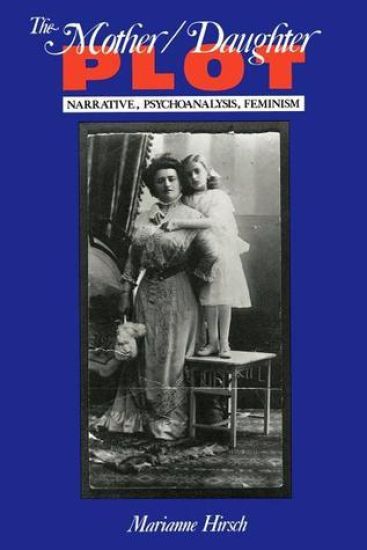
The Mother / Daughter Plot

The Mother / Daughter Plot

Marianne Hirsch

Indiana University Press
1989
pokkari
Mothers and daughters—the female figures neglected by classic psychoanalysis and submerged in traditional narrative—are at the center of this book. The novels of nineteenth- and twentieth-century women writers from the Western European and North American traditions reveal that the story of motherhood remains the unspeakable plot of Western culture. Focusing on the feminine and, more controversially, on the maternal, this book alters our perception of both the familial structures basic to traditional narrative—the Oedipus story—and the narrative structures basic to traditional representations of the family—Freud's family romance. Confronting psychoanalytic theories of subject-formation with narrative theories, Marianne Hirsch traces the emergence and transformation of female family romance patterns from Jane Austen to Marguerite Duras.
Memory as Colonial Capital

Memory as Colonial Capital

Marianne Hirsch

Springer International Publishing AG
2017
sidottu
This volume examines the ways that writers from the Caribbean, Africa, and the U.S. theorize and employ postcolonial memory in ways that expose or challenge colonial narratives of the past, and shows how memory assumes particular forms and values in post/colonial contexts in twenty and twenty-first-century works. The problem of contested memory and colonial history continues to be an urgent and timely issue, as colonial history has served to crush, erase and manipulate collective and individual memories. Indeed, the most powerful mechanism of colonial discourse is that which alters and silences local histories and even individuals’ memories in service to colonial authority. Johnson and Brezault work to contextualize the politics of writing memory in the shadow of colonial history, creating a collection that pioneers a postcolonial turn in cultural memory studies suitable for scholars interested in cultural memory, postcolonial, Francophone and ethnic studies.Includes a foreword by Marianne Hirsch.
Memory as Colonial Capital

Memory as Colonial Capital

Marianne Hirsch

Springer International Publishing AG
2018
nidottu
This volume examines the ways that writers from the Caribbean, Africa, and the U.S. theorize and employ postcolonial memory in ways that expose or challenge colonial narratives of the past, and shows how memory assumes particular forms and values in post/colonial contexts in twenty and twenty-first-century works. The problem of contested memory and colonial history continues to be an urgent and timely issue, as colonial history has served to crush, erase and manipulate collective and individual memories. Indeed, the most powerful mechanism of colonial discourse is that which alters and silences local histories and even individuals’ memories in service to colonial authority. Johnson and Brezault work to contextualize the politics of writing memory in the shadow of colonial history, creating a collection that pioneers a postcolonial turn in cultural memory studies suitable for scholars interested in cultural memory, postcolonial, Francophone and ethnic studies.Includes a foreword by Marianne Hirsch.
Freund Von Heine, Marx/Engels Und Lincoln

Freund Von Heine, Marx/Engels Und Lincoln

Marianne Hirsch

Peter Lang AG
2003
nidottu
Es handelt sich hier nicht bloss um eine Biographie Karl Ludwig Bernays', des Freundes von Heinrich Heine, Karl Marx, Friedrich Engels und Abraham Lincoln. Dieses Buch beinhaltet auch autobiographische Elemente von Helmut Hirsch; genauer: wissenschaftshistorische Ereignisse, die dem Forscher beim Bearbeiten der Bernays-Biographie widerfuhren, wie z.B. die Begegnung mit Jacques Grandjonc oder die Dispute mit Fachkollegen und -kolleginnen. So erstreckt sich die Bandbreite der Abhandlung von der Literatur, Politik und Demokratie des Vor- und Nachmarz uber die Verbindungen nach Frankreich, Danemark und der Schweiz bis zu den Exilbeziehungen zwischen Deutschland und den USA im 19. und 20. Jahrhundert.
School Photos in Liquid Time

School Photos in Liquid Time

Marianne Hirsch; Leo Spitzer

University of Washington Press
2019
sidottu
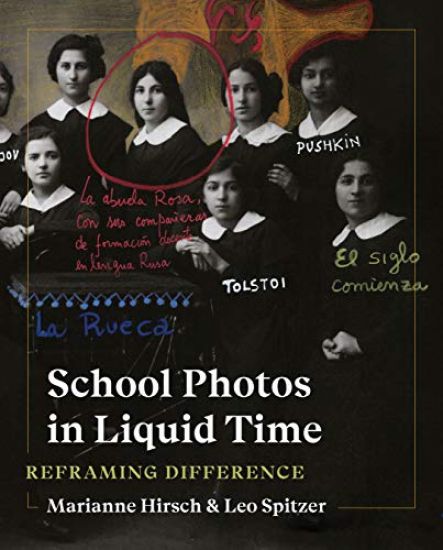
From clandestine images of Jewish children isolated in Nazi ghettos and Japanese American children incarcerated in camps to images of Native children removed to North American boarding schools, classroom photographs of schoolchildren are pervasive even in repressive historical and political contexts. School Photos in Liquid Time offers a closer look at this genre of vernacular photography, tracing how photography advances ideologies of social assimilation as well as those of hierarchy and exclusion. In Marianne Hirsch and Leo Spitzer's deft analysis, school photographs reveal connections between the histories of persecuted subjects in different national and imperial centers.Exploring what this ubiquitous and mundane but understudied genre tells us about domination as well as resistance, the authors examine school photos as documents of social life and agents of transformation. They place them in dialogue with works by contemporary artists who reframe, remediate, and elucidate them. Ambitious yet accessible, School Photos in Liquid Time presents school photography as a new access point into institutions of power, revealing the capacity of past and present actors to disrupt and reinvent them.
School Photos in Liquid Time

School Photos in Liquid Time

Marianne Hirsch; Leo Spitzer

University of Washington Press
2019
pokkari
From clandestine images of Jewish children isolated in Nazi ghettos and Japanese American children incarcerated in camps to images of Native children removed to North American boarding schools, classroom photographs of schoolchildren are pervasive even in repressive historical and political contexts. School Photos in Liquid Time offers a closer look at this genre of vernacular photography, tracing how photography advances ideologies of social assimilation as well as those of hierarchy and exclusion. In Marianne Hirsch and Leo Spitzer's deft analysis, school photographs reveal connections between the histories of persecuted subjects in different national and imperial centers.Exploring what this ubiquitous and mundane but understudied genre tells us about domination as well as resistance, the authors examine school photos as documents of social life and agents of transformation. They place them in dialogue with works by contemporary artists who reframe, remediate, and elucidate them. Ambitious yet accessible, School Photos in Liquid Time presents school photography as a new access point into institutions of power, revealing the capacity of past and present actors to disrupt and reinvent them.
Conflicts in Feminism

Conflicts in Feminism

Marianne Hirsch; Evelyn Fox Keller

Routledge
1990
nidottu
Conflicts in Feminism proposes new strategies for negotiating and practicing conflict in feminism. Noted scholars and writers examine the most critically divisive issues within feminism today with sensitivity to all sides of the debates. By analyzing how the debates have worked for and against feminism, and by promoting dialogue across a variety of contexts, these provocative essays explore the roots of divisiveness while articulating new models for a productive discourse of difference.
Ghosts of Home

Ghosts of Home

Marianne Hirsch; Leo Spitzer

University of California Press
2010
sidottu
In modern-day Ukraine, east of the Carpathian Mountains, there is an invisible city. Known as Czernowitz, the 'Vienna of the East' under the Habsburg empire, this vibrant Jewish-German Eastern European culture vanished after World War II - yet an idealized version lives on, suspended in the memories of its dispersed people and passed down to their children like a precious and haunted heirloom. In this original blend of history and communal memoir, Marianne Hirsch and Leo Spitzer chronicle the city's survival in personal, familial, and cultural memory. They find evidence of a cosmopolitan culture of nostalgic lore - but also of oppression, shattered promises, and shadows of the Holocaust in Romania. Hirsch and Spitzer present the first historical account of Jewish Czernowitz in the English language and offer a profound analysis of memory's echo across generations.
Ghosts of Home

Ghosts of Home

Marianne Hirsch; Leo Spitzer

University of California Press
2011
pokkari
In modern-day Ukraine, east of the Carpathian Mountains, there is an invisible city. Known as Czernowitz, the 'Vienna of the East' under the Habsburg empire, this vibrant Jewish-German Eastern European culture vanished after World War II - yet an idealized version lives on, suspended in the memories of its dispersed people and passed down to their children like a precious and haunted heirloom. In this original blend of history and communal memoir, Marianne Hirsch and Leo Spitzer chronicle the city's survival in personal, familial, and cultural memory. They find evidence of a cosmopolitan culture of nostalgic lore - but also of oppression, shattered promises, and shadows of the Holocaust in Romania. Hirsch and Spitzer present the first historical account of Jewish Czernowitz in the English language and offer a profound analysis of memory's echo across generations.
Conflicts in Feminism

Conflicts in Feminism

Marianne Hirsch; Evelyn Fox Keller

Routledge
2016
sidottu
Conflicts in Feminism proposes new strategies for negotiating and practicing conflict in feminism. Noted scholars and writers examine the most critically divisive issues within feminism today with sensitivity to all sides of the debates. By analyzing how the debates have worked for and against feminism, and by promoting dialogue across a variety of contexts, these provocative essays explore the roots of divisiveness while articulating new models for a productive discourse of difference.