Kirjojen hintavertailu. Mukana 11 699 587 kirjaa ja 12 kauppaa.

Kirjahaku

Etsi kirjoja tekijän nimen, kirjan nimen tai ISBN:n perusteella.

3 kirjaa tekijältä Marijeta Bozovic

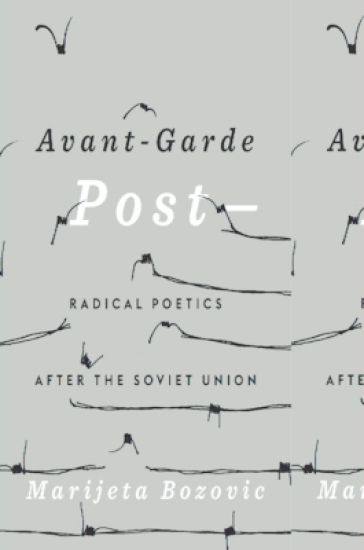
Avant-Garde Post–

Avant-Garde Post–

Marijeta Bozovic

HARVARD UNIVERSITY PRESS
2023
sidottu
The remarkable story of seven contemporary Russian-language poets whose experimental work anchors a thriving dissident artistic movement opposed to both Putin’s regime and Western liberalism.What does leftist art look like in the wake of state socialism? In recent years, Russian-language avant-garde poetry has been seeking the answers to this question. Marijeta Bozovic follows a constellation of poets at the center of a contemporary literary movement that is bringing radical art out of the Soviet shadow: Kirill Medvedev, Pavel Arseniev, Aleksandr Skidan, Dmitry Golynko, Roman Osminkin, Keti Chukhrov, and Galina Rymbu. While their formal experiments range widely, all share a commitment to explicitly political poetry. Each one, in turn, has become a hub in a growing new-left network across the former Second World.Joined together by their work with the Saint Petersburg–based journal [Translit], this circle has staunchly resisted the Putin regime and its mobilization of Soviet nostalgia. At the same time, the poets of Avant-Garde Post– reject Western discourse about the false promises of leftist utopianism and the superiority of the liberal world. In opposing both narratives, they draw on the legacies of historical Russian and Soviet avant-gardes as well as on an international canon of Marxist art and theory. They are also intimately connected with other artists, intellectuals, and activists around the world, collectively restoring leftist political poetry to global prominence.The avant-garde, Bozovic shows, is not a relic of the Soviet past. It is a recurrent pulse in Russophone—as well as global—literature and art. Charged by that pulse, today’s new left is reimagining class-based critique. Theirs is an ongoing, defiant effort to imagine a socialist future that is at once global and egalitarian.
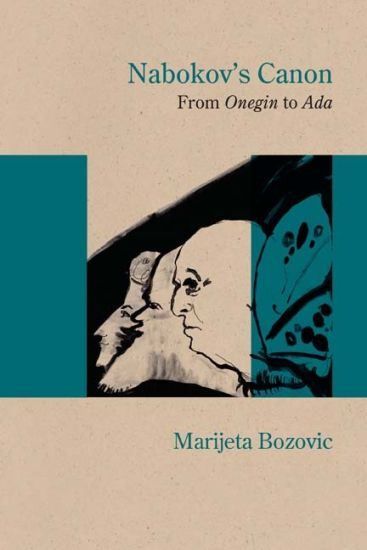
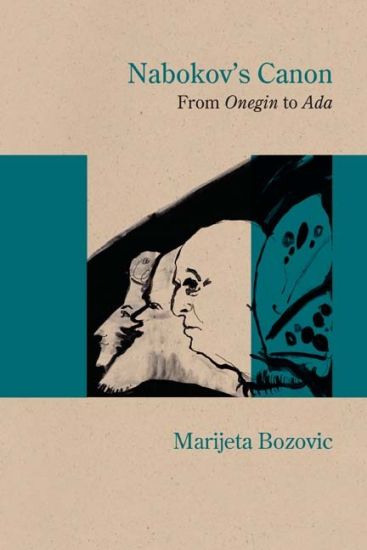
Nabokov’s Canon

Nabokov’s Canon

Marijeta Bozovic

Northwestern University Press
2016
nidottu
Nabokov's translation of Pushkin's Eugene Onegin (1964) and its accompanying Commentary, along with Ada, or Ardor (1969), his densely allusive late Englishlanguage novel, have appeared nearly inscrutable to many interpreters of his work. If not outright failures, they are often considered relatively unsuccessful curiosities. In Bozovic's insightful study, these key texts reveal Nabokov's ambitions to reimagine a canon of nineteenth- and twentieth-century Western masterpieces with Russian literature as a central, rather than marginal, strain. Nabokov's scholarly work, translations, and lectures on literature bear resemblance to New Critical canon reformations; however, Nabokov's canon is pointedly translingual and transnational and serves to legitimize his own literary practice. The new angles and theoretical framework offered by Nabokov's Canon help us to understand why Nabokov's provocative monuments remain powerful source texts for several generations of diverse international writers, as well as richly productive material for visual, cinematic, musical, and other artistic adaptations.
Nabokov's Canon

Nabokov's Canon

Marijeta Bozovic

Northwestern University Press
2016
sidottu
Nabokov's translation of Pushkin's Eugene Onegin (1964) and its accompanying Commentary, along with Ada, or Ardor (1969), his densely allusive late Englishlanguage novel, have appeared nearly inscrutable to many interpreters of his work. If not outright failures, they are often considered relatively unsuccessful curiosities. In Bozovic's insightful study, these key texts reveal Nabokov's ambitions to reimagine a canon of nineteenth- and twentieth-century Western masterpieces with Russian literature as a central, rather than marginal, strain. Nabokov's scholarly work, translations, and lectures on literature bear resemblance to New Critical canon reformations; however, Nabokov's canon is pointedly translingual and transnational and serves to legitimize his own literary practice. The new angles and theoretical framework offered by Nabokov's Canon help us to understand why Nabokov's provocative monuments remain powerful source texts for several generations of diverse international writers, as well as richly productive material for visual, cinematic, musical, and other artistic adaptations.