Kirjojen hintavertailu. Mukana 12 390 323 kirjaa ja 12 kauppaa.

Kirjahaku

Etsi kirjoja tekijän nimen, kirjan nimen tai ISBN:n perusteella.

19 kirjaa tekijältä Marilyn Nelson

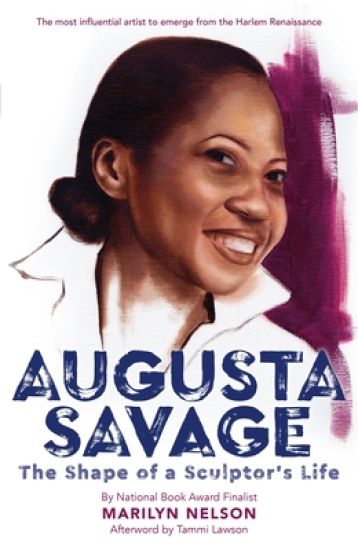
Augusta Savage

Augusta Savage

Marilyn Nelson

Little, Brown Young Readers
2022
sidottu
Augusta Savage was arguably the most influential American artist of the 1930s. A gifted sculptor, Savage was commissioned to create a portrait bust of W.E.B. Du Bois for the New York Public Library. She flourished during the Harlem Renaissance, and became a teacher to an entire generation of African American artists, including Jacob Lawrence, and would go on to be nationally recognized as one of the featured artists at the 1939 World's Fair. She was the first-ever recorded Black gallerist. After being denied an artists' fellowship abroad on the basis of race, Augusta Savage worked to advance equal rights in the arts. And yet popular history has forgotten her name. Deftly written and brimming with photographs of Savage's stunning sculpture, this is an important portrait of an exceptional artists who, despite the limitations she faced, was compelled to forge a life through art and creativity.
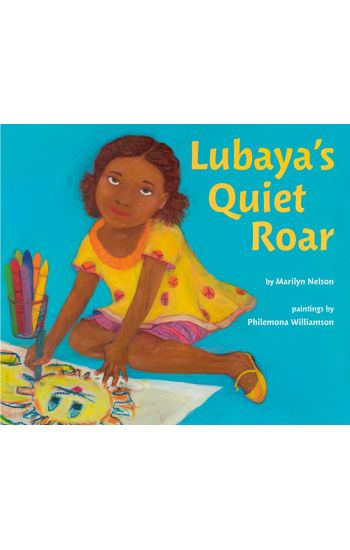
Lubaya's Quiet Roar

Lubaya's Quiet Roar

Marilyn Nelson

Dial Press Inc.,U.S.
2020
sidottu
In this stirring picture book about social justice activism and the power of introverts, a quiet girl's artwork makes a big impression at a protest rally.Newbery Honor winner Marilyn Nelson and fine artist Philemona Williamson have come together to create this lyrical, impactful story of how every child, even the quietest, can make a difference in their community and world. Young Lubaya is happiest when she's drawing, often behind the sofa while her family watches TV. There, she creates pictures on the backs of her parents' old protest posters. But when upsetting news shouts into their living room, her parents need the posters again. The next day her family takes part in a march, and there, on one side of the posters being held high, are Lubaya's drawings of kids holding hands and of the sun shining over the globe--rousing visual statements of how the world could be. "Lubaya's roar may not be loud, but a quiet roar can make history."
Mama's Promises

Mama's Promises

Marilyn Nelson

Louisiana State University Press
1985
nidottu
Waniek is a poet of intelligence, passion, and gentleness with a fine sense of the comic and unfailing judgment about what constitutes a poetic line. She creates a rich mixture of impressions about the speaker of these poems as a woman who is at the same time in her mid-twenties and her mid-fifties, who is black and white and red, who is both trapped by and freed by motherhood. - Miller WilliamsMarilyn Nelson Waniek writes with great wisdom and compassion. Grounded but never earthbound, her poems speak honestly and eloquently about giving birth, nurturing life, and facing death; they inhabit the present, fully aware of their responsibilities to the past and the future. Waniek leaves us with the affecting strength and assurance of lasting things, as in the poem ""Mama's Promise.""But the dangerous highway curves through blue evenings when I hold his yielding hand and snip his minuscule nails with my vicious-looking scissors. I carry him around like an egg in a spoon, and I remember a porcelain fawn, a best friend's trust, my broken faith in myself. It's not my grace that keeps me erect as the sidewalk clatters downhill under my rollerskate wheels. Then I think of Mama, her bountiful breasts. When I was a child, I really swear, Mama's kisses could heal. I remember her promise, and whisper it over my sweet son's sleep: When you float to the bottom, child, like a mote down a sunbeam, you'll see me from a trillion miles away: my eyes looking upon you, my arms outstretched for you like night.From ""Mama's Promise"" published in Mama's Promises by Marilyn Nelson. Copyright © 1985 by Marilyn Nelson Waniek. All rights reserved.
The Homeplace

The Homeplace

Marilyn Nelson

Louisiana State University Press
1990
nidottu
Finalist for the 1991 National Book AwardIn The Homeplace, the stories of a family become the history of a people as Marilyn Nelson Waniek sketches the lives descended from her great-great-grandmother Diverne.The poet's mother, Johnnie Mitchell Nelson, inspired this volume when she bequeathed to Waniek from her deathbed the tales that had shaped her life. The first section of the book presents those stories transformed into graceful, humorous, and deeply touching poems.In the book's second section Waniek honors her late father, Melvin Nelson, and tells the story of his ""family"": the fabled group of black World War II aviators known as the Tuskegee Airmen. Using the language and perspective of her father and his comrades, Waniek explores through a few of their individual stories the hardships and achievements of the thousand black flyers trained at Tuskegee Institute.Throughout The Homeplace, the reader is involved in a series of sharply portrayed lives. By telling a continuous story in a mix of free verse and traditional forms, Waniek gives her work pace and intensity. She handles the villanelle, the sonnet, and the popular ballad with equal skill and gusto. ""I just knew we were going to live some history,"" Johnnie Nelson said at the end of her life. Her daughter has produced an eloquent homage to that history, celebrating the survival of Afro-American pride.
The Fields of Praise

The Fields of Praise

Marilyn Nelson

Louisiana State University Press
1997
sidottu
In The Fields of Praise, Marilyn Nelson claims as subjects the life of the spirit, the vicissitudes of love, and the African American experience and arranges them as white pebbles marking our common journey toward a ""monstrous love / that wants to make the world right.""Nelson is a poet of stunning power, able to bring alive the most rarified and subtle of experiences. A slave destined to become a minister preaches sermons of heartrending eloquence and wisdom to a mule. An old woman scrubbing over a washtub receives a personal revelation of what Emancipation means: ""So this is freedom: the peace of hours like these."" Memories of the heroism of the Tuskegee Airmen in the face of aerial combat abroad and virulent racism at home bring a speaker to the sudden awareness of herself as the daughter ""of a thousand proud fathers.""Whether evoking spiritual longing or a return to the wedding at Cana, Nelson renders the interior landscape of all her speakers with absolute precision. This is a beautiful collection indeed, and readers will come away from The Fields of Praise with a reawakened appreciation for life's minor miracles, one of them being the power of the word.
The Fields of Praise

The Fields of Praise

Marilyn Nelson

Louisiana State University Press
1997
nidottu
In The Fields of Praise, Marilyn Nelson claims as subjects the life of the spirit, the vicissitudes of love, and the African American experience and arranges them as white pebbles marking our common journey toward a ""monstrous love / that wants to make the world right.""Nelson is a poet of stunning power, able to bring alive the most rarified and subtle of experiences. A slave destined to become a minister preaches sermons of heartrending eloquence and wisdom to a mule. An old woman scrubbing over a washtub receives a personal revelation of what Emancipation means: ""So this is freedom: the peace of hours like these."" Memories of the heroism of the Tuskegee Airmen in the face of aerial combat abroad and virulent racism at home bring a speaker to the sudden awareness of herself as the daughter ""of a thousand proud fathers.""Whether evoking spiritual longing or a return to the wedding at Cana, Nelson renders the interior landscape of all her speakers with absolute precision. This is a beautiful collection indeed, and readers will come away from The Fields of Praise with a reawakened appreciation for life's minor miracles, one of them being the power of the word.
The Cachoeira Tales and Other Poems

The Cachoeira Tales and Other Poems

Marilyn Nelson

Louisiana State University Press
2005
nidottu
Soaring images, rhythmic language, and wry humor come together in these three narrative poems that explore travel from an African American historical and social perspective. A cab ride turns into an amazing encounter with the driver, an amateur physicist whose ideas about space and time travel spark the poet's musings on chutzpah and artistic ambition. A trip to Triolet, a Creole village in the Indian Ocean island nation of Mauritius, leads the poet to ponder the past and present as she reflects on the ironic complexities of the slave trade and its legacy shared by so many peoples. And in The Cachoeira Tales, longing to take her family on a journey to ""some place sanctified by the Negro soul,"" the poet finds herself in Brazil's Bahia, along with a theater director, a jazz musician, a retired commercial pilot, an activist, a university student, and two mysterious African American women whom they meet along the way. In rhymed couplets, each pilgrim tells a story, and the result is a rollicking, sensual exploration of spirit and community, with a nod to Chaucer and to traditional Trickster tales. Using her remarkable ability to educate and inspire, Marilyn Nelson demonstrates the power of travel to transform our imaginations. We have long known that travel broadens; in these poems, it also deepens and makes wiser.""Joined skin to skin, we moved like molecules // in the great, impossible miracle // of atmosphere, swaying to the music, // all eyes on the stage, all hearts attuning // themselves in beautiful polyrhythmy, // one shaking booty. On one side of me // a young man danced; I felt his muscled warmth // flow into mine, his pure, sexual strength. // On my other sides young women danced, whose curves // bumped me softly, dancing without reserve, // hands waving in the air, releasing scent // fragrant as nard. We danced in reverent, // silent assent to the praise-song of drums.""- from Olodum of The Cachoeira Tales
Faster Than Light

Faster Than Light

Marilyn Nelson

Louisiana State University Press
2012
sidottu
Conjuring numerous voices and characters across oceans and centuries, Faster Than Light explores widely disparate experiences through the lens of traditional poetic forms. This volume contains a selection of Marilyn Nelson's new and uncollected poems as well as work from each of her lyric histories of eighteenth-, nineteenth-, and twentieth-century African American individuals and communities.Poems include the stories of historical figures like Emmett Till, the fourteen-year-old boy lynched in 1955, and the inhabitants of Seneca Village, an African American community razed in 1857 for the creation of Central Park. ""Bivouac in a Storm"" tells the story of a group of young soldiers, later known as the Tuskegee Airmen, as they trained near Biloxi, Mississippi, ""marching in summer heat / thick as blackstrap molasses, under trees / haunted by whippings."" Later pieces range from the poet's travels in Africa, Europe, and Polynesia, to poems written in collaboration with Father Jacques de Foiard Brown, a former Benedictine monk and the subject of Nelson's playful fictional fantasy sequence, ""Adventure-Monk!"" Both personal and historical, these poems remain grounded in everyday details but reach toward spiritual and moral truths.
Faster Than Light

Faster Than Light

Marilyn Nelson

Louisiana State University Press
2012
nidottu
Conjuring numerous voices and characters across oceans and centuries, Faster Than Light explores widely disparate experiences through the lens of traditional poetic forms. This volume contains a selection of Marilyn Nelson's new and uncollected poems as well as work from each of her lyric histories of eighteenth-, nineteenth-, and twentieth-century African American individuals and communities.Poems include the stories of historical figures like Emmett Till, the fourteen-year-old boy lynched in 1955, and the inhabitants of Seneca Village, an African American community razed in 1857 for the creation of Central Park. ""Bivouac in a Storm"" tells the story of a group of young soldiers, later known as the Tuskegee Airmen, as they trained near Biloxi, Mississippi, ""marching in summer heat / thick as blackstrap molasses, under trees / haunted by whippings."" Later pieces range from the poet's travels in Africa, Europe, and Polynesia, to poems written in collaboration with Father Jacques de Foiard Brown, a former Benedictine monk and the subject of Nelson's playful fictional fantasy sequence, ""Adventure-Monk!"" Both personal and historical, these poems remain grounded in everyday details but reach toward spiritual and moral truths.
Papa's Free Day Party

Papa's Free Day Party

Marilyn Nelson

Just Us Books, Inc.
2021
sidottu
Johnnie wants to celebrate her Papa's birthday, but Papa doesn't know exactly when that special day is. Johnnie doesn't understand how that could be. Then she learns about Papa's childhood--how he built a new life in the all-Black town of Boley, Oklahoma. Inspired by her father's incredible story, Johnnie decides to throw Papa a different kind of party--one to recognize her Father's Day of freedom. Based on a true story about the author's grandfather, Papa's Free Day Party is a powerful celebration of storytelling, strength, and the importance of family. Th book's author, Marilyn Nelson, is the author of the memoir How I Discovered Poetry, written in a series of 50 poems. It is a Coretta Scott King Honor Book and was named on of NPR's Best Books of 2014. She was Poet Laureate of Connecticut from 2001 to 2006.
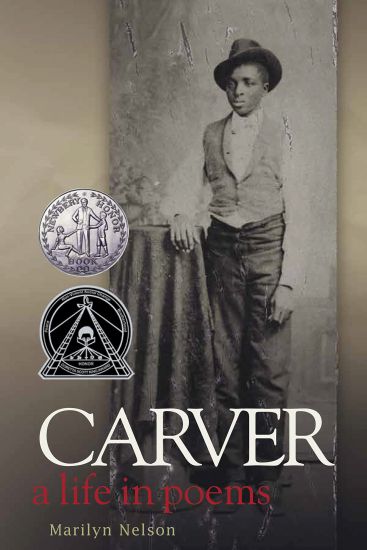
Carver: A Life in Poems

Carver: A Life in Poems

Marilyn Nelson

Wordsong
2022
nidottu
Newbery Honor BookNational Book Award finalistCoretta Scott King Author Honor BookBoston Globe-Horn Book AwardFlora Stieglitz Straus Award Beautiful verse explores agricultural scientist George Washington Carver's life and many achievements, from his work as a botanist and inventor to his unsung gifts as a painter, musician, and teacher. George Washington Carver was determined to help the people he loved. Born a slave in Missouri, he left home in search of an education, eventually earning his master's degree. When Booker T. Washington invited Carver to start the agricultural department at the all-black-staffed Tuskegee Institute, Carver truly found his calling. He spent the rest of his life seeking solutions to the poverty among landless Black farmers by developing new uses for soil-replenishing crops such as peanuts, cowpeas, and sweet potatoes. This STEAM biography reveals Carver's complex and profoundly devout life.
Carver: A Life in Poems

Carver: A Life in Poems

Marilyn Nelson

Wordsong
2001
sidottu
Newbery Honor BookNational Book Award finalistCoretta Scott King Author Honor BookBoston Globe-Horn Book AwardFlora Stieglitz Straus Award Beautiful verse explores agricultural scientist George Washington Carver's life and many achievements, from his work as a botanist and inventor to his unsung gifts as a painter, musician, and teacher. George Washington Carver was determined to help the people he loved. Born a slave in Missouri, he left home in search of an education, eventually earning his master's degree. When Booker T. Washington invited Carver to start the agricultural department at the all-black-staffed Tuskegee Institute, Carver truly found his calling. He spent the rest of his life seeking solutions to the poverty among landless Black farmers by developing new uses for soil-replenishing crops such as peanuts, cowpeas, and sweet potatoes. This STEAM biography reveals Carver's complex and profoundly devout life.
Fortune's Bones

Fortune's Bones

Marilyn Nelson

Boyds Mills Press
2004
sidottu
Winner of the Coretta Scott King Book Award For young readers comes a poetic commemoration of the life of an 18th-century slave, from a past poet laureate and three-time National Book Award finalist For over 200 years, the Mattatuck Museum in Connecticut has housed a mysterious skeleton. In 1996, community members decided to find out what they could about it. Historians discovered that the bones were those of an enslaved man named Fortune, who was owned by a local doctor. After Fortune’s death, the doctor rendered the bones. Further research revealed that Fortune had married, had fathered four children, and had been baptized later in life. His bones suggest that after a life of arduous labor, he died in 1798 at about the age of 60. The Manumission Requiem is Marilyn Nelson’s poetic commemoration of Fortune’s life. Detailed notes and archival photographs enhance the reader’s appreciation of the poem.
The Boley Rodeo

The Boley Rodeo

Marilyn Nelson

LOUISIANA STATE UNIVERSITY PRESS
2026
pokkari
Powerful, beautiful, and often deceptively simple, the poetry of Marilyn Nelson takes a polyphonic approach to rendering American lives of the past, present, and beyond. Voices speak from varied times and places, while the sound that results is that of a full-throated choir telling often-forgotten truths about human existence. Collecting poems written since 2008, The Boley Rodeo features seven sections that capture the range of Nelson's artistry, from historical ruminations on grace and endurance to celebrations of artistic vocation and spirited flights of imagination: Sketches describing the annual Boley Rodeo, the nation's oldest all-Black rodeo, held in her mother's hometown. Excavations of the history of a Congregational church in Old Lyme, Connecticut, some of whose parishioners were slaveholders. Speculative fictions in which a young girl communes with the ghost of an enslaved person from the eighteenth century. Autobiographical pieces evoking a childhood spent moving between air force bases and searching for purpose and certainty while discovering a love of literature. Persona poems speaking in the voices of women artists from throughout history, followed by a sequence on the life and achievements of the Harlem Renaissance sculptor Augusta Savage. And, finally, tales of adventure and intrigue starring the monk Abba Jacob, a familiar figure from Nelson's earlier books, based loosely on a real-life friend and hermit, now recast as the hero of an international mystery thriller. With The Boley Rodeo, Nelson provides further proof of the deep humanism, historical acumen, laugh-out-loud humor, and honest directness that have characterized her writing over the past five decades. It is a work of great emotion and consummate craft.
The Boley Rodeo

The Boley Rodeo

Marilyn Nelson

LOUISIANA STATE UNIVERSITY PRESS
2026
sidottu
Powerful, beautiful, and often deceptively simple, the poetry of Marilyn Nelson takes a polyphonic approach to rendering American lives of the past, present, and beyond. Voices speak from varied times and places, while the sound that results is that of a full-throated choir telling often-forgotten truths about human existence. Collecting poems written since 2008, The Boley Rodeo features seven sections that capture the range of Nelson's artistry, from historical ruminations on grace and endurance to celebrations of artistic vocation and spirited flights of imagination: Sketches describing the annual Boley Rodeo, the nation's oldest all-Black rodeo, held in her mother's hometown. Excavations of the history of a Congregational church in Old Lyme, Connecticut, some of whose parishioners were slaveholders. Speculative fictions in which a young girl communes with the ghost of an enslaved person from the eighteenth century. Autobiographical pieces evoking a childhood spent moving between air force bases and searching for purpose and certainty while discovering a love of literature. Persona poems speaking in the voices of women artists from throughout history, followed by a sequence on the life and achievements of the Harlem Renaissance sculptor Augusta Savage. And, finally, tales of adventure and intrigue starring the monk Abba Jacob, a familiar figure from Nelson's earlier books, based loosely on a real-life friend and hermit, now recast as the hero of an international mystery thriller. With The Boley Rodeo, Nelson provides further proof of the deep humanism, historical acumen, laugh-out-loud humor, and honest directness that have characterized her writing over the past five decades. It is a work of great emotion and consummate craft.
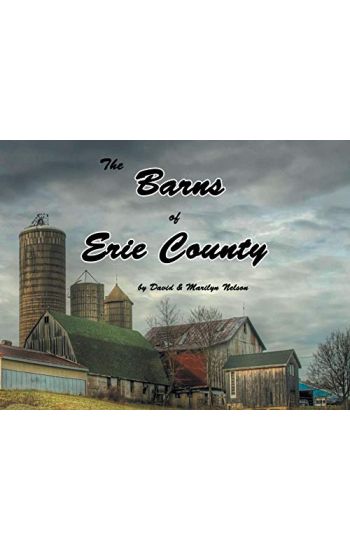
The Barns of Erie County

The Barns of Erie County

David Nelson; Marilyn Nelson

Xlibris Us
2021
pokkari
For the barn lover, this book is a feast for the eyes Contained in these pages is a collection of the incredible diversity of barns found in the Erie County area of Pennsylvania. Many of the barns you see in these pages have fallen victim to the wind and weather found off the shores of Lake Erie and no longer exist. Owning a record of them in such a beautiful format is a valuable asset to any collection of images of American rural landscape. Combined with artistic composition and the process of high-dynamic range photography, it makes for a must-have coffee table book that any barn lover would be proud to own.
A is for Oboe: The Orchestra's Alphabet

A is for Oboe: The Orchestra's Alphabet

Lera Auerbach; Marilyn Nelson

Penguin Putnam Inc
2022
sidottu
This deeply imaginative and entertaining poetry collection details the pleasures of the orchestra, from strong-willed A to satisfied Z.Two widely acclaimed poets--one a composer and classical pianist as well--have come together to create this extraordinary portrait of the orchestra in all of its richness and fascination, using the structure of the alphabet in a way that's entirely new and delightful. A is for the first note you hear as you take your seat in the concert hall, played by the headstrong oboe. B is for the bassoon, "the orchestra's jester, complaining impatiently through his nose." And C is for the conductor, "like the captain on the bridge of a great ship, navigating the composer's musical charts." Onward the text goes, soaring in reverie and making thought-provoking observations while not taking itself too seriously--illuminating all the various details that flow together to create the nourishing experience of playing or listening to music.
Miss Crandall's School for Young Ladies & Little Misses of Color

Miss Crandall's School for Young Ladies & Little Misses of Color

Elizabeth Alexander; Marilyn Nelson

Boyds Mills Press
2007
sidottu
ALSC Notable Children's BookHere is the story of Miss Prudence Crandall and her black students, who endured the cruelty of prejudice and hateful actions for the sake of their education. Miss Crandall faced legal proceedings for opening her school of African American women. But her young students knew that Miss Crandall had committed no crime. They knew that the real criminals were the rich white residents of Canterbury, Connecticut, who had poisoned the school's water and set fire to the schoolhouse. But hatred could not destroy their patience and compassion. From March of 1833 to September of 1834, when persecution forced the school to close, these African American women learned that they deserved an education. What they needed was the courage to go after it. Poets Elizabeth Alexander and Marilyn Nelson have re-created the remarkable story of Prudence Crandall's school in this award-winning book, using the sonnet form with innovative style. Floyd Cooper's powerful illustrations reveal the strength and vulnerability of Miss Crandall and her students.