Kirjojen hintavertailu. Mukana 12 359 765 kirjaa ja 12 kauppaa.

Kirjahaku

Etsi kirjoja tekijän nimen, kirjan nimen tai ISBN:n perusteella.

4 kirjaa tekijältä Marilyn Waring

Three Masquerades

Three Masquerades

Marilyn Waring

University of Toronto Press
1997
pokkari
Marilyn Waring probes the 'world behind the mask' in these three remarkable essays on women in politics, economics and work, and human rights. First, she pulls away the masks that women who are elected to parliamentary office are forced to wear. How do we women find ourselves trapped in the institution's games? How does that affect our ability to make progress on issues of primary importance to us? What does that do to our self-image? Can we even afford to be aware of this? The second essay continues Waring's powerful writing on economics and the concept of work. She updates the international situation described in her bestseller Counting for Nothing. Based on her project experience with the United Nations, she exposes the gap between rhetoric and consequence: you wash your pig: this is work; you wash your child: this is welfare... it has no value. The last essay unmasks the rhetoric of human rights. Waring shows how nation states exploit United Nations conventions, while also explaining the opportunities the conventions provide for political action.

1 Way 2 C the World

1 Way 2 C the World

Marilyn Waring

University of Toronto Press
2009
pokkari
Marilyn Waring is a truly absorbing figure known as a distinguished public intellectual, a leading feminist thinker, environmentalist, social justice activist, and for her early political career after election to New Zealand's parliament at age twenty-three. Assembling some of her most thought-provoking writings, 1 Way 2 C the World is a compelling collection of essays and reflections on many important issues of our time. Written in lively, crisp, and often humourous prose, Waring provides illuminating commentary on topics such as gay marriage, human rights, globalization, the environment, and international relations and development. Including accounts of being in India at the time of Indira Gandhi's assassination, and in Ethiopia's during the 1984 famine, Waring's vivid writing remains contemporarily relevant, while this collection includes recent writings on the post-9/11 world. Brimming with pieces that are essential reading for anyone concerned with the state of the world, 1 Way 2 C the World is bound to fascinate and inspire.
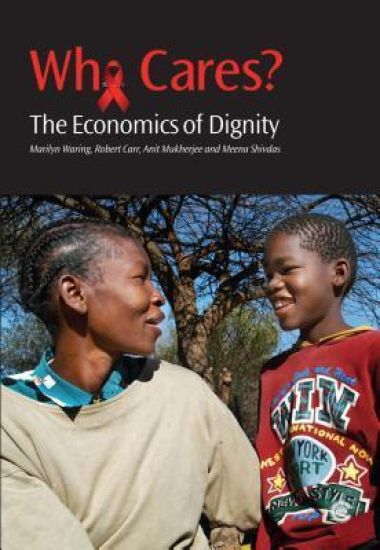
Who Cares?

Who Cares?

Marilyn Waring; Robert Carr; Anit Mukherjee; Meena Shivdas

Commonwealth Secretariat
2011
nidottu
At the centre of the HIV/AIDS response are the 12 million people who need care and treatment. Those who are ill require support from carers who provide physical, social and psychological support. Yet these carers – essential actors in the response – are often invisible to the system that relies on them. The writers argue that focusing on the carer, at the household level, directs assistance where it is most effective and most needed, will respect human rights, and will help achieve the millennium development goals in health.
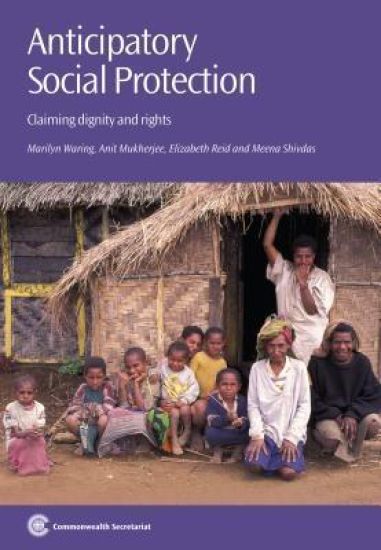
Anticipatory Social Protection

Anticipatory Social Protection

Marilyn Waring; Anit N. Mukherjee; Elizabeth Reid; Meena Shivdas

Commonwealth Secretariat
2013
nidottu
The social protection landscape is currently characterised by competing discourses and agendas, given that bilaterals, multilaterals and private funders have different targets and have differing constituents whose lives they seek to improve. Critical aspects such as gender inequalities and inequities, women and children's agency and community coping mechanisms are often not adequately addressed. This publication introduces the Commonwealth Secretariat's anticipatory and transformative social protection approach, which outlines the principles and strategies for advancing a gender-responsive, human rights-based approach to social protection.It presents analysis and discussion of a framework for social protection, models of good practice from across the Commonwealth, and innovative ways of providing social protection that are not based on men and women being in full-time paid work in the formal economy.This publication will assist policy-makers and development practitioners in making informed decisions about programme design and delivery so that beneficiaries' access to and participation in social protection mechanisms are fully realised.